

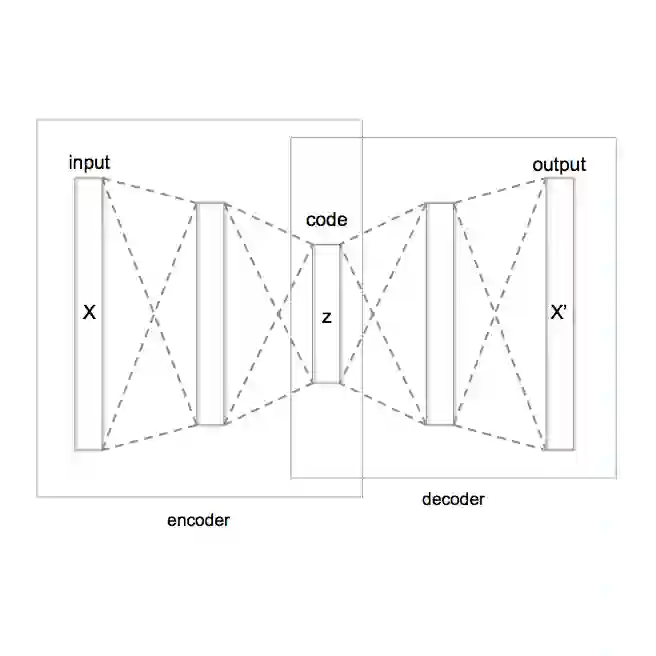
Head-based signals such as EEG, EMG, EOG, and ECG collected by wearable systems will play a pivotal role in clinical diagnosis, monitoring, and treatment of important brain disorder diseases. However, the real-time transmission of the significant corpus physiological signals over extended periods consumes substantial power and time, limiting the viability of battery-dependent physiological monitoring wearables. This paper presents a novel deep-learning framework employing a variational autoencoder (VAE) for physiological signal compression to reduce wearables' computational complexity and energy consumption. Our approach achieves an impressive compression ratio of 1:293 specifically for spectrogram data, surpassing state-of-the-art compression techniques such as JPEG2000, H.264, Direct Cosine Transform (DCT), and Huffman Encoding, which do not excel in handling physiological signals. We validate the efficacy of the compressed algorithms using collected physiological signals from real patients in the Hospital and deploy the solution on commonly used embedded AI chips (i.e., ARM Cortex V8 and Jetson Nano). The proposed framework achieves a 91{\%} seizure detection accuracy using XGBoost, confirming the approach's reliability, practicality, and scalability.
翻译:来自可穿戴系统采集的头部信号(如EEG、EMG、EOG和ECG)将在脑部重要疾病的临床诊断、监测和治疗中发挥关键作用。然而,长时间实时传输大量生理信号会消耗大量功耗和时间,限制了依赖电池的生理监测可穿戴设备的可行性。本文提出一种基于变分自编码器(VAE)的新型深度学习框架,用于生理信号压缩,以降低可穿戴设备的计算复杂度和能耗。我们的方法对频谱图数据实现了高达1:293的压缩比,超越了JPEG2000、H.264、离散余弦变换(DCT)和哈夫曼编码等最先进的压缩技术(这些技术在处理生理信号方面表现不佳)。我们利用从医院真实患者处采集的生理信号验证了压缩算法的有效性,并将该解决方案部署于常用的嵌入式AI芯片(即ARM Cortex V8和Jetson Nano)上。该框架通过XGBoost实现了91%的癫痫发作检测准确率,证实了该方法的可靠性、实用性和可扩展性。




相关内容



 微信扫码咨询专知VIP会员