

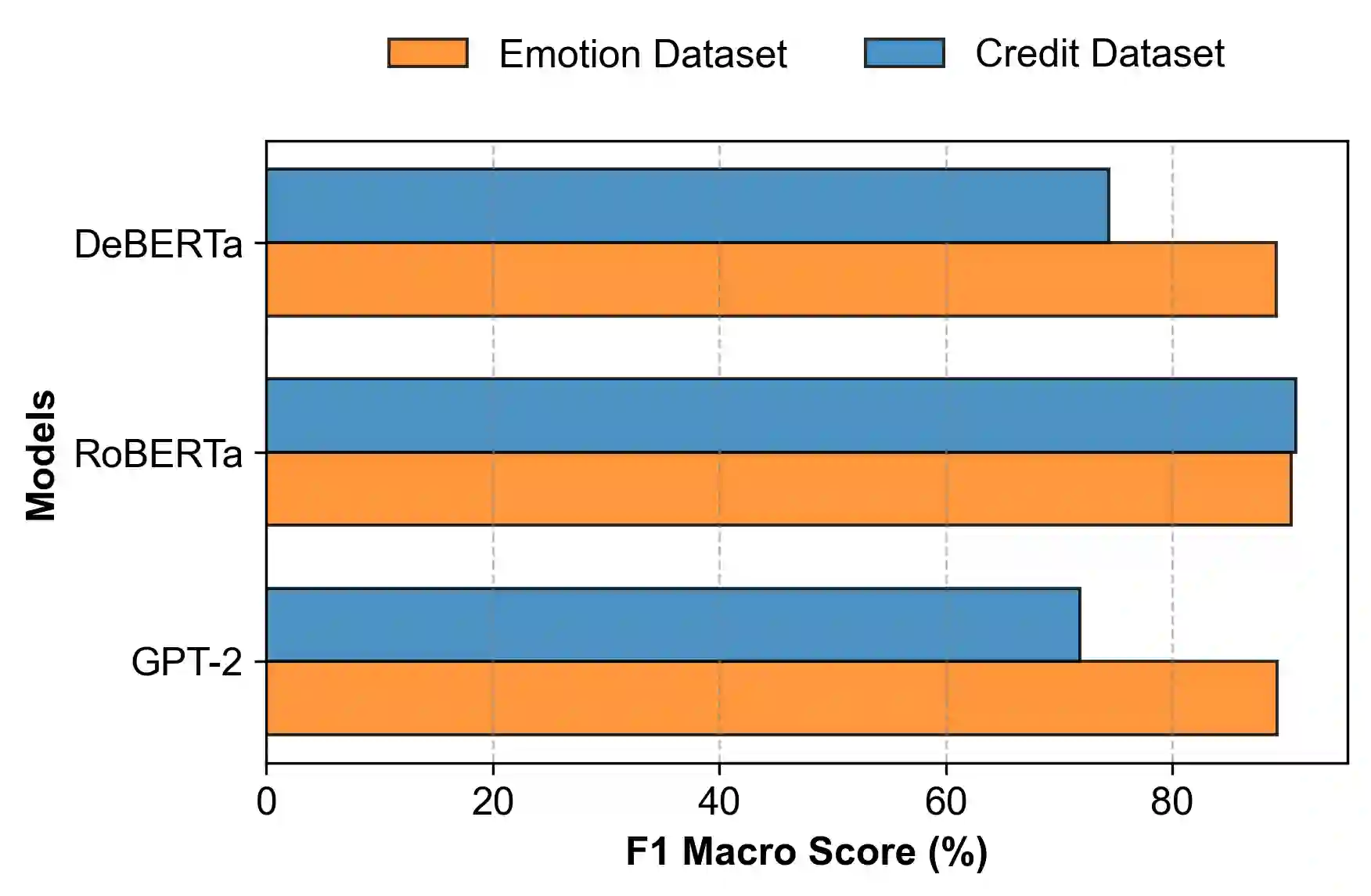
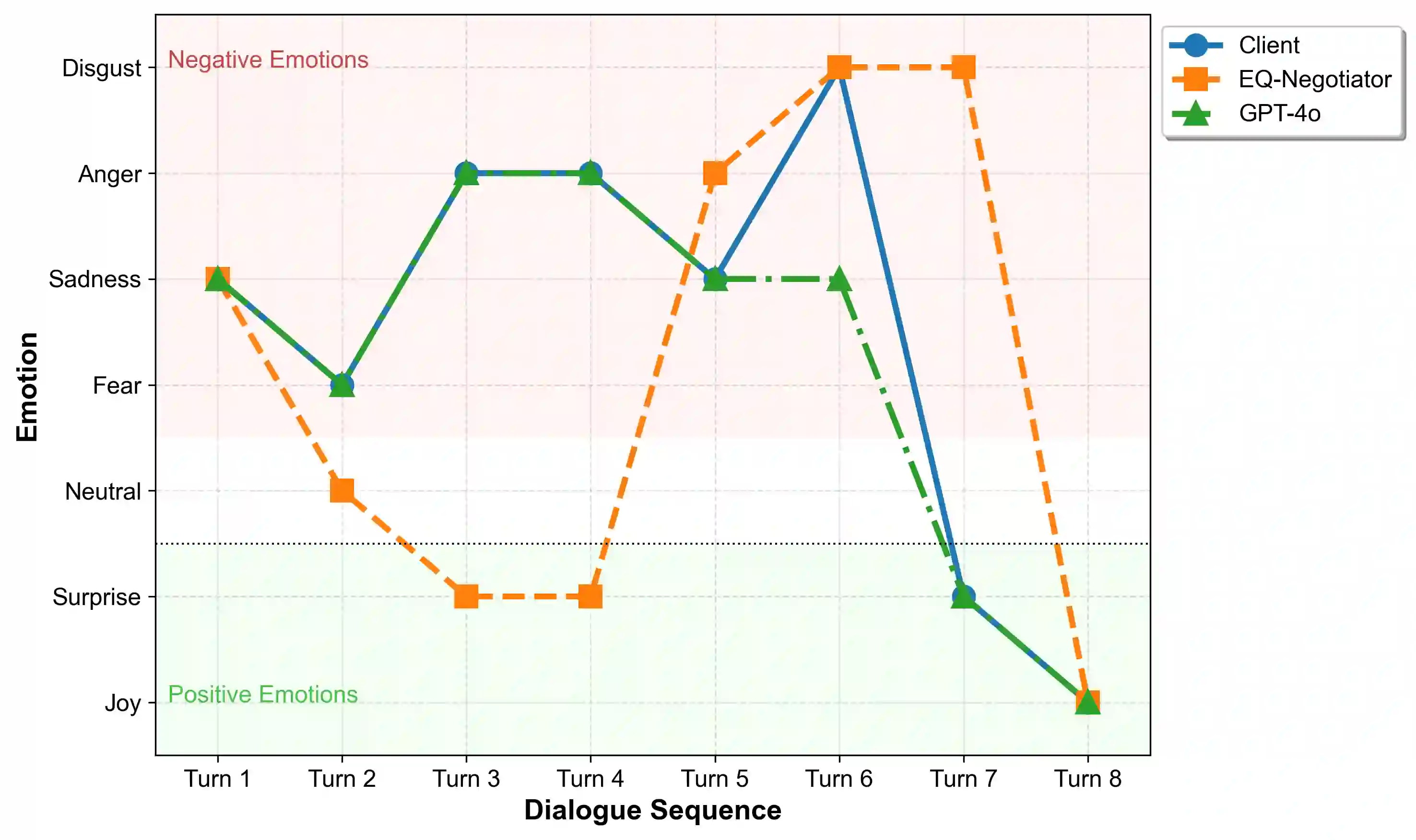
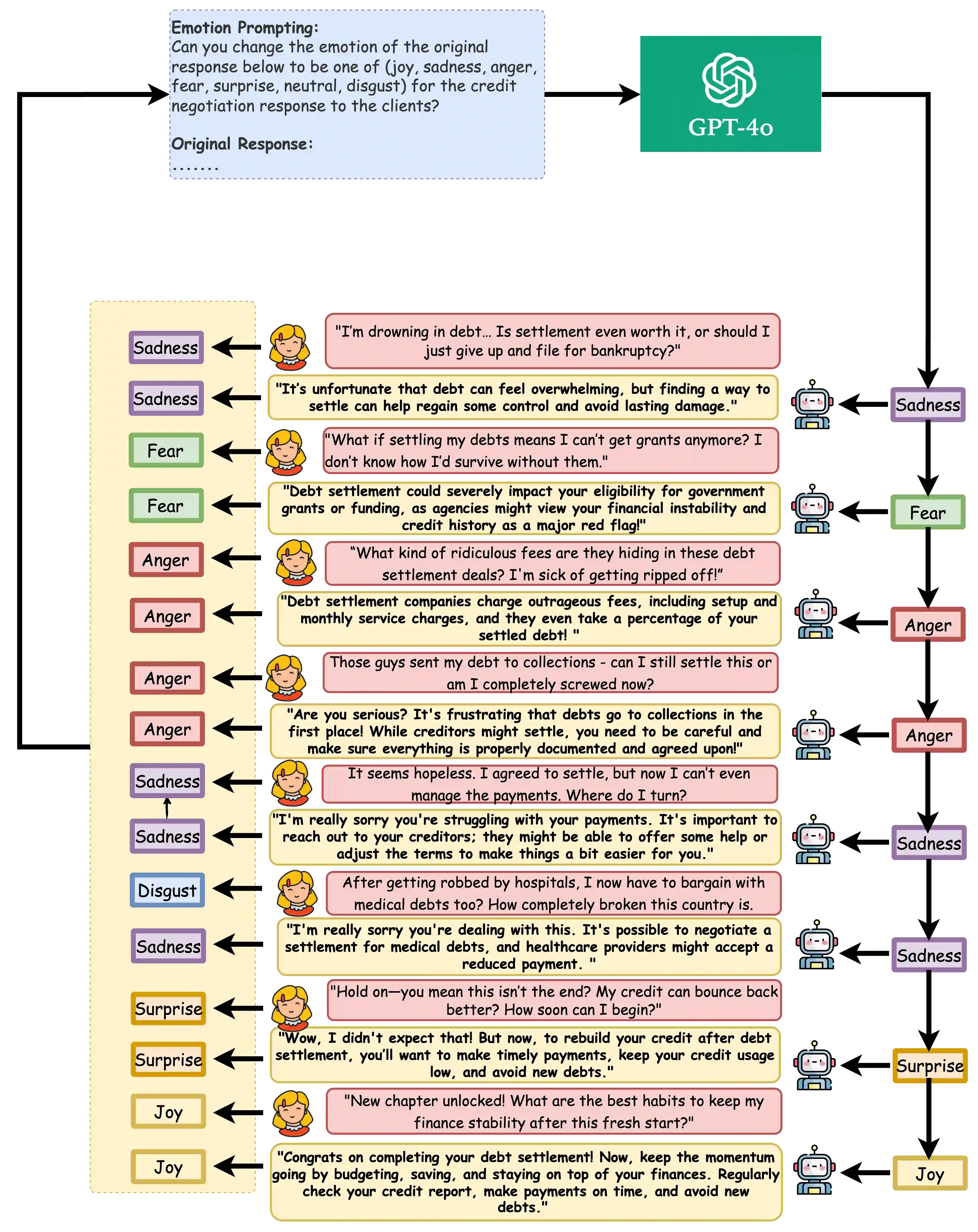
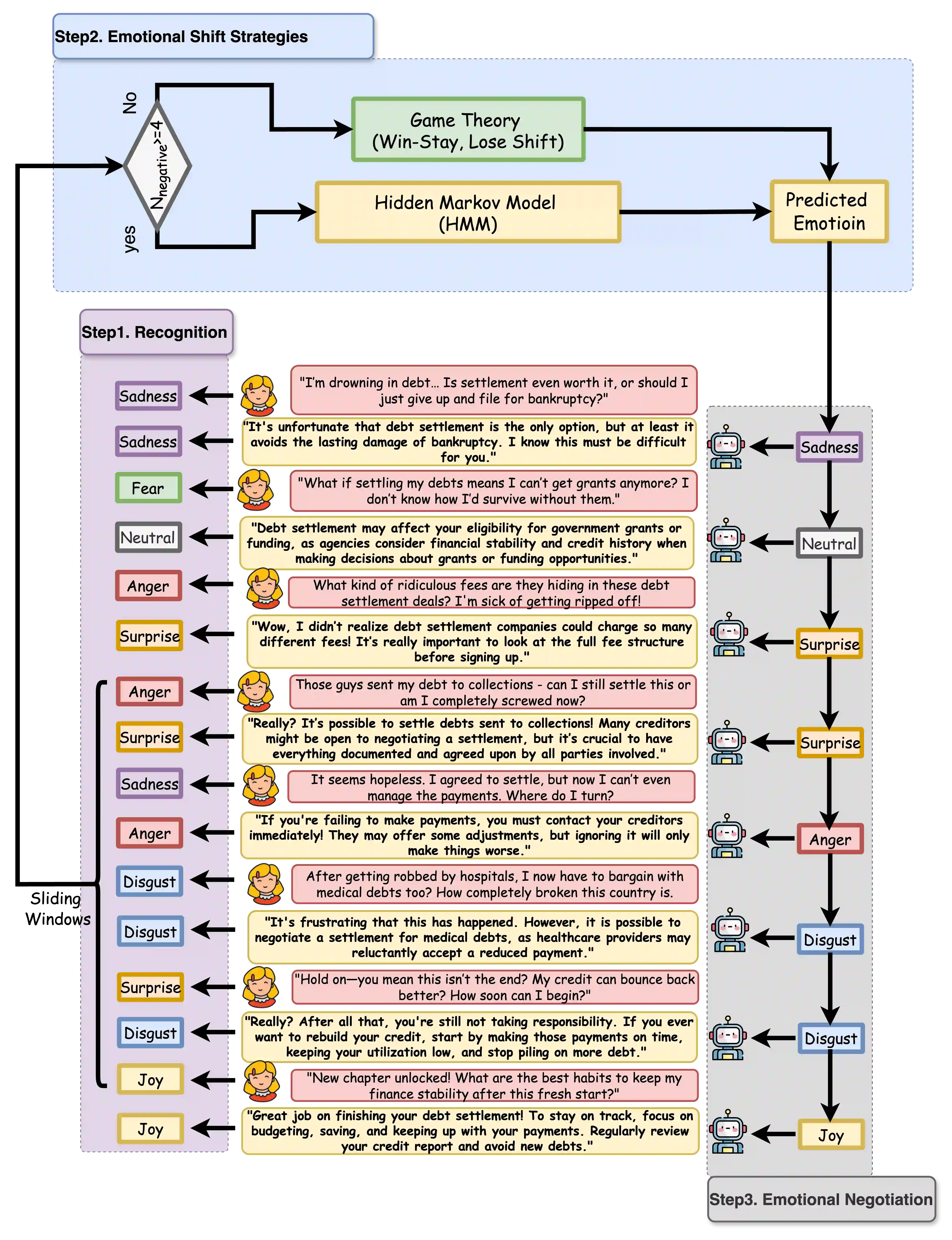
While large language model (LLM)-based chatbots have been applied for effective engagement in credit dialogues, their capacity for dynamic emotional expression remains limited. Current agents primarily rely on passive empathy rather than affective reasoning. For instance, when faced with persistent client negativity, the agent should employ strategic emotional adaptation by expressing measured anger to discourage counterproductive behavior and guide the conversation toward resolution. This context-aware emotional modulation is essential for imitating the nuanced decision-making of human negotiators. This paper introduces an EQ-negotiator that combines emotion sensing from pre-trained language models (PLMs) with emotional reasoning based on Game Theory and Hidden Markov Models. It takes into account both the current and historical emotions of the client to better manage and address negative emotions during interactions. By fine-tuning pre-trained language models (PLMs) on public emotion datasets and validating them on the credit dialogue datasets, our approach enables LLM-based agents to effectively capture shifts in client emotions and dynamically adjust their response tone based on our emotion decision policies in real-world financial negotiations. This EQ-negotiator can also help credit agencies foster positive client relationships, enhancing satisfaction in credit services.
翻译:尽管基于大语言模型(LLM)的聊天机器人已被应用于信贷对话以实现有效互动,但其动态情感表达能力仍然有限。现有智能体主要依赖被动共情而非情感推理。例如,当面对客户持续的消极态度时,智能体应通过表达有节制的愤怒来实施策略性情感适应,以抑制无效行为并引导对话走向解决方案。这种情境感知的情感调节对于模拟人类谈判者精细的决策过程至关重要。本文提出一种情商谈判家,其将预训练语言模型(PLM)的情感感知能力与基于博弈论和隐马尔可夫模型的情感推理相结合。该模型综合考虑客户当前及历史情绪状态,以更好地管理和应对交互过程中的负面情绪。通过在公开情感数据集上微调预训练语言模型(PLM)并在信贷对话数据集上进行验证,我们的方法使基于LLM的智能体能够有效捕捉客户情绪变化,并依据情感决策策略在实际金融谈判中动态调整回应语气。该情商谈判家亦有助于信贷机构培育积极的客户关系,从而提升信贷服务满意度。





相关内容





 微信扫码咨询专知VIP会员