

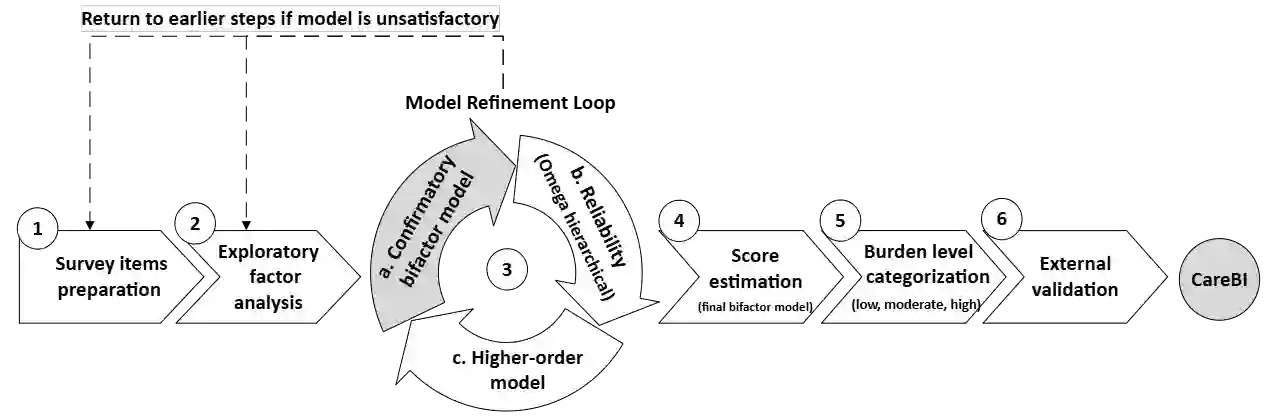
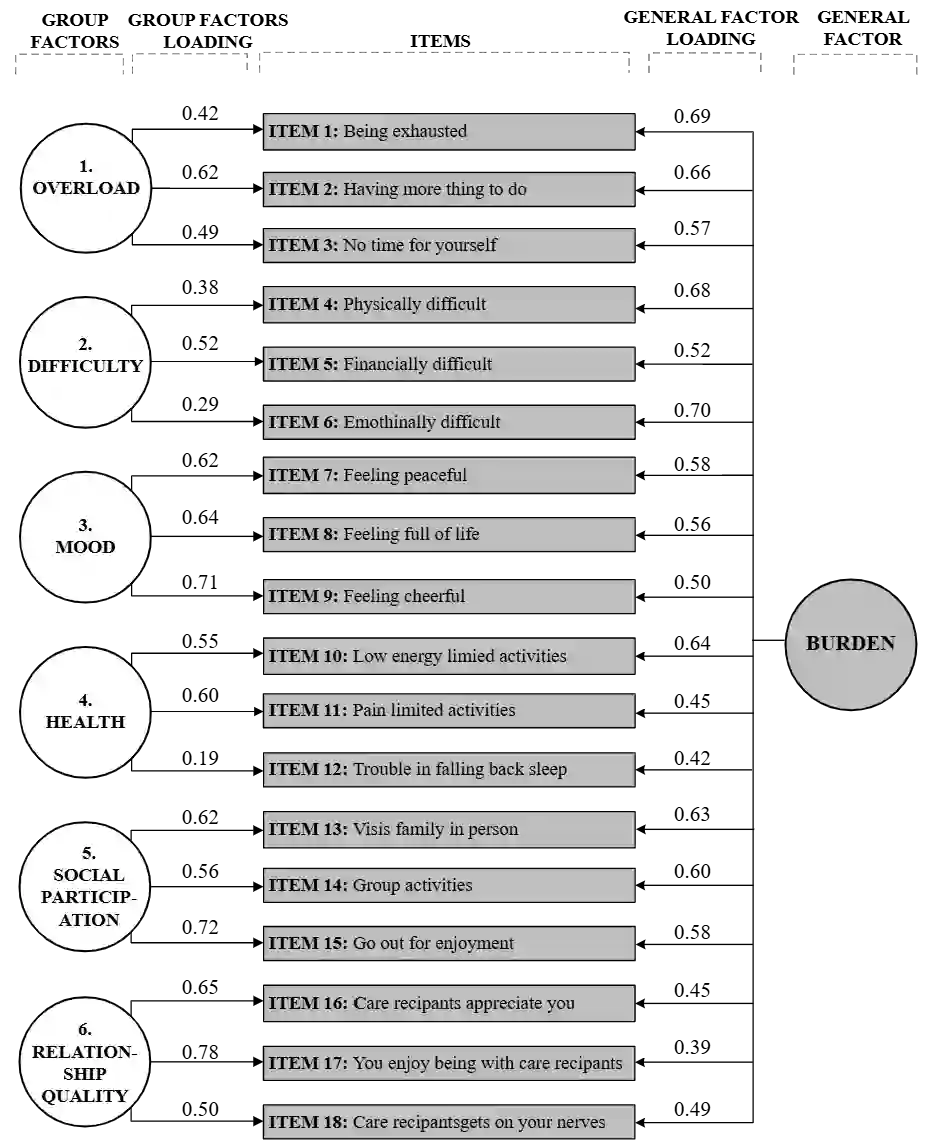
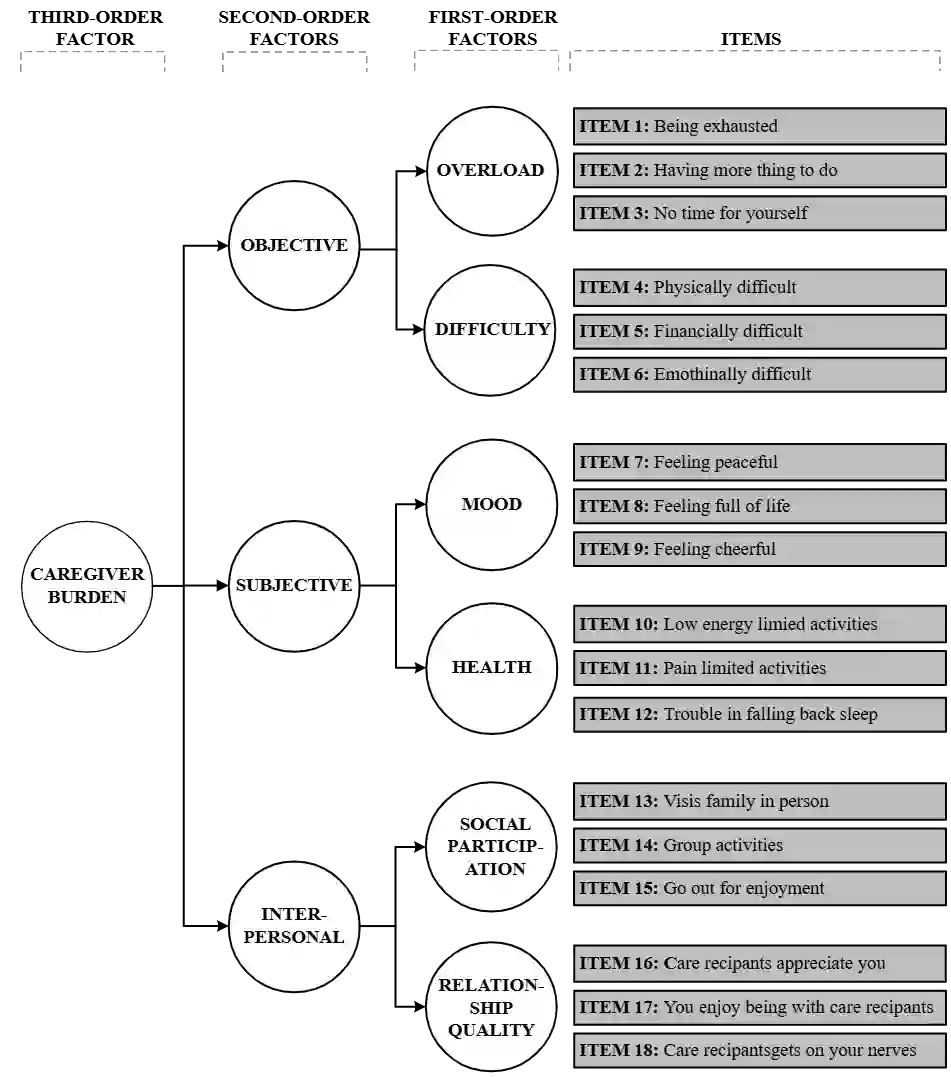
Informal caregiving often carries a significant emotional, physical, and financial toll, yet caregiver burden is often underrepresented in healthcare research and methods. Existing caregiver burden instruments, while valuable in clinical research, often lack compatibility with observational datasets regularly used in health services research and planning. This study introduces the Caregiver Burden Index (CareBI) developed for the National Study of Caregiving (NSOC), that can be used to represent caregiver burden in quantitative models and observational research studies. CareBI was developed and validated using a multistep process that included the identification and preparation of individual NSOC survey items, exploratory and confirmatory factor analysis, score estimation, interpretation, and external validation. The study used data from round 12 of the NSOC. CareBI represents three domains of burden: objective, subjective, and interpersonal, providing a comprehensive view of both the positive and negative aspects of caregiving. It also aligns with the Zarit Burden Interview, a widely used tool for prospectively assessing caregiver burden. Construct validity was assessed by comparing CareBI's relationship with caregiver and care recipient outcomes, as well as sensitivity to known burden-related risk and mitigation factors. Early findings affirm the scale's utility in categorizing low-, moderate-, and high-burden caregivers and guiding resource-oriented strategies. CareBI represents a reproducible tool for embedding caregiver metrics into health operations, predictive modeling, and public policy frameworks, and provides a template for applying operations research and industrial engineering methods to psychosocial measurement challenges in aging and long-term care.
翻译:非正式照护通常伴随着显著的情感、身体和经济负担,然而照护者负担在医疗健康研究及方法学中常被低估。现有照护者负担测量工具虽在临床研究中具有价值,却常与健康服务研究及规划中常规使用的观察性数据集缺乏兼容性。本研究针对全美照护研究(NSOC)开发了照护者负担指数(CareBI),该指数可用于量化模型与观察性研究中表征照护者负担。CareBI通过多阶段流程开发并验证,包括NSOC调查条目的识别与预处理、探索性与验证性因子分析、分数估计、解释及外部验证。研究采用NSOC第十二轮调查数据。CareBI涵盖负担的三个维度:客观负担、主观负担与人际负担,全面呈现照护行为的积极与消极层面。该指数亦与前瞻性评估照护者负担的常用工具Zarit负担访谈保持概念对齐。通过检验CareBI与照护者及受照护者结局的关联性,以及对已知负担相关风险与缓解因素的敏感性,评估了其结构效度。初步研究结果证实该量表在区分低、中、高负担照护者及指导资源导向策略方面的实用性。CareBI为将照护者指标嵌入健康运营、预测建模与公共政策框架提供了可复现的工具,并为运用运筹学与工业工程方法应对老龄化与长期照护中的心理社会测量挑战提供了范式模板。




相关内容





 微信扫码咨询专知VIP会员