

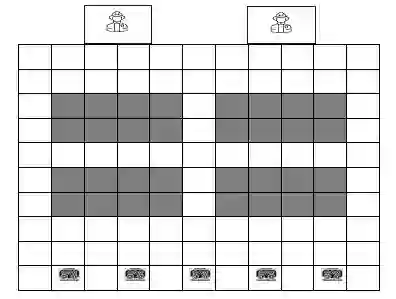
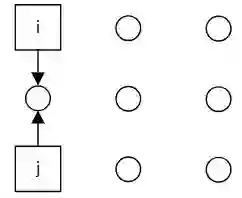
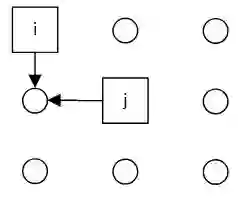
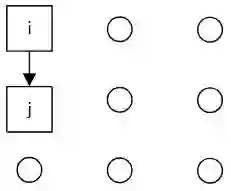
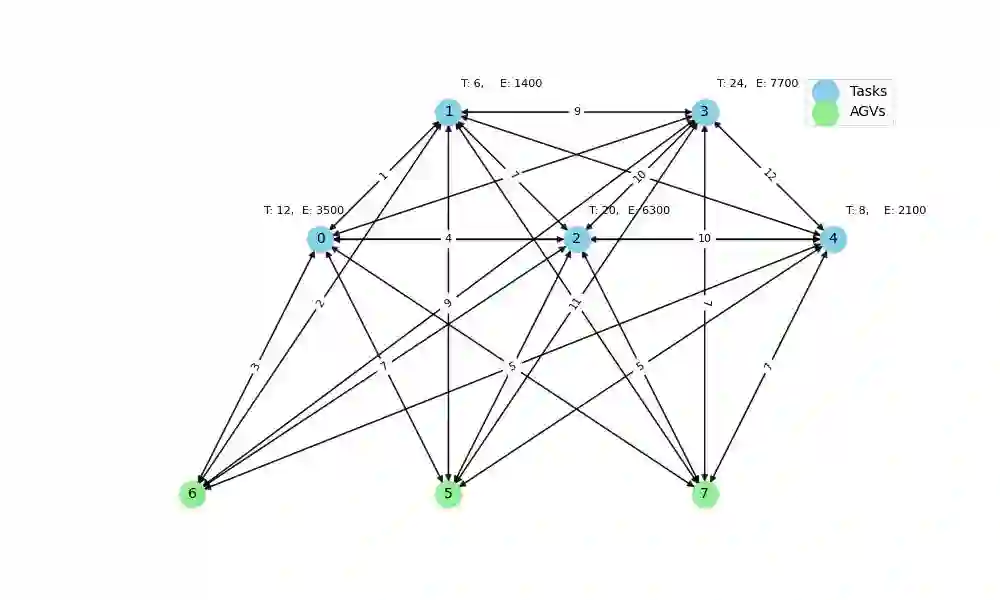
Multi-Agent Path Finding (MAPF) has gained significant attention, with most research focusing on minimizing collisions and travel time. This paper also considers energy consumption in the path planning of automated guided vehicles (AGVs). It addresses two main challenges: i) resolving collisions between AGVs and ii) assigning tasks to AGVs. We propose a new collision avoidance strategy that takes both energy use and travel time into account. For task assignment, we present two multi-objective algorithms: Non-Dominated Sorting Genetic Algorithm (NSGA) and Adaptive Large Neighborhood Search (ALNS). Comparative evaluations show that these proposed methods perform better than existing approaches in both collision avoidance and task assignment.
翻译:多智能体路径规划(MAPF)已受到广泛关注,现有研究大多聚焦于最小化碰撞次数与行驶时间。本文进一步将自动导引车(AGV)路径规划中的能耗纳入考量,主要解决两大挑战:i)AGV之间的碰撞消解;ii)AGV的任务分配。我们提出了一种兼顾能耗与行驶时间的新型避障策略。针对任务分配问题,本文设计了两种多目标优化算法:非支配排序遗传算法(NSGA)与自适应大邻域搜索算法(ALNS)。对比实验表明,所提方法在避障与任务分配两方面均优于现有方法。




相关内容




 微信扫码咨询专知VIP会员