

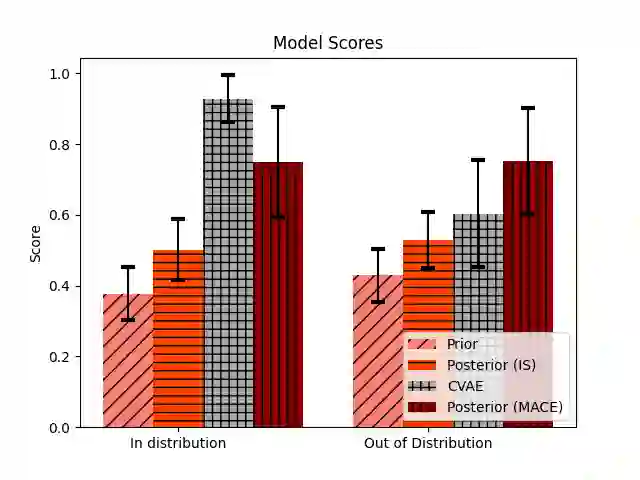
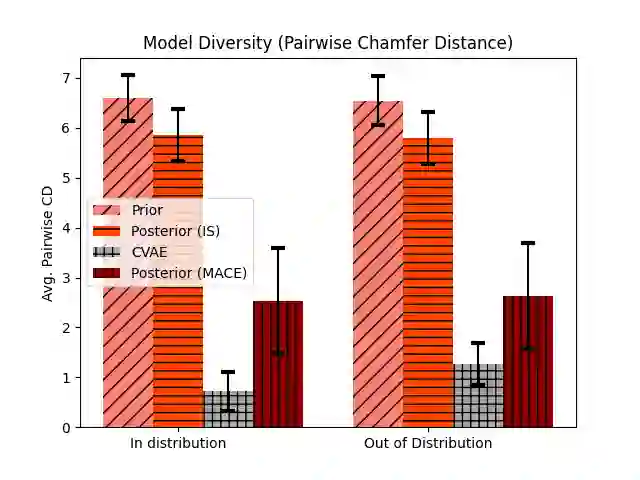
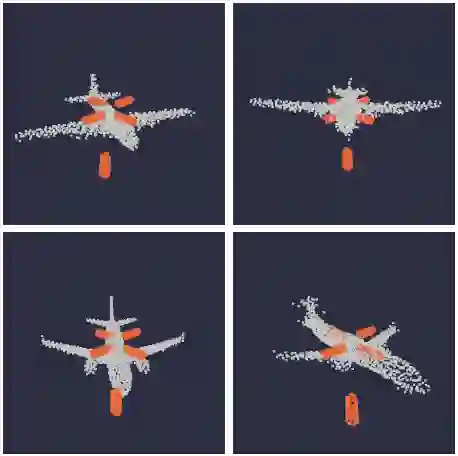
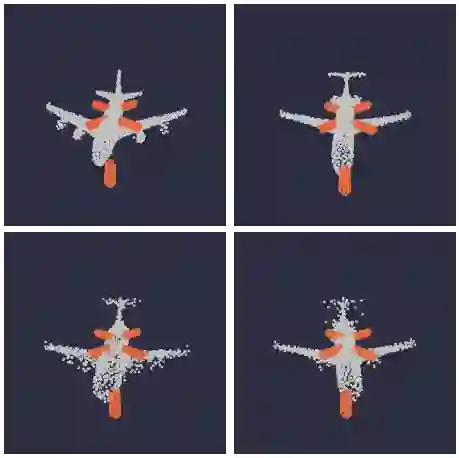
Adaptable models could greatly benefit robotic agents operating in the real world, allowing them to deal with novel and varying conditions. While approaches such as Bayesian inference are well-studied frameworks for adapting models to evidence, we build on recent advances in deep generative models which have greatly affected many areas of robotics. Harnessing modern GPU acceleration, we investigate how to quickly adapt the sample generation of neural network models to observations in robotic tasks. We propose a simple and general method that is applicable to various deep generative models and robotic environments. The key idea is to quickly fine-tune the model by fitting it to generated samples matching the observed evidence, using the cross-entropy method. We show that our method can be applied to both autoregressive models and variational autoencoders, and demonstrate its usability in object shape inference from grasping, inverse kinematics calculation, and point cloud completion.
翻译:适应性模型能够极大提升在真实世界中运行的机器人代理处理新型及多变条件的能力。尽管贝叶斯推断等方法是使模型适应证据的成熟框架,我们基于近年来深度生成模型在机器人学多个领域产生重大影响的进展展开研究。借助现代GPU加速能力,我们探索如何针对机器人任务中的观测数据快速调整神经网络模型的样本生成过程。本文提出一种适用于多种深度生成模型和机器人环境的简洁通用方法,其核心思想是通过交叉熵方法将模型拟合至与观测证据匹配的生成样本,从而实现快速微调。我们证明了该方法可同时应用于自回归模型和变分自编码器,并在基于抓取的物体形状推断、逆运动学计算及点云补全任务中验证了其实用性。




相关内容





 微信扫码咨询专知VIP会员