

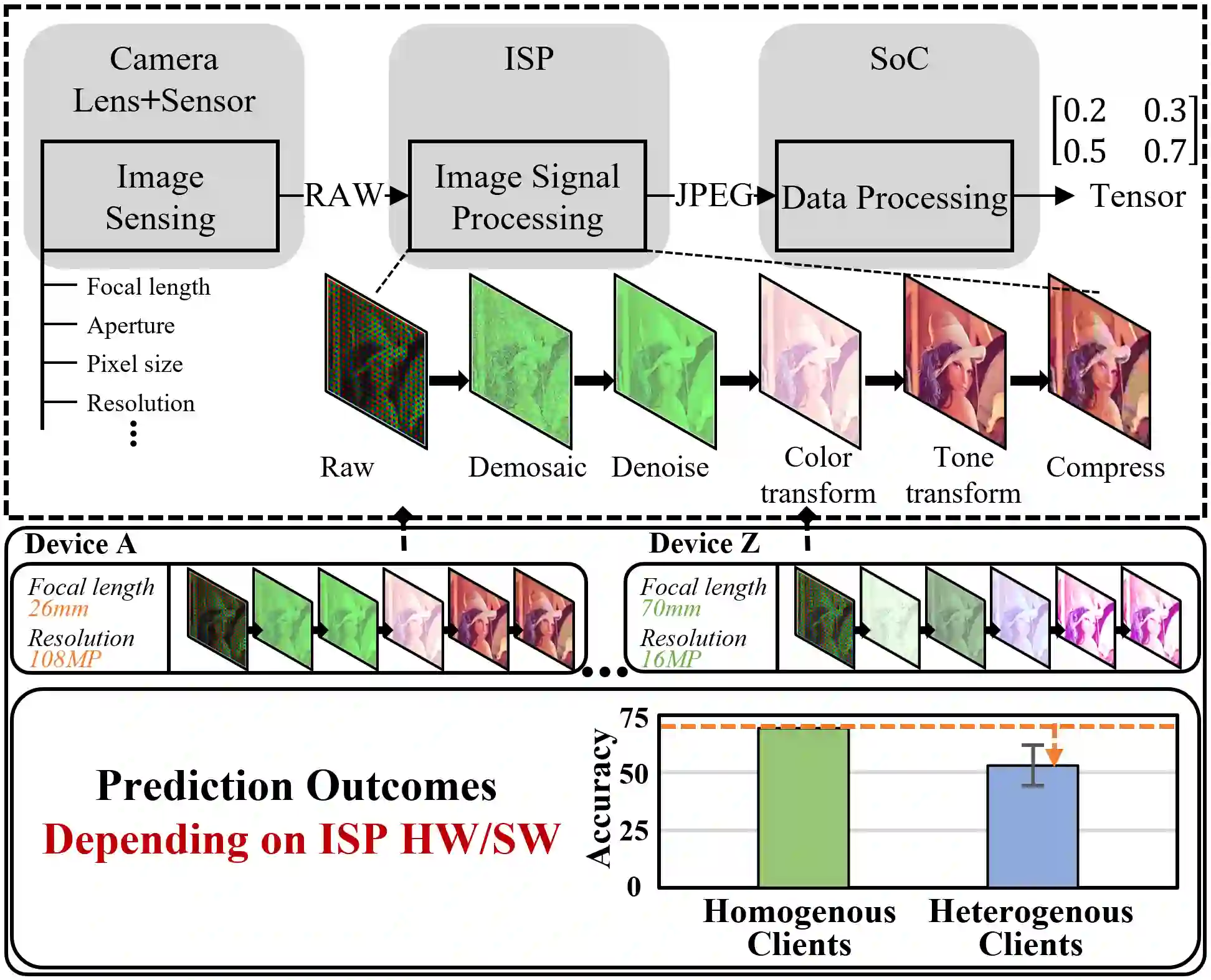
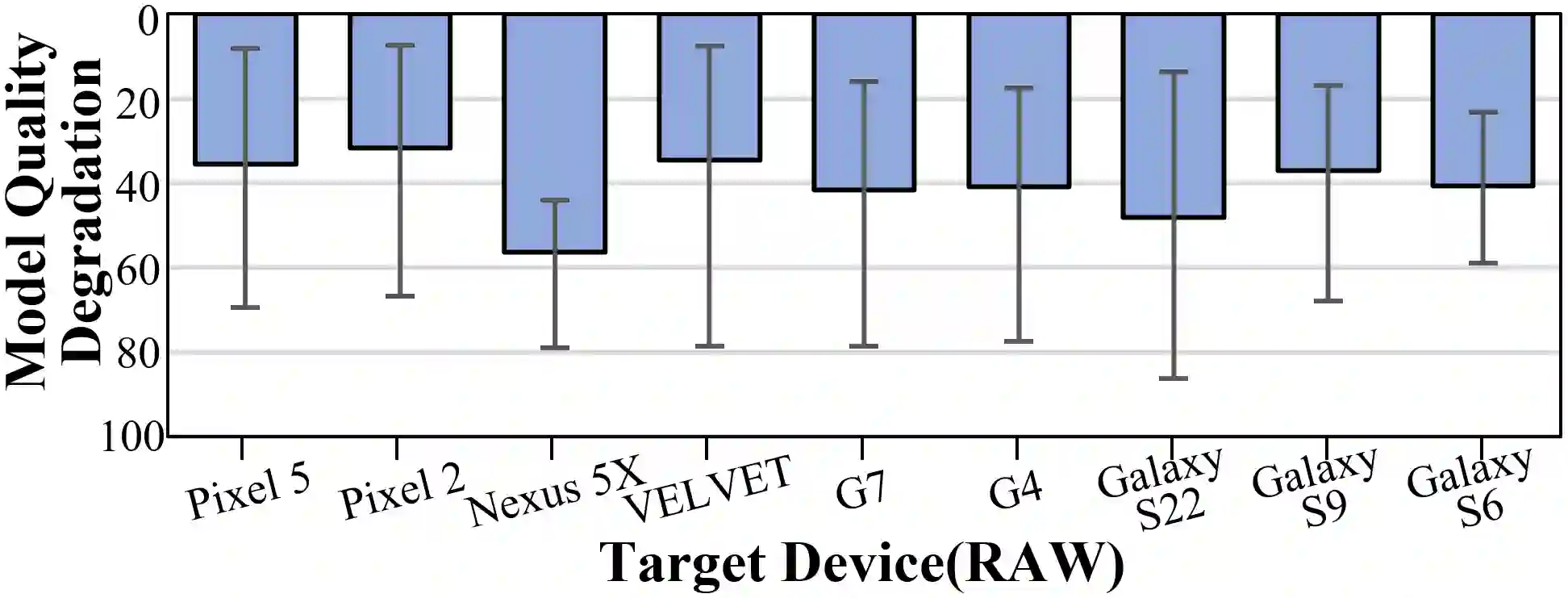
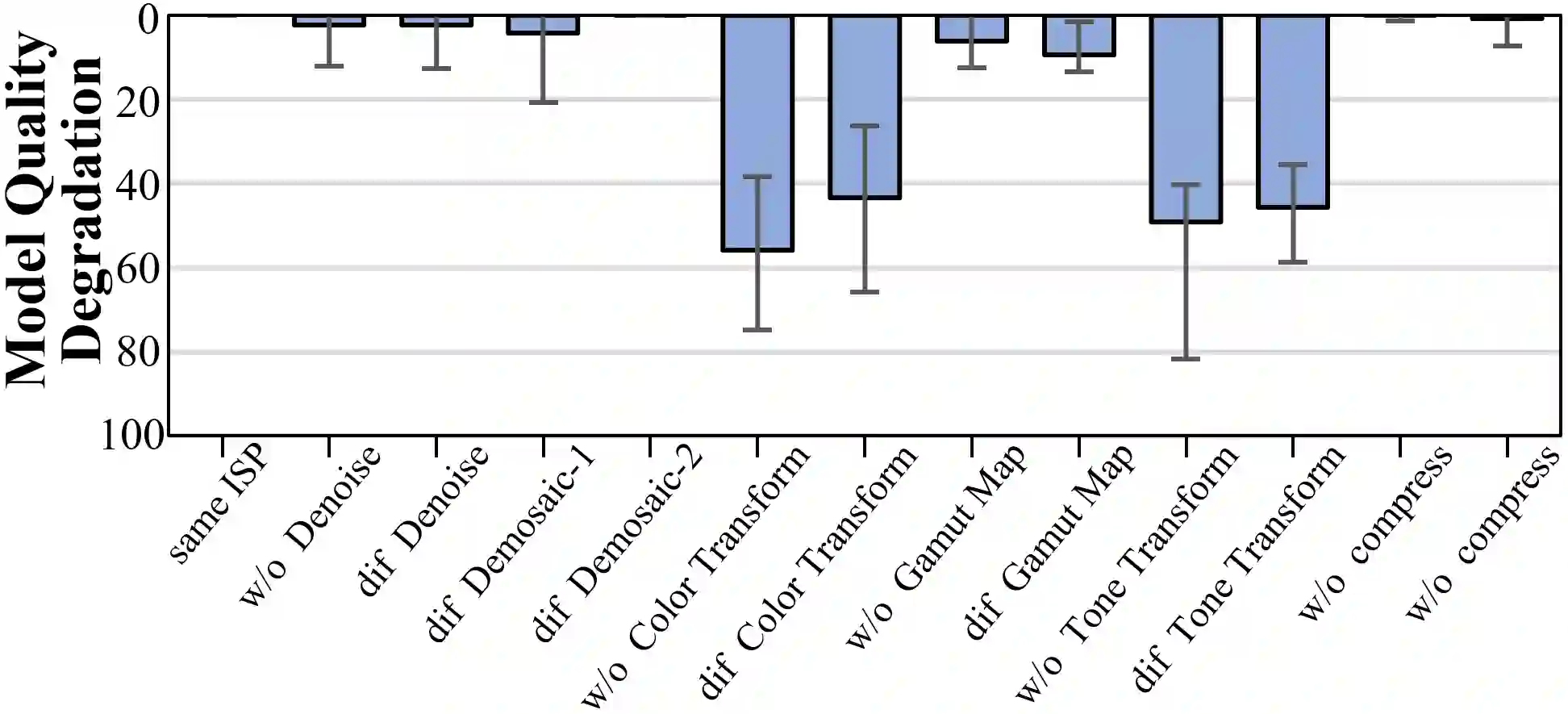
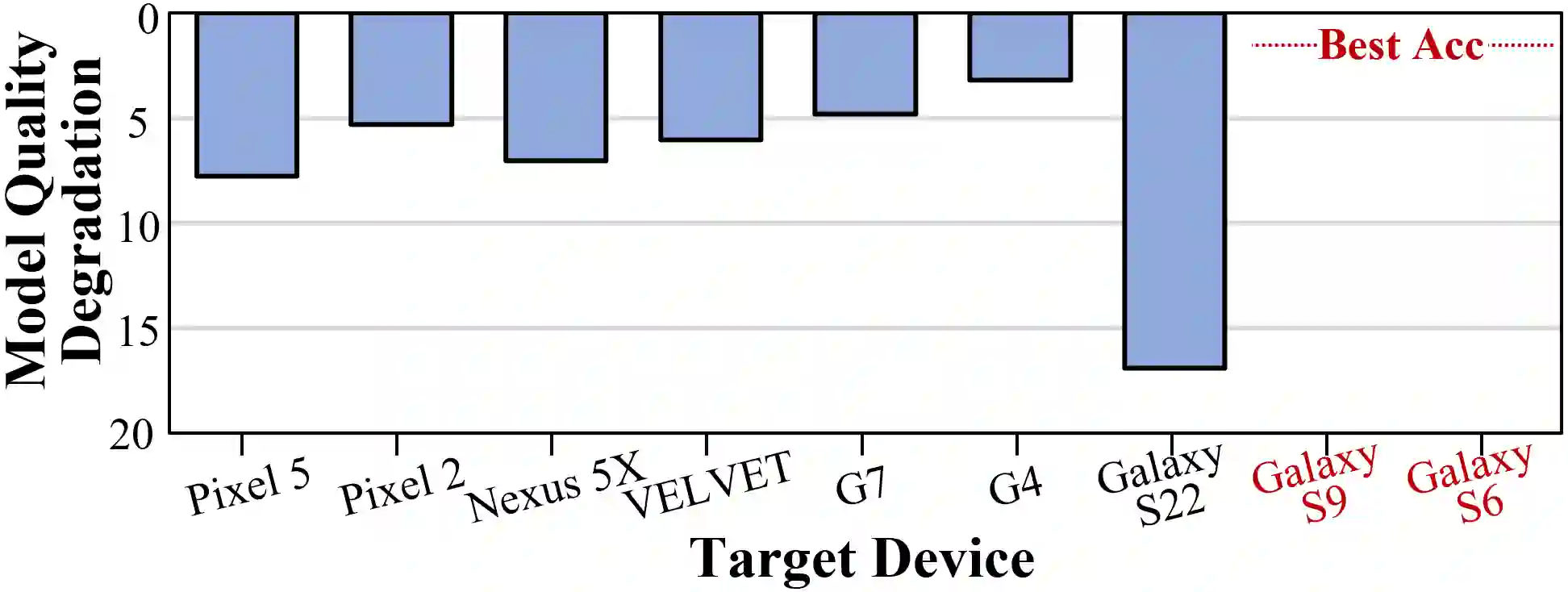
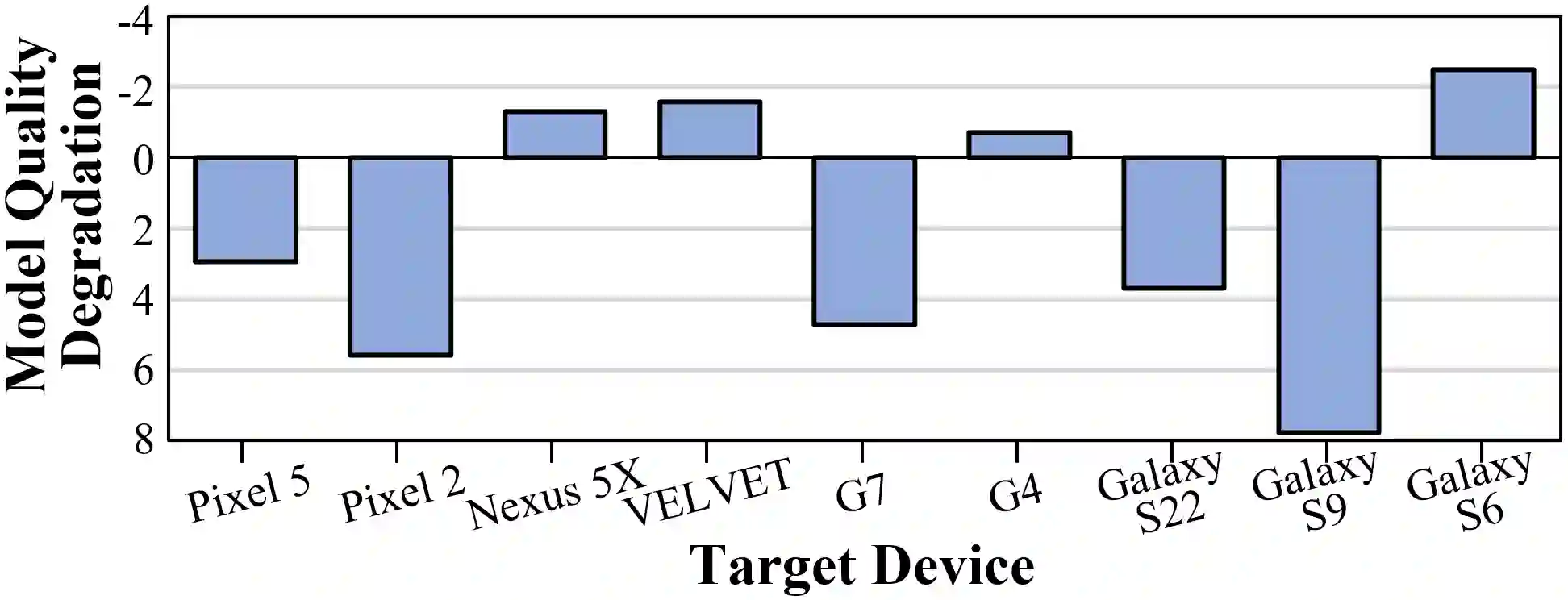
Federated Learning (FL) is a practical approach to train deep learning models collaboratively across user-end devices, protecting user privacy by retaining raw data on-device. In FL, participating user-end devices are highly fragmented in terms of hardware and software configurations. Such fragmentation introduces a new type of data heterogeneity in FL, namely \textit{system-induced data heterogeneity}, as each device generates distinct data depending on its hardware and software configurations. In this paper, we first characterize the impact of system-induced data heterogeneity on FL model performance. We collect a dataset using heterogeneous devices with variations across vendors and performance tiers. By using this dataset, we demonstrate that \textit{system-induced data heterogeneity} negatively impacts accuracy, and deteriorates fairness and domain generalization problems in FL. To address these challenges, we propose HeteroSwitch, which adaptively adopts generalization techniques (i.e., ISP transformation and SWAD) depending on the level of bias caused by varying HW and SW configurations. In our evaluation with a realistic FL dataset (FLAIR), HeteroSwitch reduces the variance of averaged precision by 6.3\% across device types.
翻译:联邦学习(Federated Learning, FL)是一种在用户端设备上协作训练深度学习模型的实用方法,通过将原始数据保留在本地设备上以保护用户隐私。在联邦学习中,参与的用户端设备在硬件和软件配置方面高度碎片化。这种碎片化引入了联邦学习中一种新型的数据异质性,即\textit{系统引发数据异质性},因为每个设备会根据其硬件和软件配置生成不同的数据。本文首先特征化系统引发数据异质性对联邦学习模型性能的影响。我们使用具有不同厂商和性能等级差异的异构设备收集了一个数据集。通过该数据集,我们证明了\textit{系统引发数据异质性}会负面影响模型精度,并加剧联邦学习中的公平性和领域泛化问题。为解决这些挑战,我们提出HeteroSwitch,该方法根据不同硬件和软件配置引起的偏差程度,自适应地采用泛化技术(即ISP变换和SWAD)。在基于真实联邦学习数据集(FLAIR)的评估中,HeteroSwitch将跨设备类型的平均精度方差降低了6.3%。




相关内容





 微信扫码咨询专知VIP会员