

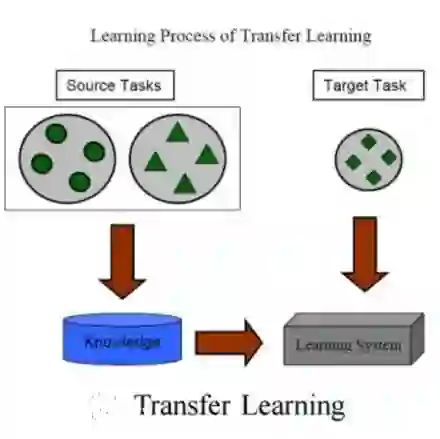
We explore space traffic management as an application of collision-free navigation in multi-agent systems where vehicles have limited observation and communication ranges. We investigate the effectiveness of transferring a collision avoidance multi-agent reinforcement (MARL) model trained on a ground environment to a space one. We demonstrate that the transfer learning model outperforms a model that is trained directly on the space environment. Furthermore, we find that our approach works well even when we consider the perturbations to satellite dynamics caused by the Earth's oblateness. Finally, we show how our methods can be used to evaluate the benefits of information-sharing between satellite operators in order to improve coordination.
翻译:我们探索了空间交通管理作为多智能体系统中无碰撞导航的应用,其中飞行器具有有限的观测和通信范围。我们研究了将在地面环境中训练的碰撞避免多智能体强化学习模型迁移到空间环境的有效性。我们证明迁移学习模型优于直接在空间环境下训练的模型。此外,我们发现即使考虑地球扁率引起的卫星动力学摄动,我们的方法仍能良好工作。最后,我们展示了如何利用所提方法评估卫星运营商之间信息共享的效益,以改进协调性。




相关内容




 微信扫码咨询专知VIP会员