

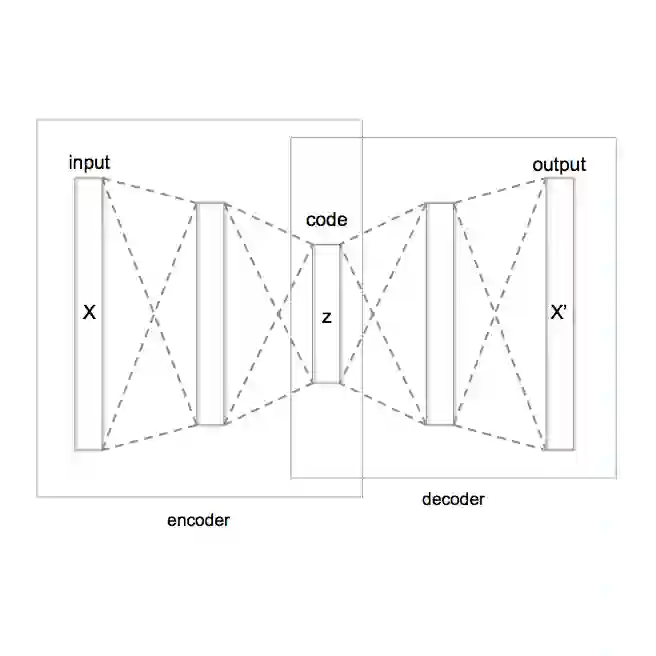
Variational autoencoders (VAEs) learn low-dimensional latent representations of high-dimensional data. When the data lies on a manifold with non-Euclidean topology, the standard Gaussian prior introduces a topological mismatch that degrades reconstruction quality and prevents faithful representation. We present a constructive mathematical framework that resolves this mismatch for all manifolds that admit a product covering space. These are manifolds expressible as products of elementary factors (circles, intervals, or lines) or as quotients of such products by a finite symmetry group. The class includes cylinders, tori, Möbius strips, Klein bottles, and real projective spaces. Factorized distributions over the elementary factors yield product topologies with closed-form, decoupled KL divergences, so that each latent factor can be shaped independently while keeping training tractable. We catalogue reparametrizable encoder-prior pairs for periodic, bounded, and unbounded supports, and provide coordinate transformations that allow standard neural networks to output non-Euclidean parameters with smooth gradients. For quotient manifolds, the decoder receives group-invariant features of the covering-space coordinates, so that identified points produce identical outputs. Anchor constraints fix the coordinate system relative to the data or create soft topological holes. Experiments on synthetic manifolds and real-image datasets (rotated and cyclically shifted MNIST) confirm that a topology-matched prior aligns KL regularization with the data manifold. The resulting topology-aware models outperform the Gaussian baseline at all practically relevant regularization strengths. The code is available at https://github.com/JvHulst/VAE-Topology.
翻译:变分自编码器(VAE)通过学习高维数据的低维潜在表征实现数据压缩。当数据位于具有非欧几里得拓扑结构的流形上时,标准高斯先验会引入拓扑失配,导致重建质量下降且无法忠实表征数据。我们提出一个构造性数学框架,可解决所有允许乘积覆盖空间的流形的拓扑失配问题。这类流形可表示为基本因子(圆、区间或直线)的乘积,或此类乘积在有限对称群作用下的商空间,包括圆柱面、环面、莫比乌斯带、克莱因瓶和实射影空间。基本因子的因子化分布生成具有闭式可解且解耦KL散度的乘积拓扑结构,使每个潜在因子可独立建模而保持训练的可操作性。我们系统整理了适用于周期、有界和无界支撑域的可重参数化编码器-先验对,并提出允许标准神经网络输出非欧几里得参数并保持梯度平滑的坐标变换方法。对于商流形,解码器接收覆盖空间坐标的群不变特征,使识别点产生相同输出。锚点约束可固定相对于数据的坐标系,或创建软拓扑空洞。在合成流形和真实图像数据集(旋转及循环移位MNIST)上的实验证实,拓扑匹配先验使KL正则化与数据流形对齐。在所有实际相关的正则化强度下,该拓扑感知模型均优于高斯基线模型。代码开源在https://github.com/JvHulst/VAE-Topology。




相关内容


 微信扫码咨询专知VIP会员