

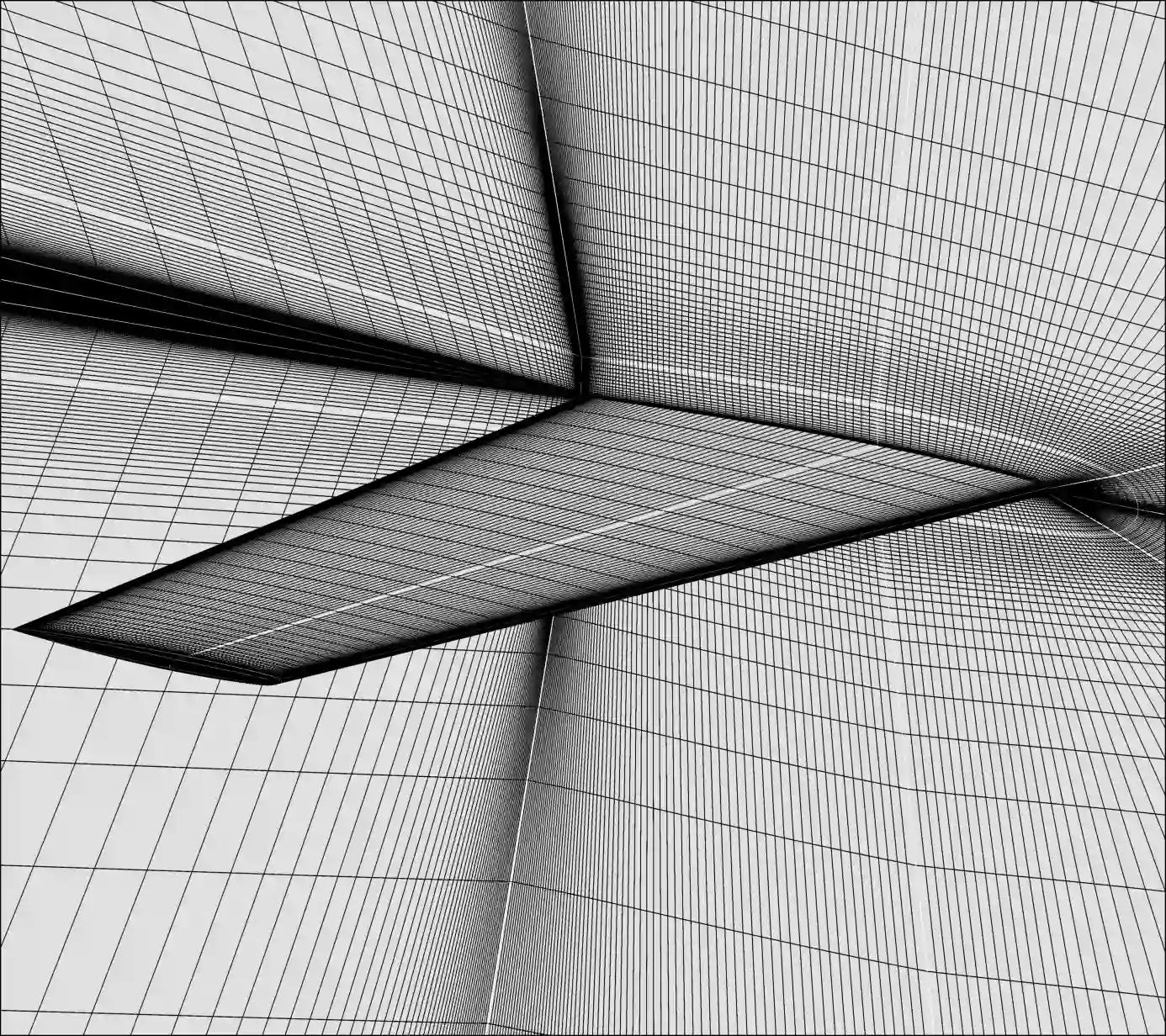
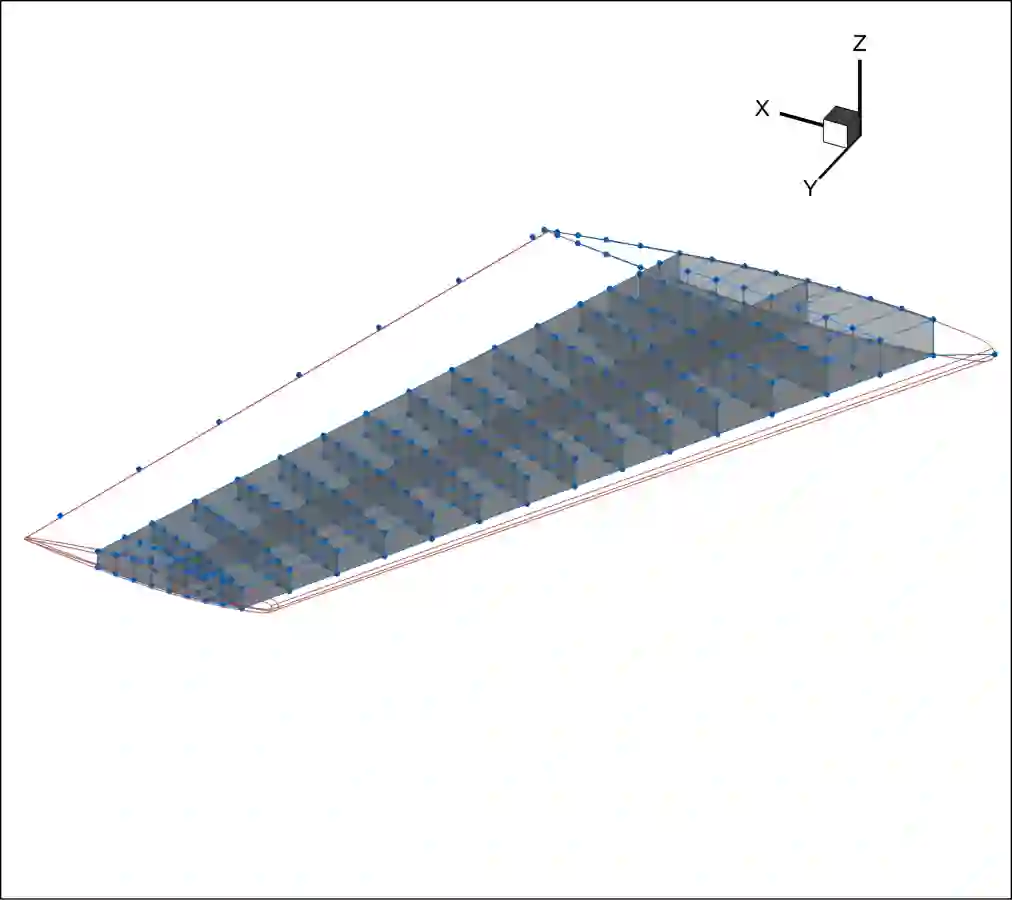
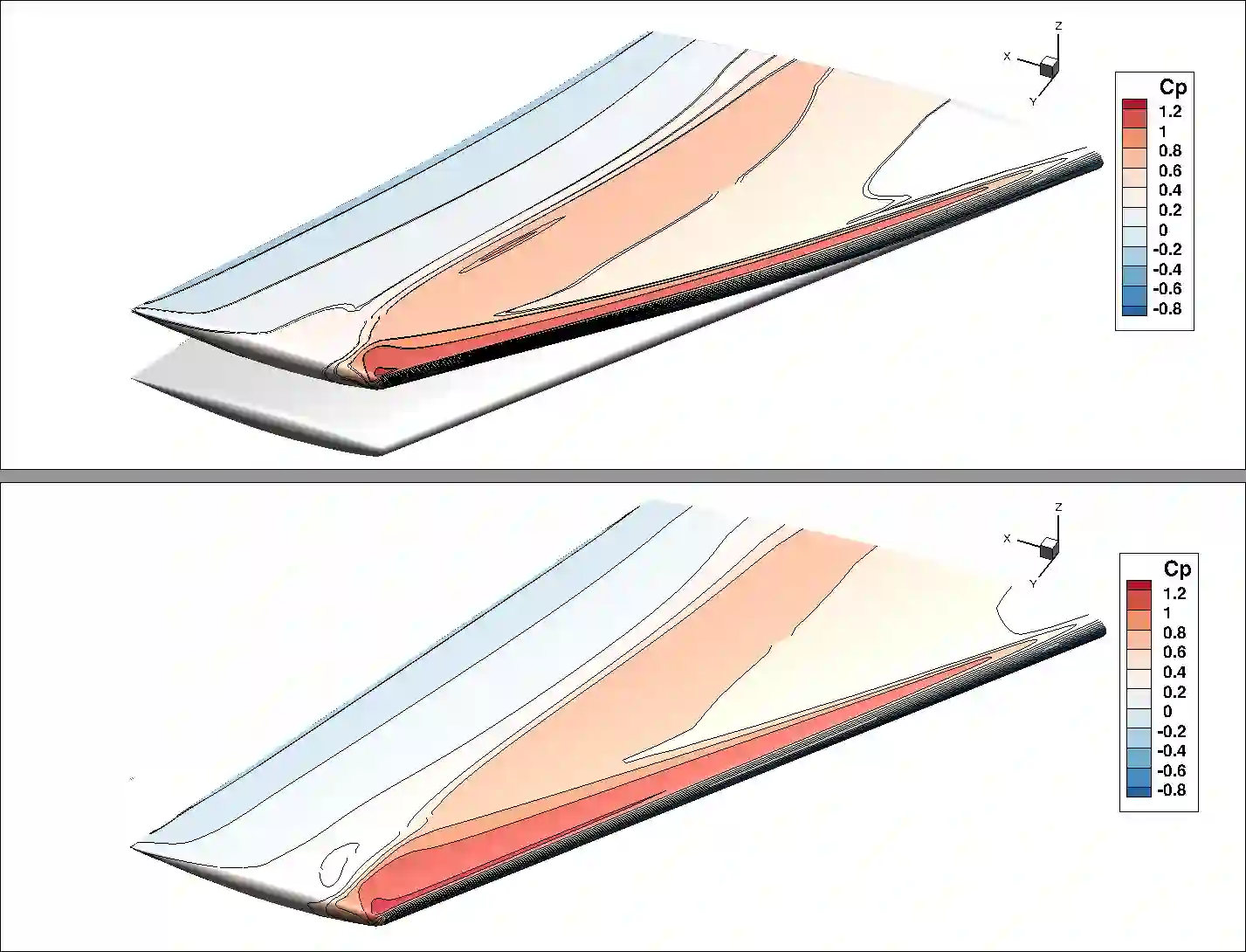
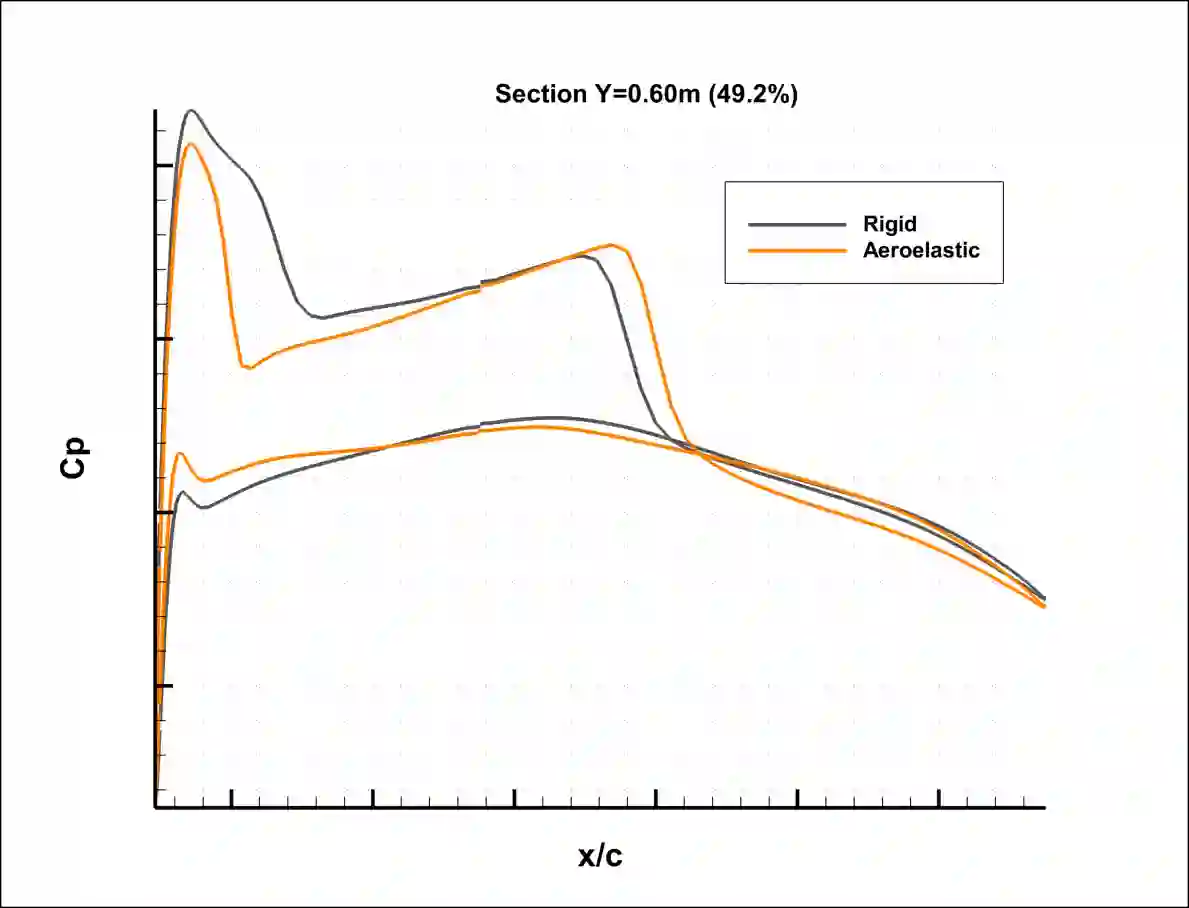
Robust and efficient solvers for coupled-adjoint linear systems are crucial to successful aerostructural optimization. Monolithic and partitioned strategies can be applied. The monolithic approach is expected to offer better robustness and efficiency for strong fluid-structure interactions. However, it requires a high implementation cost and convergence may depend on appropriate scaling and initialization strategies. On the other hand, the modularity of the partitioned method enables a straightforward implementation while its convergence may require relaxation. In addition, a partitioned solver leads to a higher number of iterations to get the same level of convergence as the monolithic one. The objective of this paper is to accelerate the fluid-structure coupled-adjoint partitioned solver by considering techniques borrowed from approximate invariant subspace recycling strategies adapted to sequences of linear systems with varying right-hand sides. Indeed, in a partitioned framework, the structural source term attached to the fluid block of equations affects the right-hand side with the nice property of quickly converging to a constant value. We also consider deflation of approximate eigenvectors in conjunction with advanced inner-outer Krylov solvers for the fluid block equations. We demonstrate the benefit of these techniques by computing the coupled derivatives of an aeroelastic configuration of the ONERA-M6 fixed wing in transonic flow. For this exercise the fluid grid was coupled to a structural model specifically designed to exhibit a high flexibility. All computations are performed using RANS flow modeling and a fully linearized one-equation Spalart-Allmaras turbulence model. Numerical simulations show up to 39% reduction in matrix-vector products for GCRO-DR and up to 19% for the nested FGCRO-DR solver.
翻译:对于耦合伴随线性系统的鲁棒高效求解器是成功进行气动结构优化的关键。可采用整体法和分区法两种策略。整体法在强流固耦合情况下预计能提供更好的鲁棒性和效率,但其实现成本较高,且收敛性可能依赖于适当的缩放和初始化策略。另一方面,分区法的模块化特性使其易于实现,但其收敛性可能需要松弛处理。此外,为达到与整体法相同的收敛水平,分区求解器所需的迭代次数更多。本文旨在通过采用适用于右端项变化线性系统序列的近似不变子空间回收技术,加速流固耦合伴随分区求解器。实际上,在分区框架中,附着于流体方程块的结构源项会影响右端项,并具有快速收敛至常数的优良特性。我们还考虑了将近似特征向量消去法与流体方程块的高级内外Krylov求解器相结合。通过计算跨声速流动中ONERA-M6固定翼气动弹性构型的耦合导数,我们展示了这些技术的优势。在此算例中,流体网格与一个为展示高柔性而专门设计的结构模型耦合。所有计算均采用RANS流动模型和完全线性化的单方程Spalart-Allmaras湍流模型进行。数值模拟结果表明,GCRO-DR求解器的矩阵-向量乘积减少了高达39%,嵌套的FGCRO-DR求解器则减少了高达19%。




相关内容



 微信扫码咨询专知VIP会员