

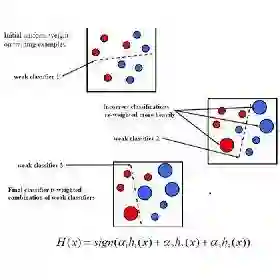
The recognition performance of biometric systems strongly depends on the quality of the compared biometric samples. Motivated by the goal of establishing a common understanding of face image quality and enabling system interoperability, the committee draft of ISO/IEC 29794-5 introduces expression neutrality as one of many component quality elements affecting recognition performance. In this study, we train classifiers to assess facial expression neutrality using seven datasets. We conduct extensive performance benchmarking to evaluate their classification and face recognition utility prediction abilities. Our experiments reveal significant differences in how each classifier distinguishes "neutral" from "non-neutral" expressions. While Random Forests and AdaBoost classifiers are most suitable for distinguishing neutral from non-neutral facial expressions with high accuracy, they underperform compared to Support Vector Machines in predicting face recognition utility.
翻译:生物特征识别系统的识别性能强烈依赖于所比较的生物特征样本的质量。旨在建立人脸图像质量的共同理解并实现系统互操作性,ISO/IEC 29794-5委员会草案将表达中性度列为影响识别性能的众多质量要素之一。在本研究中,我们利用七个数据集训练分类器以评估面部表情中性度。我们进行了广泛的性能基准测试,评估其分类能力及人脸识别效用预测能力。实验揭示了各分类器在区分"中性"与"非中性"表情时的显著差异。尽管随机森林与AdaBoost分类器在区分中性与非中性面部表情时具有高精度,但在预测人脸识别效用方面,其表现逊于支持向量机。




相关内容




 微信扫码咨询专知VIP会员