

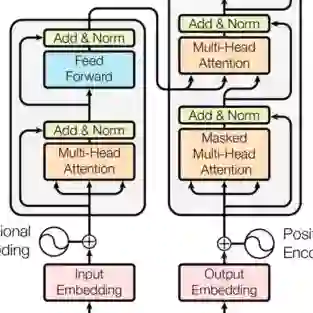
Low-altitude wireless networks (LAWN) are rapidly expanding with the growing deployment of unmanned aerial vehicles (UAVs) for logistics, surveillance, and emergency response. Reliable connectivity remains a critical yet challenging task due to three-dimensional (3D) mobility, time-varying user density, and limited power budgets. The transmit power of base stations (BSs) fluctuates dynamically according to user locations and traffic demands, leading to a highly non-stationary 3D radio environment. Radio maps (RMs) have emerged as an effective means to characterize spatial power distributions and support radio-aware network optimization. However, most existing works construct static or offline RMs, overlooking real-time power variations and spatio-temporal dependencies in multi-UAV networks. To overcome this limitation, we propose a 3D dynamic radio map (3D-DRM) framework that learns and predicts the spatio-temporal evolution of received power. Specially, a Vision Transformer (ViT) encoder extracts high-dimensional spatial representations from 3D RMs, while a Transformer-based module models sequential dependencies to predict future power distributions. Experiments unveil that 3D-DRM accurately captures fast-varying power dynamics and substantially outperforms baseline models in both RM reconstruction and short-term prediction.
翻译:随着无人机在物流、监测和应急响应领域的广泛应用,低空无线网络正迅速扩展。然而,由于三维移动性、时变的用户密度以及有限的功率预算,实现可靠连接仍是一项关键且具有挑战性的任务。基站的发射功率根据用户位置和流量需求动态波动,导致高度非平稳的三维无线电环境。无线电地图已成为表征空间功率分布和支持无线电感知网络优化的有效手段。然而,现有研究大多构建静态或离线无线电地图,忽略了多无人机网络中实时的功率变化与时空依赖性。为克服这一局限,本文提出一种三维动态无线电地图框架,用于学习并预测接收功率的时空演化。具体而言,该框架采用视觉Transformer编码器从三维无线电地图中提取高维空间表征,并利用基于Transformer的模块建模序列依赖性以预测未来的功率分布。实验表明,三维动态无线电地图能准确捕捉快速变化的功率动态,在无线电地图重建和短期预测任务中均显著优于基线模型。




相关内容

 微信扫码咨询专知VIP会员