

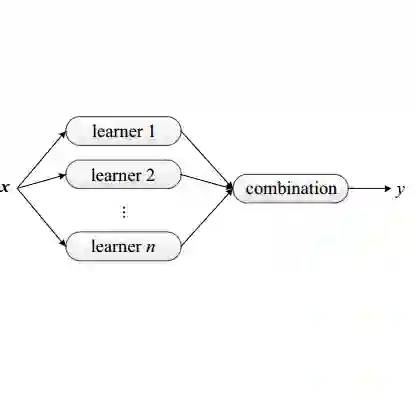
The rapid expansion of Internet of Things (IoT) devices has transformed industries and daily life by enabling widespread connectivity and data exchange. However, this increased interconnection has introduced serious security vulnerabilities, making IoT systems more exposed to sophisticated cyber attacks. This study presents a novel ensemble learning architecture designed to improve IoT attack detection. The proposed approach applies advanced machine learning techniques, specifically the Extra Trees Classifier, along with thorough preprocessing and hyperparameter optimization. It is evaluated on several benchmark datasets including CICIoT2023, IoTID20, BotNeTIoT L01, ToN IoT, N BaIoT, and BoT IoT. The results show excellent performance, achieving high recall, accuracy, and precision with very low error rates. These outcomes demonstrate the model efficiency and superiority compared to existing approaches, providing an effective and scalable method for securing IoT environments. This research establishes a solid foundation for future progress in protecting connected devices from evolving cyber threats.
翻译:物联网(IoT)设备的快速扩张通过实现广泛的连接性和数据交换,改变了行业和日常生活。然而,这种日益增强的互联性也引入了严重的安全漏洞,使得物联网系统更容易遭受复杂的网络攻击。本研究提出了一种新颖的集成学习架构,旨在改进物联网攻击检测。所提出的方法应用了先进的机器学习技术,特别是Extra Trees分类器,并结合了彻底的预处理和超参数优化。该方法在多个基准数据集上进行了评估,包括CICIoT2023、IoTID20、BotNeTIoT L01、ToN IoT、N BaIoT和BoT IoT。结果表明,该方法性能优异,实现了高召回率、准确率和精确率,且错误率极低。这些结果证明了该模型相较于现有方法的效率和优越性,为保护物联网环境提供了一种有效且可扩展的方法。本研究为未来保护互联设备免受不断演变的网络威胁奠定了坚实的基础。




相关内容




 微信扫码咨询专知VIP会员