

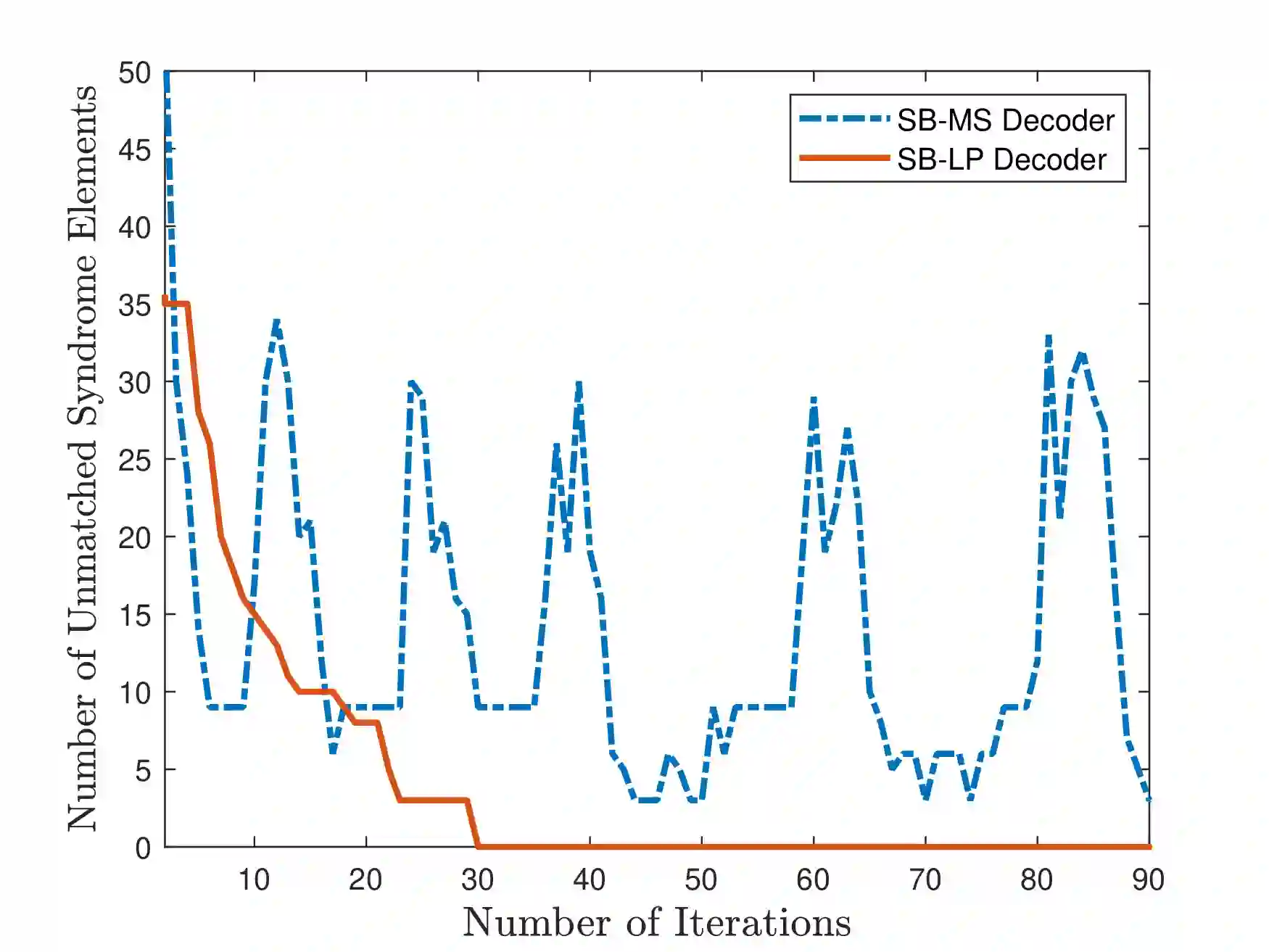
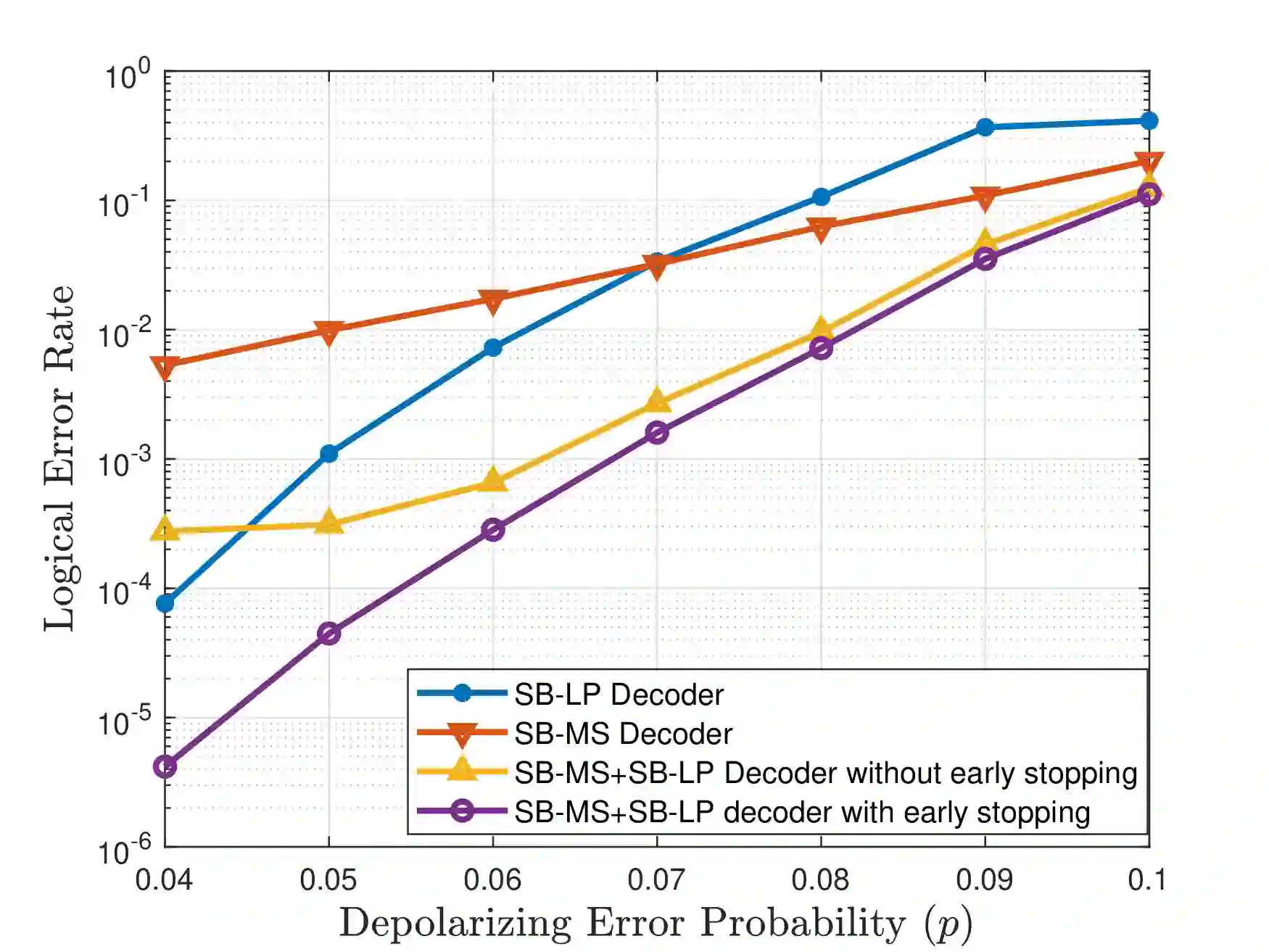
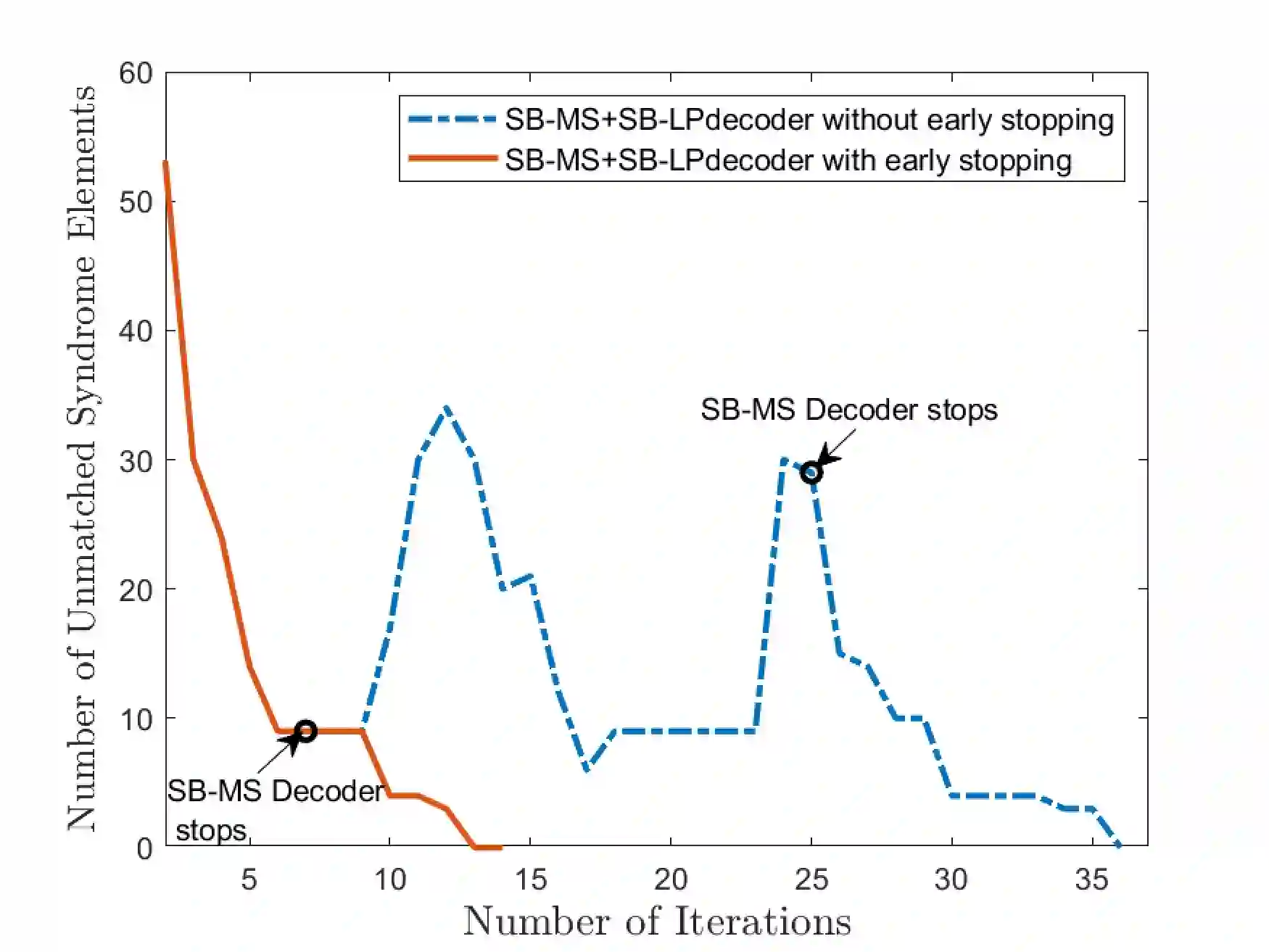
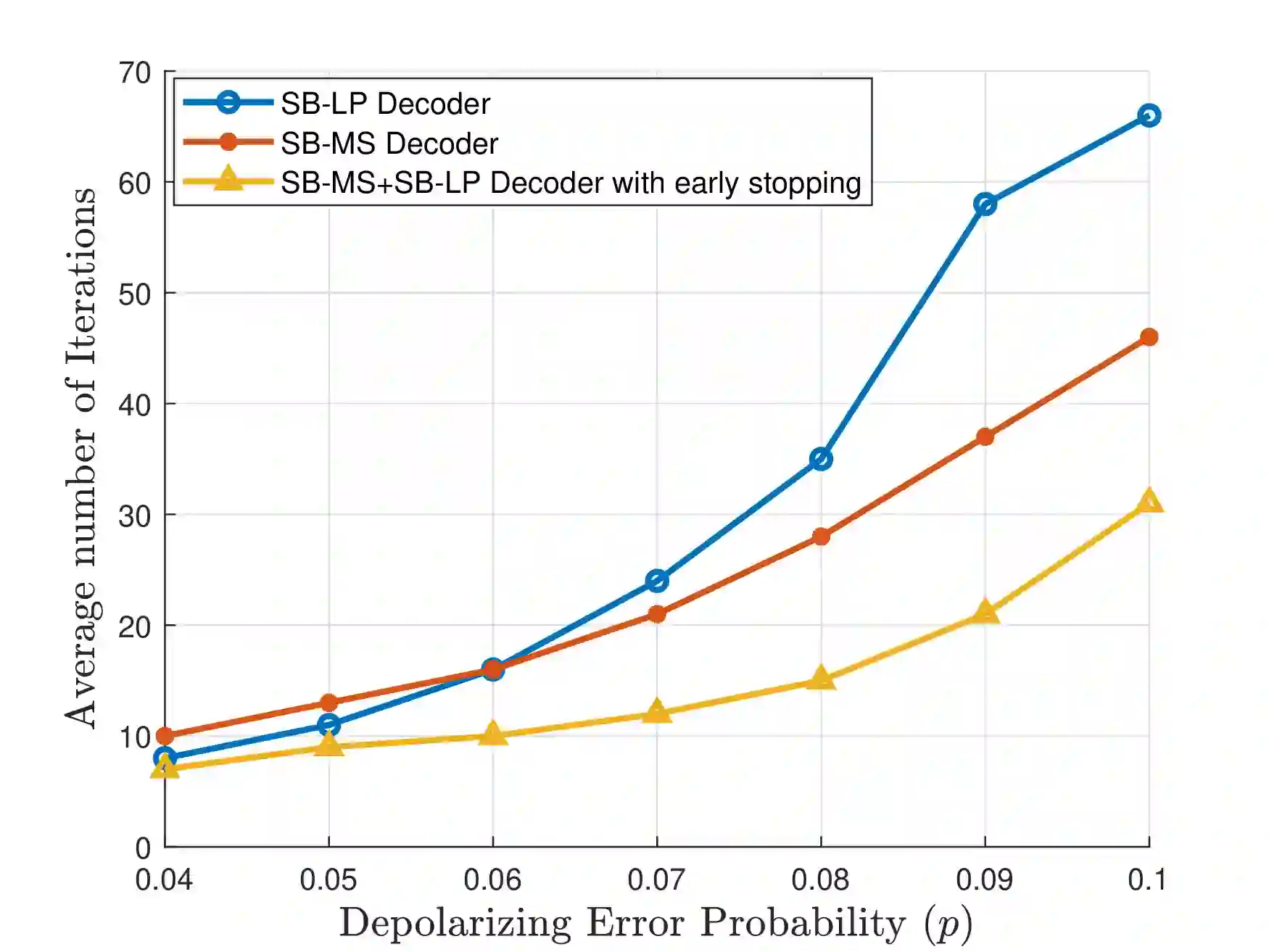
This paper proposes two approaches for reducing the impact of the error floor phenomenon when decoding quantum low-density parity-check codes with belief propagation based algorithms. First, a low-complexity syndrome-based linear programming (SB-LP) decoding algorithm is proposed, and second, the proposed SB-LP is applied as a post-processing step after syndrome-based min-sum (SB-MS) decoding. For the latter case, a new early stopping criterion is introduced to decide when to activate the SB-LP algorithm, avoiding executing a predefined maximum number of iterations for the SB-MS decoder. Simulation results show, for a sample hypergraph code, that the proposed decoder can lower the error floor by two to three orders of magnitude compared to SB-MS for the same total number of decoding iterations.
翻译:本文提出两种方法来降低基于置信传播算法的量子低密度奇偶校验码译码中误差平层现象的影响。首先,提出一种低复杂度的基于综合征的线性规划(SB-LP)译码算法;其次,将所提出的SB-LP算法作为基于综合征的最小和(SB-MS)译码的后处理步骤。针对后一种方案,引入一种新的早停准则来决定何时激活SB-LP算法,从而避免为SB-MS译码器执行预定义的最大迭代次数。仿真结果表明,对于示例超图码,在相同总译码迭代次数下,所提译码器相比于SB-MS可将误差平层降低两到三个数量级。




相关内容



 微信扫码咨询专知VIP会员