

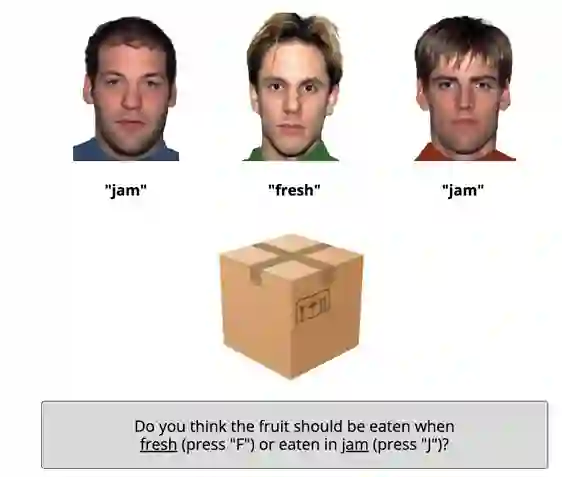
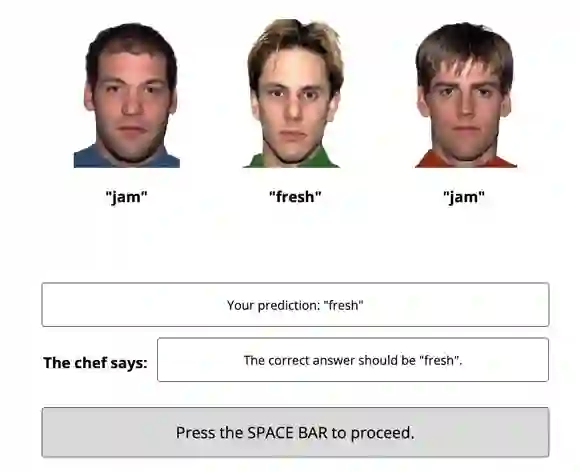
Whereas cognitive models of learning often assume direct experience with both the features of an event and with a true label or outcome, much of everyday learning arises from hearing the opinions of others, without direct access to either the experience or the ground truth outcome. We consider how people can learn which opinions to trust in such scenarios by extending the hedge algorithm: a classic solution for learning from diverse information sources. We first introduce a semi-supervised variant we call the delusional hedge capable of learning from both supervised and unsupervised experiences. In two experiments, we examine the alignment between human judgments and predictions from the standard hedge, the delusional hedge, and a heuristic baseline model. Results indicate that humans effectively incorporate both labeled and unlabeled information in a manner consistent with the delusional hedge algorithm -- suggesting that human learners not only gauge the accuracy of information sources but also their consistency with other reliable sources. The findings advance our understanding of human learning from diverse opinions, with implications for the development of algorithms that better capture how people learn to weigh conflicting information sources.
翻译:尽管认知学习模型通常假设个体能够直接体验事件特征并获取真实标签或结果,日常学习却多源于听取他人意见,既无法亲身经历事件,也无法获得客观真相。本研究探讨了人类在此类情境中如何学习信任何种意见,为此扩展了经典的多源信息学习方案——Hedge 算法。首先,我们提出一种半监督变体,称为"幻觉 Hedge"算法,该算法能够从有监督和无监督经验中共同学习。通过两项实验,我们检验了人类判断与标准 Hedge 算法、幻觉 Hedge 算法及启发式基线模型预测之间的一致性。结果表明,人类在整合标记与未标记信息时,其行为模式与幻觉 Hedge 算法高度吻合——这意味着人类学习者不仅会评估信息源的准确性,还会权衡其与其他可靠信息源的一致性。这一发现深化了我们对人类从多元意见中学习的理解,并为开发能更精准捕捉人类如何权衡冲突信息源的算法提供了启示。







相关内容




 微信扫码咨询专知VIP会员