

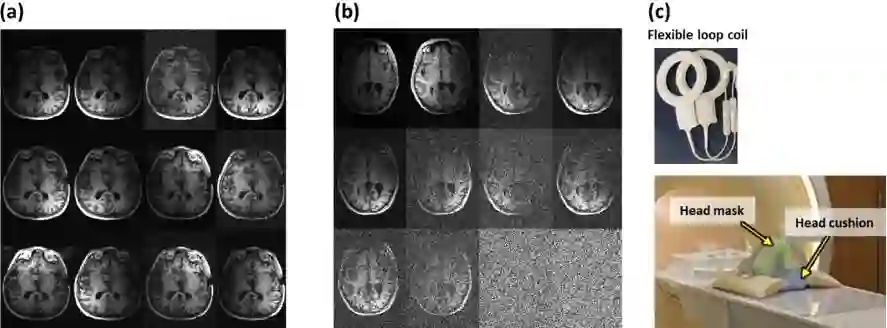
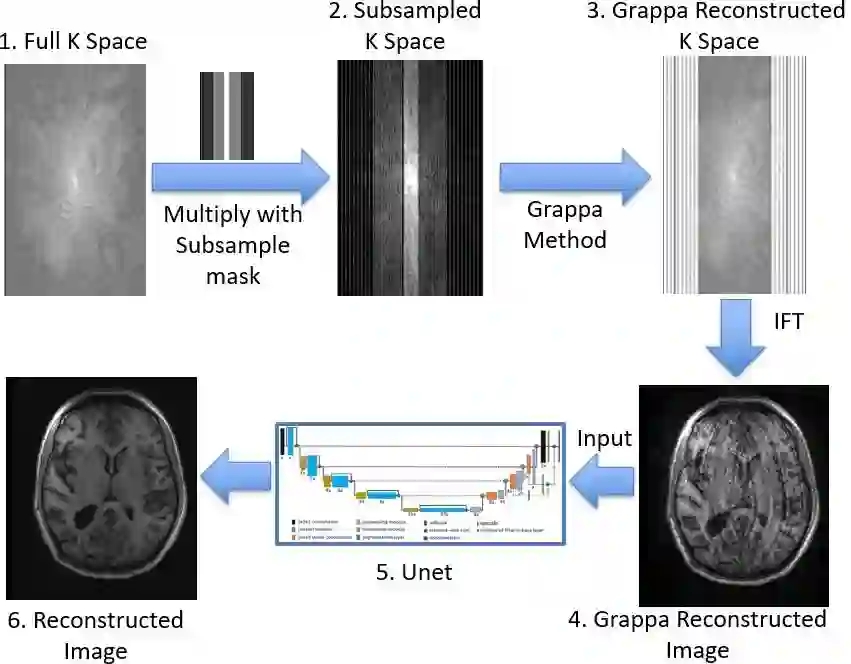
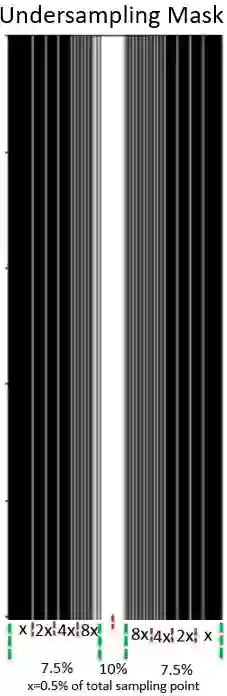
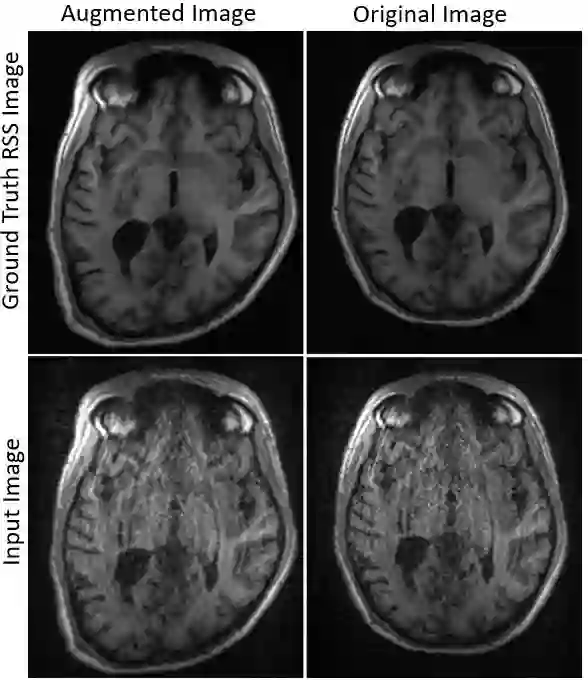
Magnetic Resonance Imaging (MRI) is a non-invasive diagnostic and radiotherapy (RT) planning tool, offering detailed insights into the anatomy of the human body. The extensive scan time is stressful for patients, who must remain motionless in a prolonged imaging procedure that prioritizes reduction of imaging artifacts. This is challenging for pediatric patients who may require measures for managing voluntary motions such as anesthesia. Several computational approaches reduce scan time (fast MRI), by recording fewer measurements and digitally recovering full information via post-acquisition reconstruction. However, most fast MRI approaches were developed for diagnostic imaging, without addressing reconstruction challenges specific to RT planning. In this work, we developed a deep learning-based method (DeepMRIRec) for MRI reconstruction from undersampled data acquired with RT-specific receiver coil arrangements. We evaluated our method against fully sampled data of T1-weighted MR images acquired from 73 children with brain tumors/surgical beds using loop and posterior coils (12 channels), with and without applying virtual compression of coil elements. DeepMRIRec reduced scanning time by a factor of four producing a structural similarity score surpassing the evaluated state-of-the-art method (0.960 vs 0.896), thereby demonstrating its potential for accelerating MRI scanning for RT planning.
翻译:磁共振成像是一种无创的诊断和放射治疗计划工具,能提供人体解剖结构的详细视图。较长的扫描时间会给患者带来压力,他们必须在优先减少成像伪影的长时间成像过程中保持静止。这对可能需要采取管理自主运动(如麻醉)措施的儿童患者来说尤其困难。几种计算方法通过记录较少的测量值并在采集后重建中数字恢复完整信息来减少扫描时间(快速MRI)。然而,大多数快速MRI方法是为诊断成像开发的,未解决放射治疗计划特有的重建挑战。在这项工作中,我们开发了一种基于深度学习的方法(DeepMRIRec),用于从使用放射治疗特定接收线圈布置采集的欠采样数据中进行MRI重建。我们使用环形线圈和后部线圈(12通道),在有无应用虚拟线圈压缩的情况下,对从73名脑肿瘤/手术床儿童患者采集的全采样T1加权MR图像评估了该方法。DeepMRIRec将扫描时间缩短了四倍,产生的结构相似度得分超过了评估的最先进方法(0.960对比0.896),从而展示了其加速放射治疗计划MRI扫描的潜力。





相关内容




 微信扫码咨询专知VIP会员