

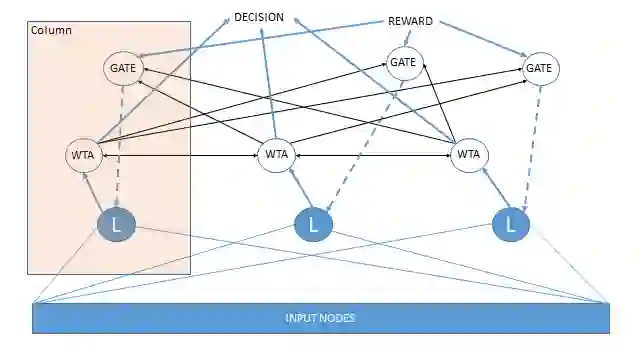
Causal relationship recognition is a fundamental operation in neural networks aimed at learning behavior, action planning, and inferring external world dynamics. This operation is particularly crucial for reinforcement learning (RL). In the context of spiking neural networks (SNNs), events are represented as spikes emitted by network neurons or input nodes. Detecting causal relationships within these events is essential for effective RL implementation. This research paper presents a novel approach to realize causal relationship recognition using a simple spiking binary neuron. The proposed method leverages specially designed synaptic plasticity rules, which are both straightforward and efficient. Notably, our approach accounts for the temporal aspects of detected causal links and accommodates the representation of spiking signals as single spikes or tight spike sequences (bursts), as observed in biological brains. Furthermore, this study places a strong emphasis on the hardware-friendliness of the proposed models, ensuring their efficient implementation on modern and future neuroprocessors. Being compared with precise machine learning techniques, such as decision tree algorithms and convolutional neural networks, our neuron demonstrates satisfactory accuracy despite its simplicity. In conclusion, we introduce a multi-neuron structure capable of operating in more complex environments with enhanced accuracy, making it a promising candidate for the advancement of RL applications in SNNs.
翻译:因果关系的识别是神经网络中的基本操作,旨在学习行为、规划行动和推断外部世界动态。这一操作对强化学习尤为关键。在脉冲神经网络中,事件表现为网络神经元或输入节点发出的脉冲。检测这些事件之间的因果关系对于有效实现强化学习至关重要。本研究提出了一种新颖方法,利用简单的脉冲二元神经元实现因果关系识别。该方法采用了专门设计的突触可塑性规则,既简洁又高效。值得注意的是,我们的方法考虑了所检测因果联系的时间特性,并能够适应生物大脑中脉冲信号以单脉冲或紧密脉冲序列(爆发)形式表达的情况。此外,本研究高度重视所提出模型的硬件友好性,确保其能在当前及未来的神经处理器上高效实现。与精确的机器学习技术(如决策树算法和卷积神经网络)相比,我们的神经元尽管结构简单,却展现出令人满意的准确度。最后,我们介绍了一种多神经元结构,能够在更复杂的环境中运行并具有更高的准确度,这使其成为推进脉冲神经网络中强化学习应用的有力候选方案。





相关内容





 微信扫码咨询专知VIP会员