

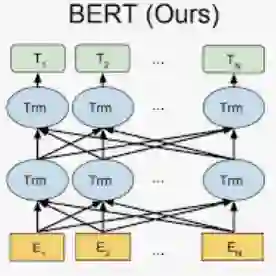
The use of transfer learning methods is largely responsible for the present breakthrough in Natural Learning Processing (NLP) tasks across multiple domains. In order to solve the problem of sentiment detection, we examined the performance of four different types of well-known state-of-the-art transformer models for text classification. Models such as Bidirectional Encoder Representations from Transformers (BERT), Robustly Optimized BERT Pre-training Approach (RoBERTa), a distilled version of BERT (DistilBERT), and a large bidirectional neural network architecture (XLNet) were proposed. The performance of the four models that were used to detect disaster in the text was compared. All the models performed well enough, indicating that transformer-based models are suitable for the detection of disaster in text. The RoBERTa transformer model performs best on the test dataset with a score of 82.6% and is highly recommended for quality predictions. Furthermore, we discovered that the learning algorithms' performance was influenced by the pre-processing techniques, the nature of words in the vocabulary, unbalanced labeling, and the model parameters.
翻译:迁移学习方法的广泛应用极大地推动了自然语言处理(NLP)任务在多个领域取得的突破性进展。为解决情感检测问题,我们研究了四种经典且先进的Transformer文本分类模型的性能。提出的模型包括:基于Transformer的双向编码器表示(BERT)、稳健优化的BERT预训练方法(RoBERTa)、BERT的蒸馏版本(DistilBERT)以及大规模双向神经网络架构(XLNet)。我们比较了这四种模型在文本中检测灾难(情感)时的表现。所有模型均展现出良好性能,表明基于Transformer的模型适用于文本中的灾难(情感)检测。其中,RoBERTa Transformer模型在测试数据集上以82.6%的得分表现最佳,高度推荐用于高质量预测。此外,我们发现学习算法的性能受预处理技术、词汇中词语的性质、标签不平衡以及模型参数的影响。




相关内容



 微信扫码咨询专知VIP会员