

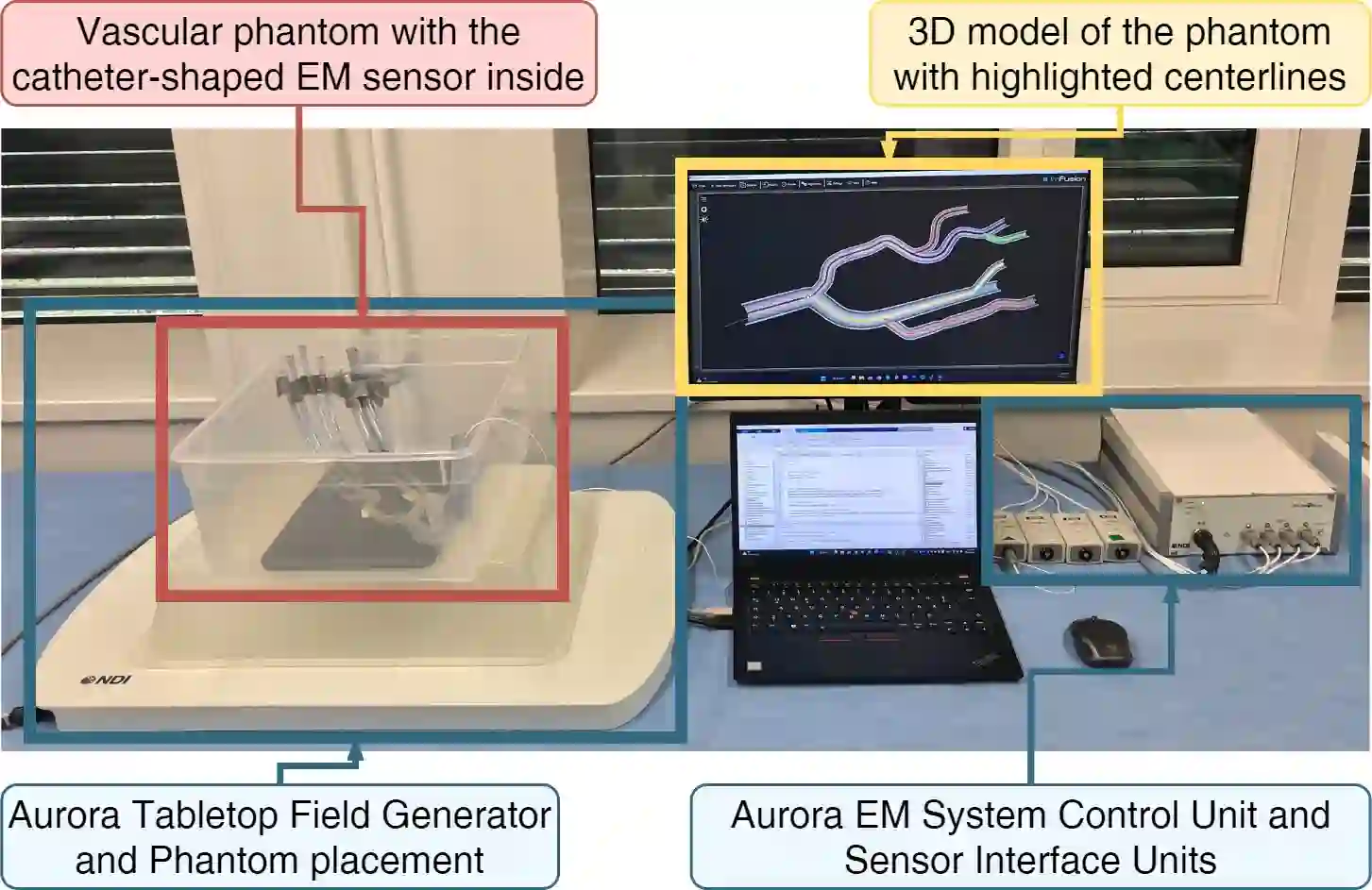
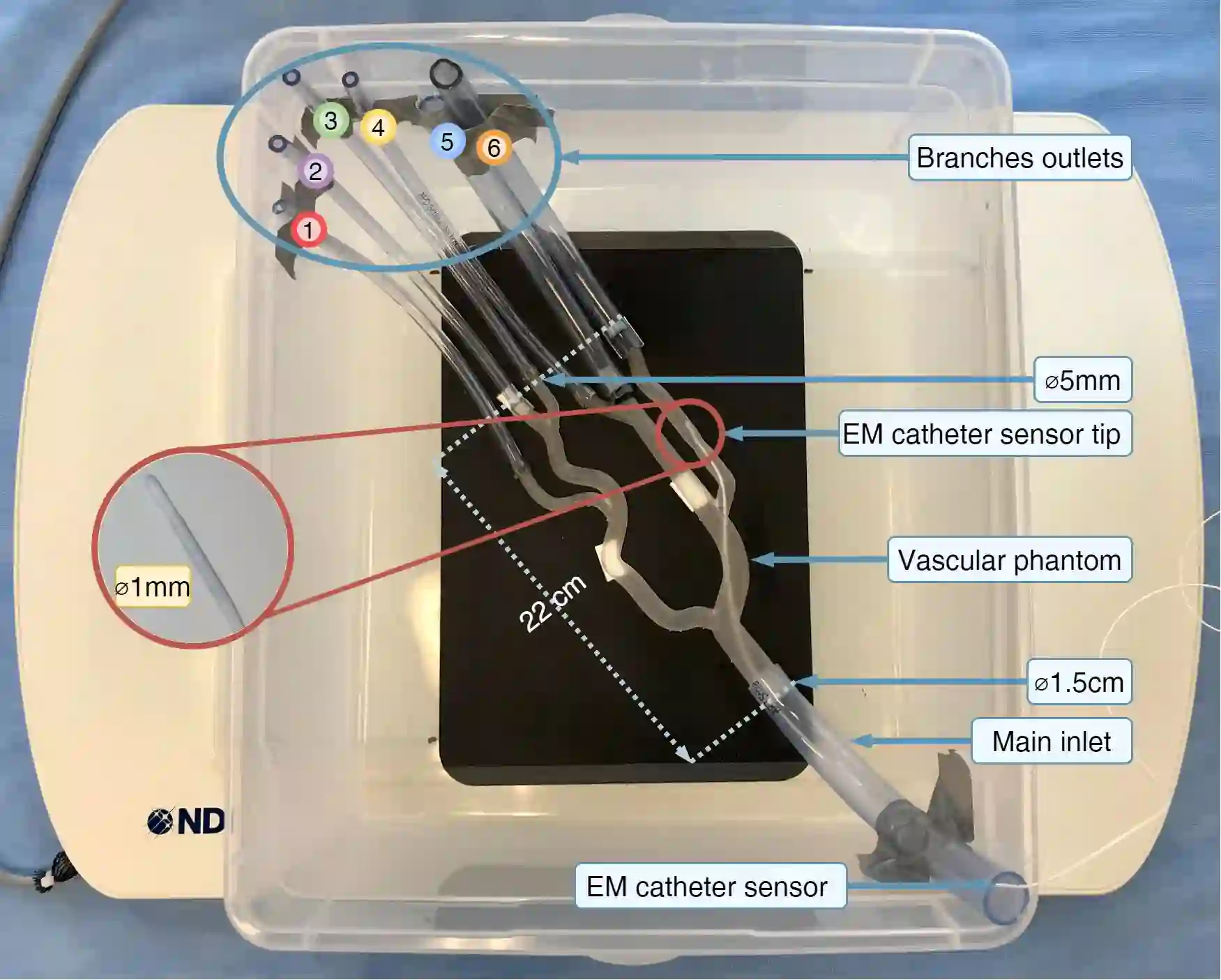
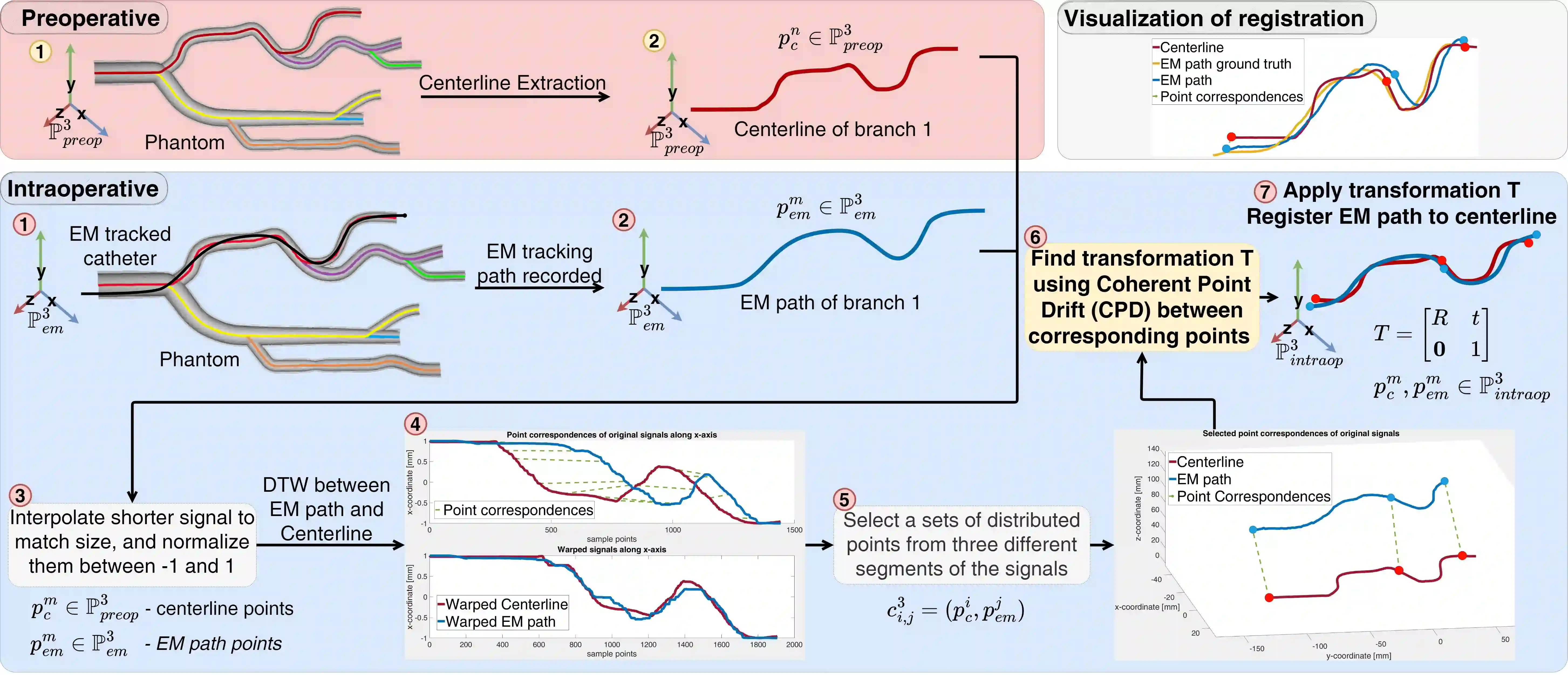
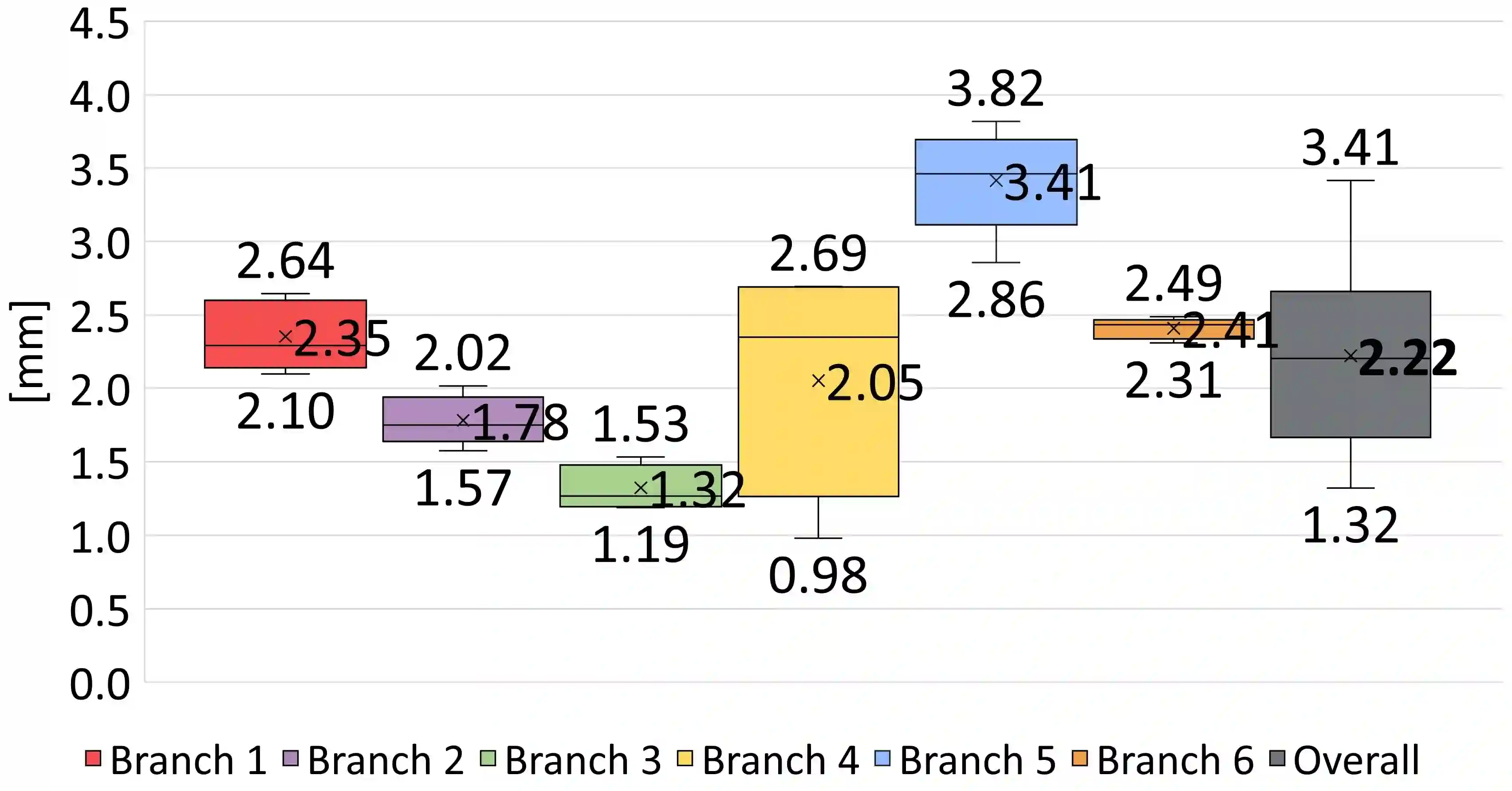
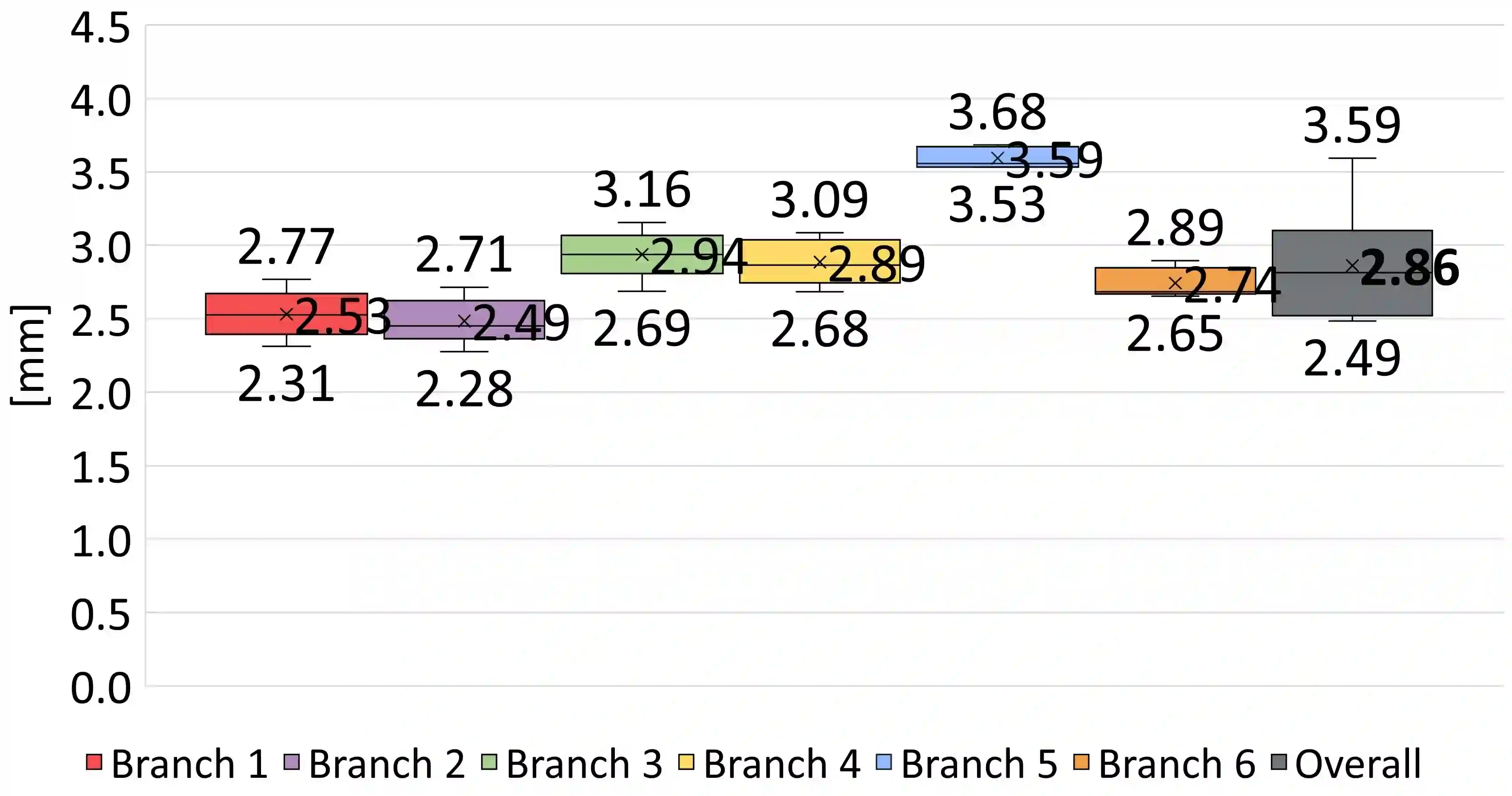
Accurate catheter tracking is crucial during minimally invasive endovascular procedures (MIEP), and electromagnetic (EM) tracking is a widely used technology that serves this purpose. However, registration between preoperative images and the EM tracking system is often challenging. Existing registration methods typically require manual interactions, which can be time-consuming, increase the risk of errors and change the procedural workflow. Although several registration methods are available for catheter tracking, such as marker-based and path-based approaches, their limitations can impact the accuracy of the resulting tracking solution, consequently, the outcome of the medical procedure. This paper introduces a novel automated catheter registration method for EM-guided MIEP. The method utilizes 3D signal temporal analysis, such as Dynamic Time Warping (DTW) algorithms, to improve registration accuracy and reliability compared to existing methods. DTW can accurately warp and match EM-tracked paths to the vessel's centerline, making it particularly suitable for registration. The introduced registration method is evaluated for accuracy in a vascular phantom using a marker-based registration as the ground truth. The results indicate that the DTW method yields accurate and reliable registration outcomes, with a mean error of $2.22$mm. The introduced registration method presents several advantages over state-of-the-art methods, such as high registration accuracy, no initialization required, and increased automation.
翻译:在微创血管内手术中,精确的导管追踪至关重要,电磁追踪技术被广泛用于实现这一目的。然而,术前影像与电磁追踪系统之间的配准往往面临挑战。现有配准方法通常需要人工交互,不仅耗时、增加失误风险,还会改变手术流程。尽管已有多种导管追踪配准方法(如基于标记点和基于路径的方法),但其局限性会影响追踪解算的精度,进而影响医疗手术效果。本文提出一种面向电磁引导微创血管内手术的新型自动化导管配准方法。该方法利用三维信号时域分析技术(如动态时间规整算法),相比现有方法提升了配准精度与可靠性。动态时间规整能精确地扭曲并匹配电磁追踪路径与血管中心线,尤其适合配准任务。以标记点配准为金标准,在血管模体上对所提配准方法进行了精度评估。结果表明,动态时间规整方法可产生精确可靠的配准结果,平均误差为2.22毫米。与现有先进方法相比,该配准方法具有配准精度高、无需初始化、自动化程度高等优势。




相关内容




 微信扫码咨询专知VIP会员