

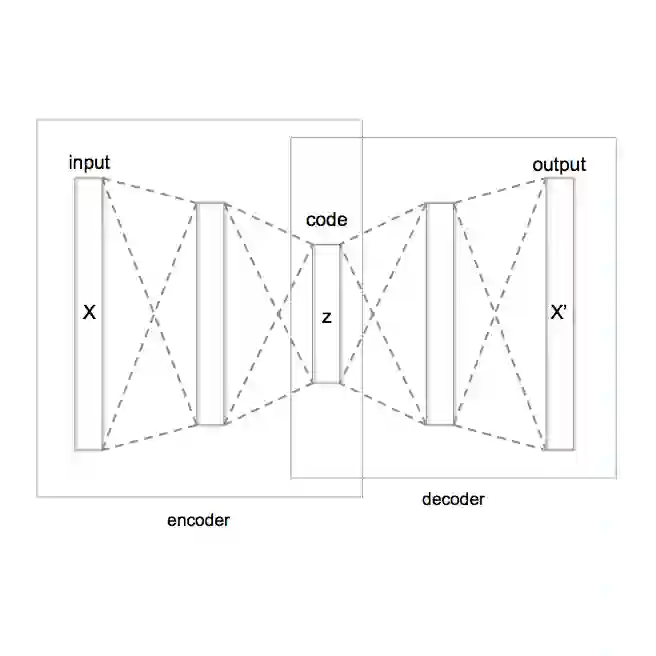
Quantifying the uncertainty of quantities of interest (QoIs) from physical systems is a primary objective in model validation. However, achieving this goal entails balancing the need for computational efficiency with the requirement for numerical accuracy. To address this trade-off, we propose a novel bi-fidelity formulation of variational auto-encoders (BF-VAE) designed to estimate the uncertainty associated with a QoI from low-fidelity (LF) and high-fidelity (HF) samples of the QoI. This model allows for the approximation of the statistics of the HF QoI by leveraging information derived from its LF counterpart. Specifically, we design a bi-fidelity auto-regressive model in the latent space that is integrated within the VAE's probabilistic encoder-decoder structure. An effective algorithm is proposed to maximize the variational lower bound of the HF log-likelihood in the presence of limited HF data, resulting in the synthesis of HF realizations with a reduced computational cost. Additionally, we introduce the concept of the bi-fidelity information bottleneck (BF-IB) to provide an information-theoretic interpretation of the proposed BF-VAE model. Our numerical results demonstrate that BF-VAE leads to considerably improved accuracy, as compared to a VAE trained using only HF data when limited HF data is available.
翻译:物理系统中感兴趣量(QoIs)的不确定性量化是模型验证的主要目标。然而,实现这一目标需要在计算效率与数值精度之间寻求平衡。为解决这一权衡问题,我们提出了一种新颖的双保真变分自编码器(BF-VAE)公式,旨在通过QoI的低保真(LF)与低保真(HF)样本估计其相关不确定性。该模型通过利用低保真对应信息近似低保真QoI的统计特性。具体而言,我们在潜在空间中设计了一种集成于VAE概率编码器-解码器结构内的双保真自回归模型。针对低保真数据有限的情况,提出了一种最大化低保真对数似然变分下界的有效算法,从而以较低计算成本合成低保真实例。此外,我们引入双保真信息瓶颈(BF-IB)概念,为所提BF-VAE模型提供信息论解释。数值结果表明,在低保真数据有限的情况下,与仅使用低保真数据训练的VAE相比,BF-VAE显著提升了精度。




相关内容




 微信扫码咨询专知VIP会员