

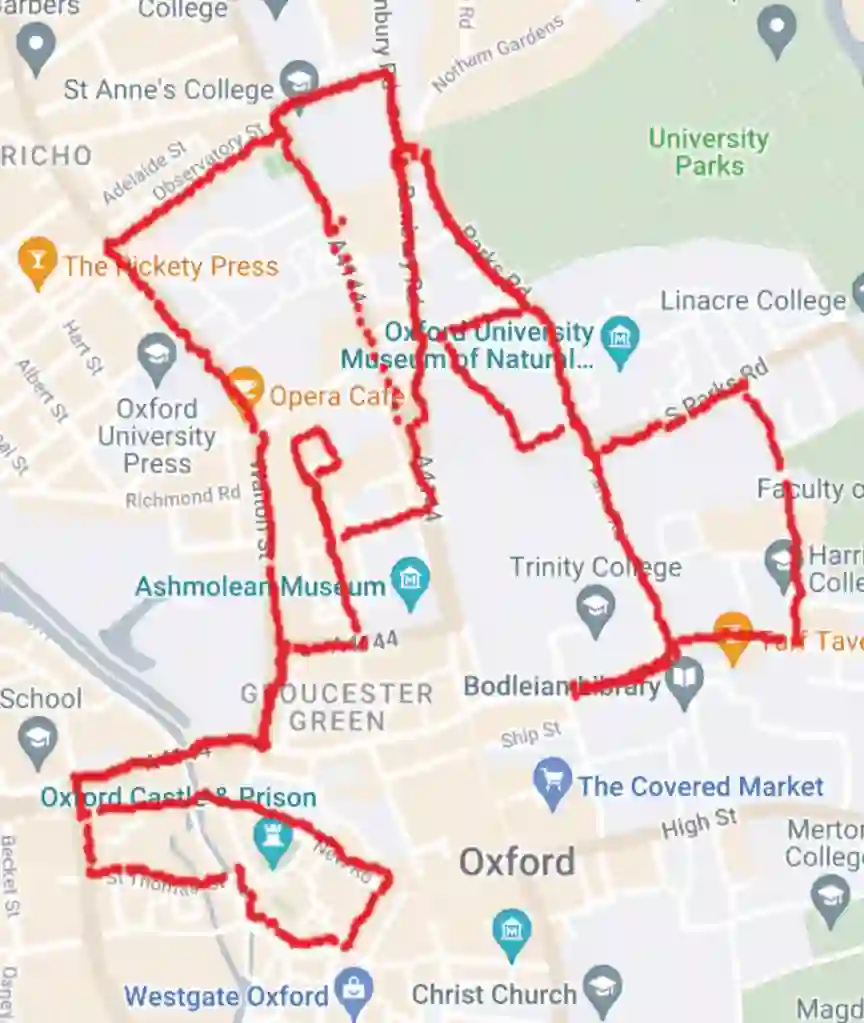
Point cloud-based place recognition is crucial for mobile robots and autonomous vehicles, especially when the global positioning sensor is not accessible. LiDAR points are scattered on the surface of objects and buildings, which have strong shape priors along different axes. To enhance message passing along particular axes, Stacked Asymmetric Convolution Block (SACB) is designed, which is one of the main contributions in this paper. Comprehensive experiments demonstrate that asymmetric convolution and its corresponding strategies employed by SACB can contribute to the more effective representation of point cloud feature. On this basis, Selective Feature Fusion Block (SFFB), which is formed by stacking point- and channel-wise gating layers in a predefined sequence, is proposed to selectively boost salient local features in certain key regions, as well as to align the features before fusion phase. SACBs and SFFBs are combined to construct a robust and accurate architecture for point cloud-based place recognition, which is termed SelFLoc. Comparative experimental results show that SelFLoc achieves the state-of-the-art (SOTA) performance on the Oxford and other three in-house benchmarks with an improvement of 1.6 absolute percentages on mean average recall@1.
翻译:基于点云的地点识别对移动机器人和自动驾驶车辆至关重要,尤其是在无法使用全球定位传感器时。激光雷达点云散布在物体和建筑物表面,沿不同轴向具有强形状先验信息。为增强沿特定轴向的消息传递,本文设计了堆叠非对称卷积模块(SACB),这是本文的主要贡献之一。综合实验表明,SACB采用的非对称卷积及其对应策略能够有效提升点云特征的表达能力。在此基础上,本文提出了选择性特征融合模块(SFFB),该模块通过按预设顺序堆叠逐点与逐通道的门控层构建,旨在选择性增强关键区域中的显著局部特征,并在融合阶段前对齐特征。通过结合SACB与SFFB,构建了鲁棒且精确的基于点云的地点识别架构,命名为SelFLoc。对比实验结果表明,SelFLoc在牛津数据集及其他三个内部基准上实现了最先进的性能,平均召回率@1绝对值提升了1.6个百分点。





相关内容



 微信扫码咨询专知VIP会员