

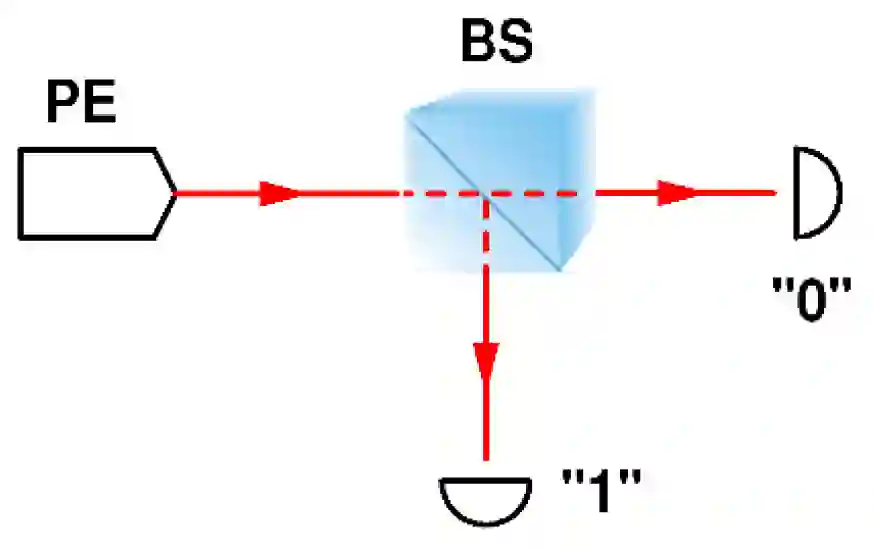
Ability to generate random numbers is an important resource for many applications ranging from scientific research to practical cryptography and quantum technologies. However, a widely accepted definition of random numbers, or randomness, has eluded researchers thus far. Without a definition, it is impossible to complete security proofs or make new industrial standards. Here, we propose an information-theory-based definition of randomness which, unlike state of the art, does not try to find desirable properties of generated numbers, but rather focus on the physical process of random number generation. We explain its intuitiveness, demonstrate its verifiability and further define randomness deviation as a measure of quality of the random number generating process or device.
翻译:生成随机数的能力是广泛应用于科学研究、实用密码学和量子技术等领域的重要资源。然而,迄今为止,一种被广泛接受的随机数或随机性定义仍未被研究者们达成共识。缺乏定义使得安全性证明无法完成,新的工业标准也难以制定。在此,我们提出一种基于信息论的随机性定义。与现有方法不同,该定义并不试图寻找生成数字的理想性质,而是聚焦于随机数生成的物理过程。我们阐释了该定义的直观性,验证了其可检验性,并进一步定义了随机性偏差作为衡量随机数生成过程或设备质量的指标。




相关内容

 微信扫码咨询专知VIP会员