

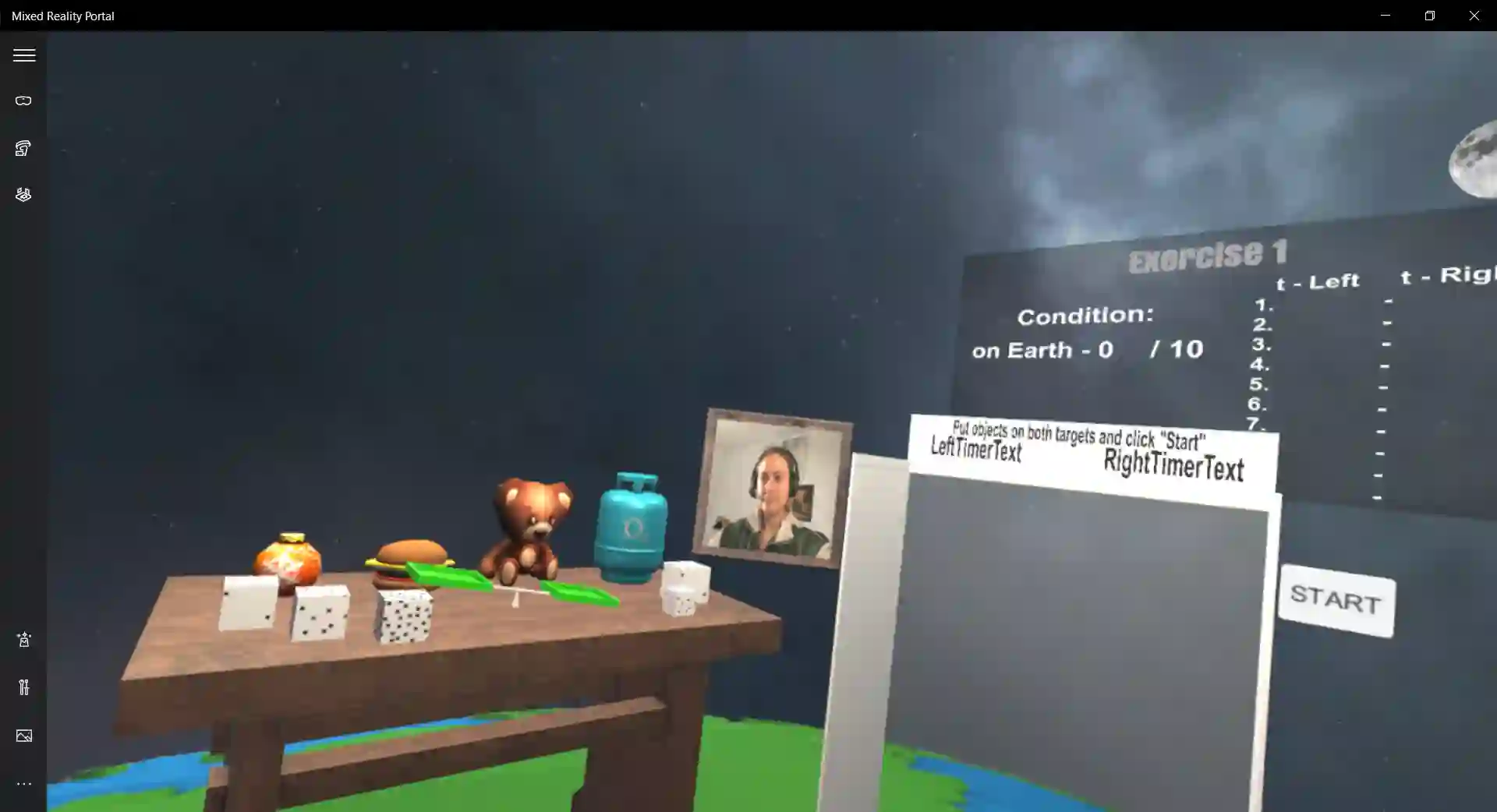
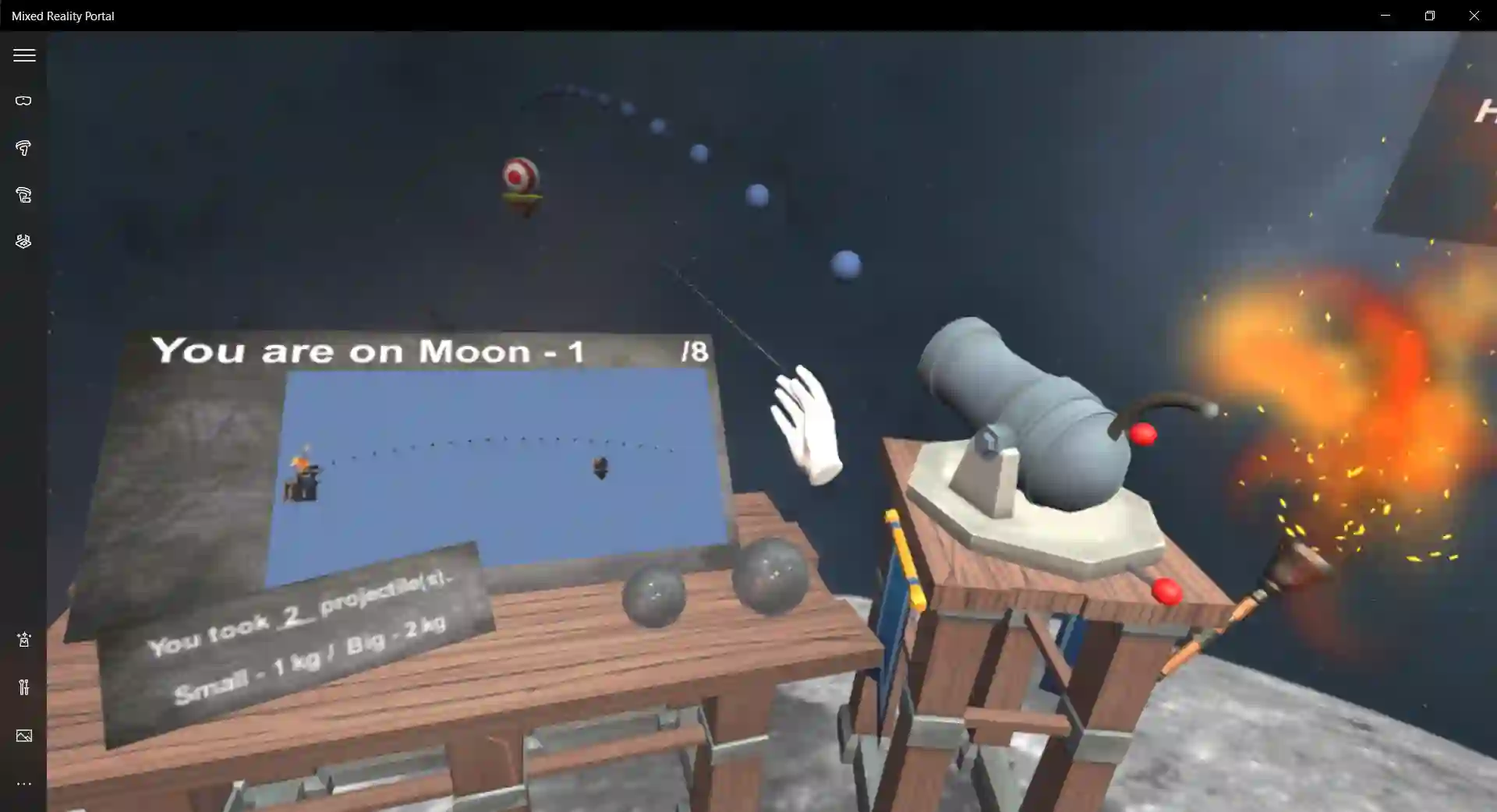
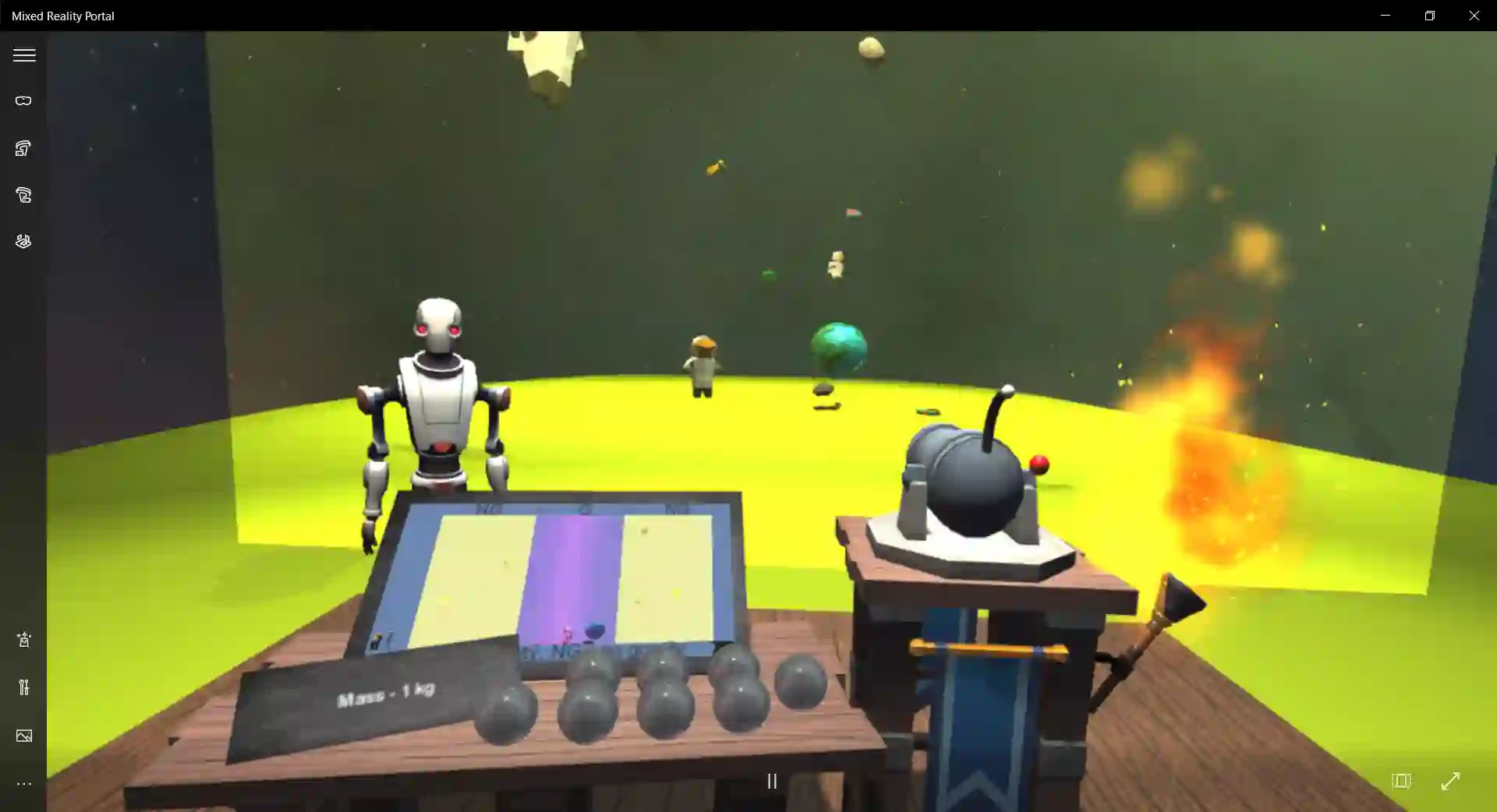
Virtual Reality (VR) has repeatedly proven its effectiveness in student learning. However, despite its benefits, the student equipped with a personal headset remains isolated from the real world while immersed in a virtual space and the classic student-teacher model of learning is difficult to transpose in such a situation. This study aims to bring the teacher back into the learning process when students use a VR headset. We describe the benefits of using a companion for educational purposes, taking as a test case the concept of gravity. We present an experimental setup designed to compare three different teaching contexts: with a physically present real teacher, using a live video of the teacher, and with a VR avatar of the teacher. We designed and evaluated three scenarios to teach the concept of gravity: an introduction to the concept of free fall, a parabolic trajectory workshop and a final exercise combining both approaches. Due to sanitary conditions, only pre-tests are reported. The results showed that the effectiveness of using the VR simulations for learning and the self-confidence level of the students increased as well. The interviews show that the students ranked the teaching modes in this order: VR companion mode, video communication and real teacher.
翻译:虚拟现实技术在学生学习中已反复证明其有效性。然而,尽管存在诸多优势,佩戴个人头显设备的学生在沉浸于虚拟空间时仍会与现实世界隔离,传统师生教学模式在此情境下难以复现。本研究旨在将教师重新引入学生使用VR头显的学习过程中。我们以引力概念为测试案例,阐述了将伴学系统用于教育目的的优势。我们设计了一套实验方案,用于比较三种不同教学情境:物理在场的真实教师、教师实时视频以及教师VR化身。针对引力概念教学,我们设计并评估了三种场景:自由落体概念入门、抛物线轨迹工作坊,以及结合两种方法的综合练习。受卫生条件限制,仅报告前测结果。研究表明,VR模拟学习效果与学生自信水平均有所提升。访谈结果显示,学生对教学模式的排序为:VR伴学模式、视频通讯、真实教师。




相关内容


 微信扫码咨询专知VIP会员