

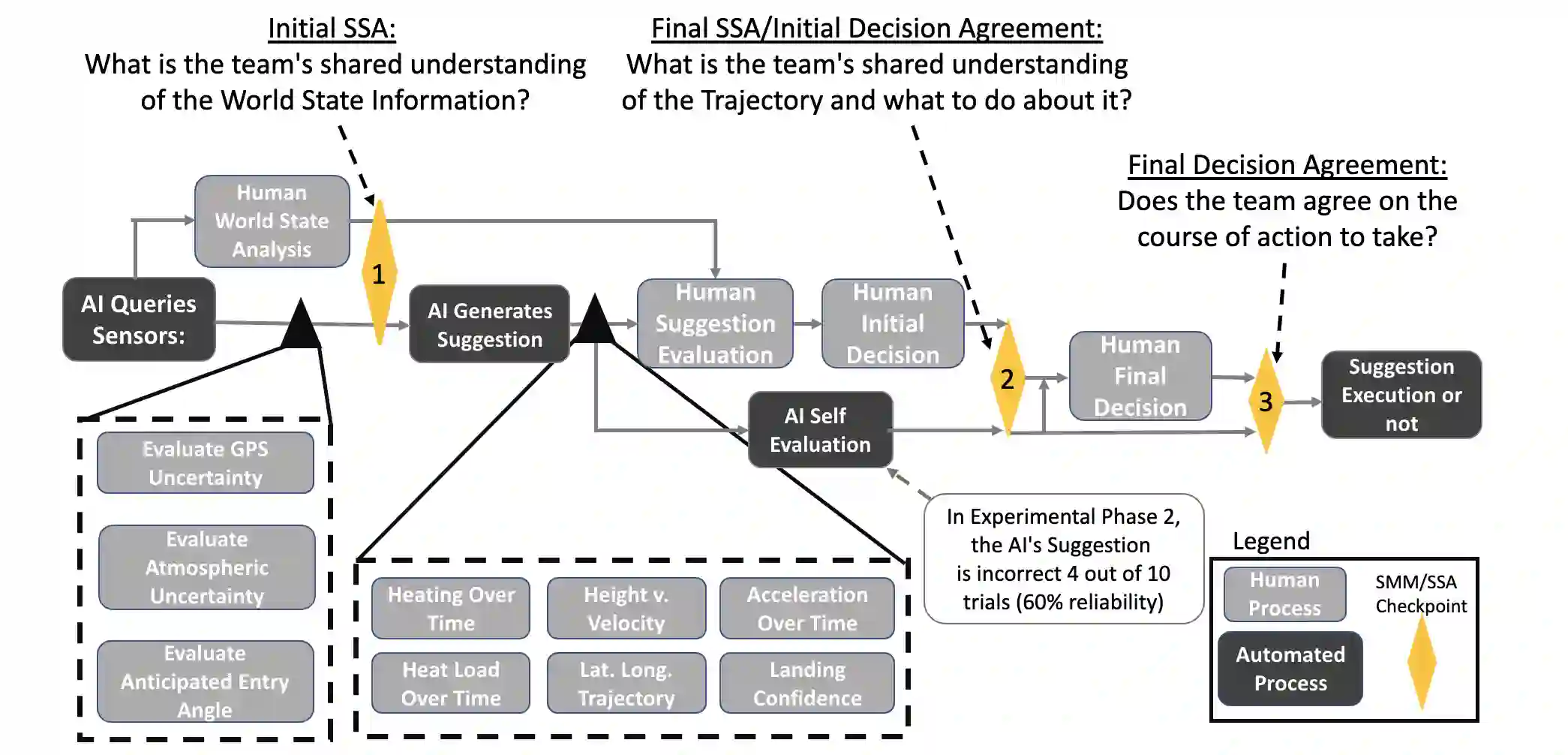
AI recommender systems are sought for decision support by providing suggestions to operators responsible for making final decisions. However, these systems are typically considered black boxes, and are often presented without any context or insight into the underlying algorithm. As a result, recommender systems can lead to miscalibrated user reliance and decreased situation awareness. Recent work has focused on improving the transparency of recommender systems in various ways such as improving the recommender's analysis and visualization of the figures of merit, providing explanations for the recommender's decision, as well as improving user training or calibrating user trust. In this paper, we introduce an alternative transparency technique of structuring the order in which contextual information and the recommender's decision are shown to the human operator. This technique is designed to improve the operator's situation awareness and therefore the shared situation awareness between the operator and the recommender system. This paper presents the results of a two-phase between-subjects study in which participants and a recommender system jointly make a high-stakes decision. We varied the amount of contextual information the participant had, the assessment technique of the figures of merit, and the reliability of the recommender system. We found that providing contextual information upfront improves the team's shared situation awareness by improving the human decision maker's initial and final judgment, as well as their ability to discern the recommender's error boundary. Additionally, this technique accurately calibrated the human operator's trust in the recommender. This work proposes and validates a way to provide model-agnostic transparency into AI systems that can support the human decision maker and lead to improved team performance.
翻译:AI推荐系统通过向负责最终决策的操作员提供建议,被广泛用于决策支持。然而,这些系统通常被视为黑箱,其呈现方式往往缺乏对底层算法的背景说明或洞察。因此,推荐系统可能导致用户依赖程度失调及情境意识下降。近期研究致力于通过多种方式提升推荐系统的透明度,包括改进推荐系统的分析性能与优值可视化、提供推荐决策的解释、优化用户培训或校准用户信任度。本文提出一种替代性透明化技术,通过结构化组织上下文信息与推荐决策的呈现顺序,旨在提升操作员的情境意识,进而增强操作员与推荐系统的共享情境意识。本文展示了一项两阶段受试者间实验结果:参与者与推荐系统共同完成高风险决策任务。我们分别操控参与者可获得上下文信息的数量、优值评估技术以及推荐系统的可靠性。研究发现:前置提供上下文信息可提升人类决策者的初始与最终判断准确性及其识别推荐系统误差边界的能力,从而改善团队的共享情境意识。此外,该技术能精确校准人类操作员对推荐系统的信任度。本研究提出并验证了一种模型无关的AI系统透明化方法,可有效支持人类决策者并提升团队绩效。




相关内容





 微信扫码咨询专知VIP会员