

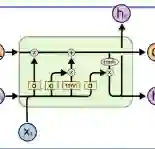
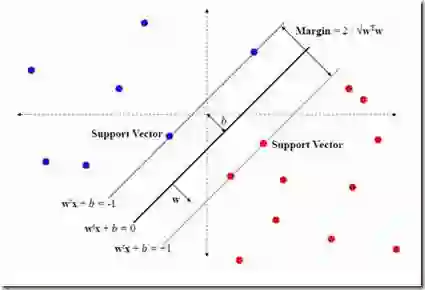
Over the last few years, social media has evolved into a medium for expressing personal views, emotions, and even business and political proposals, recommendations, and advertisements. We address the topic of identifying emotions from text data obtained from social media posts like Twitter in this research. We have deployed different traditional machine learning techniques such as Support Vector Machines (SVM), Naive Bayes, Decision Trees, and Random Forest, as well as deep neural network models such as LSTM, CNN, GRU, BiLSTM, BiGRU to classify these tweets into four emotion categories (Fear, Anger, Joy, and Sadness). Furthermore, we have constructed a BiLSTM and BiGRU ensemble model. The evaluation result shows that the deep neural network models(BiGRU, to be specific) produce the most promising results compared to traditional machine learning models, with an 87.53 % accuracy rate. The ensemble model performs even better (87.66 %), albeit the difference is not significant. This result will aid in the development of a decision-making tool that visualizes emotional fluctuations.
翻译:在过去的几年中,社交媒体已演变为表达个人观点、情感,乃至商业与政治提案、推荐及广告的媒介。本研究聚焦于从Twitter等社交媒体帖子获取的文本数据中识别情感这一主题。我们部署了多种传统机器学习方法,如支持向量机(SVM)、朴素贝叶斯、决策树和随机森林,以及深度神经网络模型,包括LSTM、CNN、GRU、BiLSTM和BiGRU,将这些推文分类为四种情感类别(恐惧、愤怒、快乐和悲伤)。此外,我们还构建了一个BiLSTM与BiGRU的集成模型。评估结果显示,深度神经网络模型(具体而言是BiGRU)相比传统机器学习模型产生了最令人满意的结果,准确率达到87.53%。集成模型表现更优(87.66%),尽管差异并不显著。这一结果将有助于开发一个能够可视化情感波动的决策支持工具。




相关内容



 微信扫码咨询专知VIP会员