

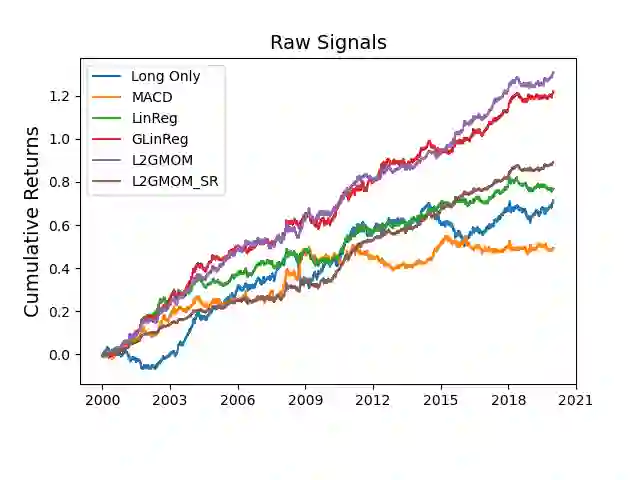
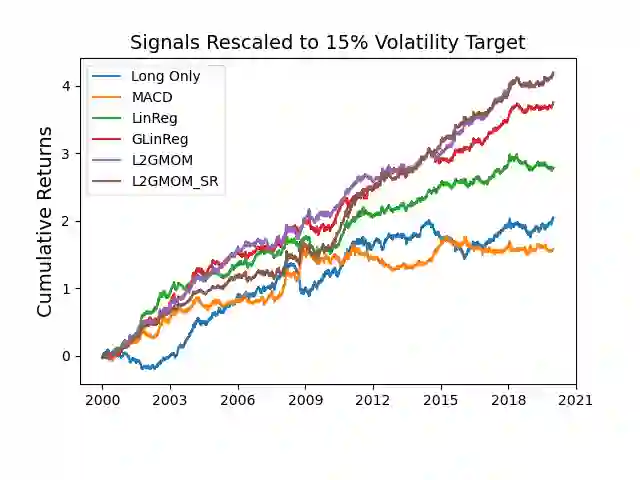
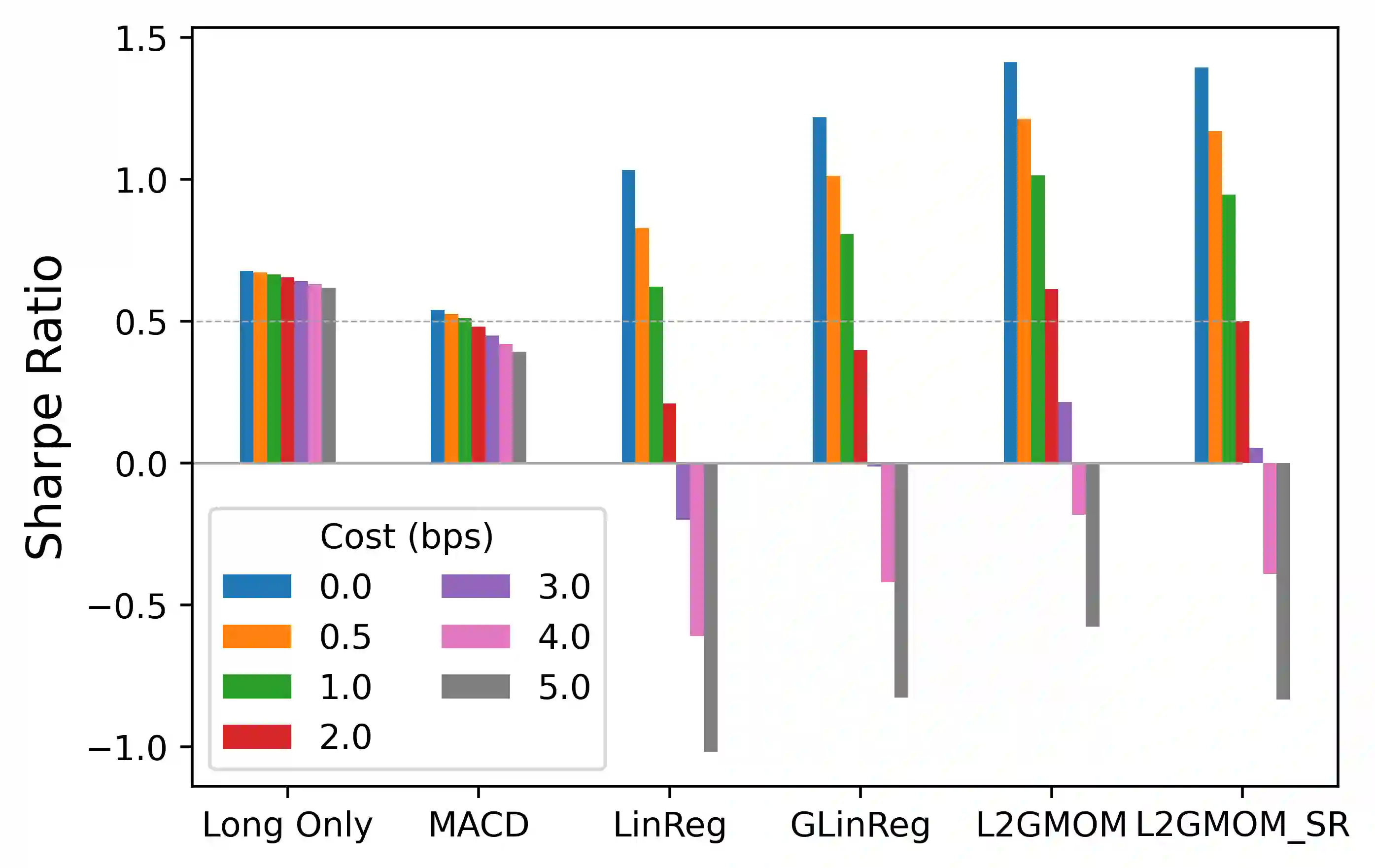
Network momentum provides a novel type of risk premium, which exploits the interconnections among assets in a financial network to predict future returns. However, the current process of constructing financial networks relies heavily on expensive databases and financial expertise, limiting accessibility for small-sized and academic institutions. Furthermore, the traditional approach treats network construction and portfolio optimisation as separate tasks, potentially hindering optimal portfolio performance. To address these challenges, we propose L2GMOM, an end-to-end machine learning framework that simultaneously learns financial networks and optimises trading signals for network momentum strategies. The model of L2GMOM is a neural network with a highly interpretable forward propagation architecture, which is derived from algorithm unrolling. The L2GMOM is flexible and can be trained with diverse loss functions for portfolio performance, e.g. the negative Sharpe ratio. Backtesting on 64 continuous future contracts demonstrates a significant improvement in portfolio profitability and risk control, with a Sharpe ratio of 1.74 across a 20-year period.
翻译:网络动量提供了一种新型的风险溢价,它利用金融网络中资产间的相互关联性来预测未来收益。然而,当前构建金融网络的过程严重依赖昂贵的数据库和金融专业知识,限制了小型机构及学术机构的可及性。此外,传统方法将网络构建和投资组合优化视为独立任务,可能阻碍投资组合达到最优表现。为应对这些挑战,我们提出L2GMOM——一种端到端的机器学习框架,能够同时学习金融网络并优化网络动量策略的交易信号。L2GMOM的模型是一种具有高度可解释性前向传播架构的神经网络,该架构源于算法展开技术。L2GMOM具有灵活性,可通过多种针对投资组合表现的损失函数(例如负夏普比率)进行训练。对64种连续期货合约的回测表明,该方法在投资组合盈利能力和风险控制方面均有显著提升,在20年周期内实现了1.74的夏普比率。




相关内容





 微信扫码咨询专知VIP会员