

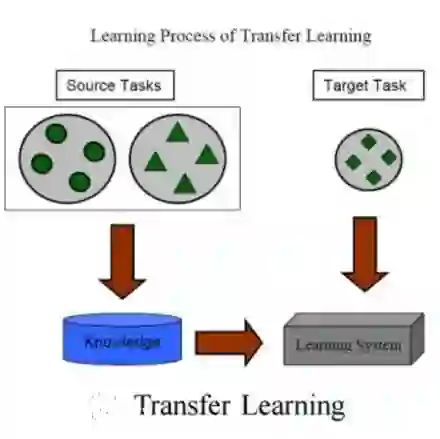
We develop here a novel transfer learning methodology called Profiled Transfer Learning (PTL). The method is based on the \textit{approximate-linear} assumption between the source and target parameters. Compared with the commonly assumed \textit{vanishing-difference} assumption and \textit{low-rank} assumption in the literature, the \textit{approximate-linear} assumption is more flexible and less stringent. Specifically, the PTL estimator is constructed by two major steps. Firstly, we regress the response on the transferred feature, leading to the profiled responses. Subsequently, we learn the regression relationship between profiled responses and the covariates on the target data. The final estimator is then assembled based on the \textit{approximate-linear} relationship. To theoretically support the PTL estimator, we derive the non-asymptotic upper bound and minimax lower bound. We find that the PTL estimator is minimax optimal under appropriate regularity conditions. Extensive simulation studies are presented to demonstrate the finite sample performance of the new method. A real data example about sentence prediction is also presented with very encouraging results.
翻译:本文提出了一种新颖的迁移学习方法,称为剖面迁移学习。该方法基于源域与目标域参数间的近似线性假设。与文献中常见的消失差异假设和低秩假设相比,近似线性假设更具灵活性且约束更弱。具体而言,PTL估计量的构建包含两个主要步骤:首先,将响应变量对迁移特征进行回归,得到剖面响应;随后,在目标数据上学习剖面响应与协变量间的回归关系。最终估计量基于近似线性关系进行整合。为从理论上支持PTL估计量,我们推导了非渐近上界与极小极大下界,发现在适当正则条件下该估计量具有极小最优性。通过大量模拟研究验证了新方法在有限样本下的性能。文中还提供了关于句子预测的实际数据案例,其结果具有显著参考价值。




相关内容



 微信扫码咨询专知VIP会员