

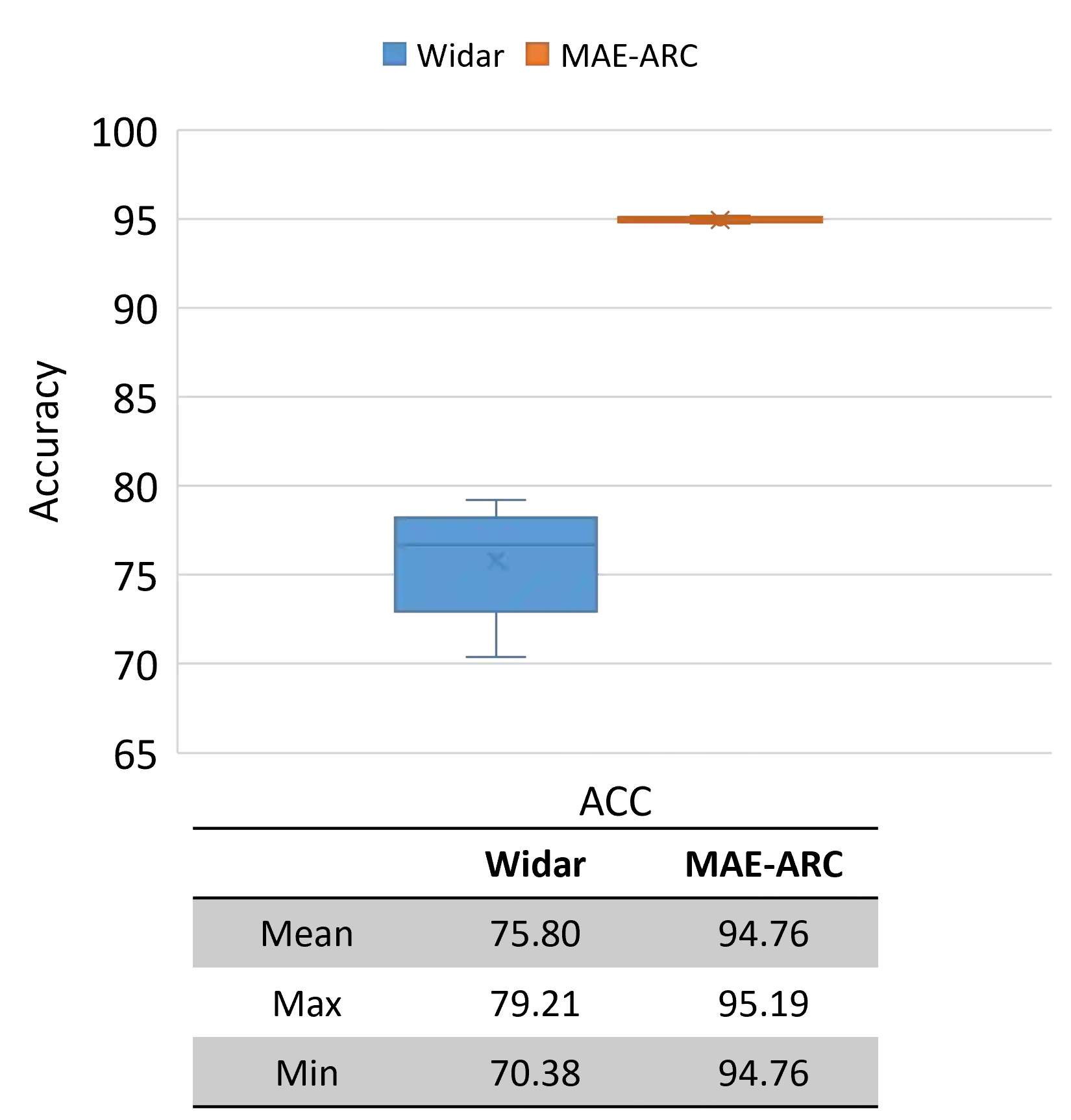
Self-supervised learning (SSL) for WiFi-based human activity recognition (HAR) holds great promise due to its ability to address the challenge of insufficient labeled data. However, directly transplanting SSL algorithms, especially contrastive learning, originally designed for other domains to CSI data, often fails to achieve the expected performance. We attribute this issue to the inappropriate alignment criteria, which disrupt the semantic distance consistency between the feature space and the input space. To address this challenge, we introduce \textbf{A}ntenna \textbf{R}esponse \textbf{C}onsistency (ARC) as a solution to define proper alignment criteria. ARC is designed to retain semantic information from the input space while introducing robustness to real-world noise. Moreover, we substantiate the effectiveness of ARC through a comprehensive set of experiments, demonstrating its capability to enhance the performance of self-supervised learning for WiFi-based HAR by achieving an increase of over 5\% in accuracy in most cases and achieving a best accuracy of 94.97\%.
翻译:自监督学习在基于WiFi的人体活动识别中展现出巨大潜力,因其能够解决标记数据不足的挑战。然而,直接将原本为其他领域设计的自监督学习算法(尤其是对比学习)移植到信道状态信息数据上,往往无法达到预期性能。我们将这一问题归因于不恰当的比对准则,这种准则破坏了特征空间与输入空间之间的语义距离一致性。为解决这一挑战,我们提出**天线响应一致性**作为定义合适比对准则的解决方案。ARC旨在保留输入空间的语义信息,同时增强对真实环境噪声的鲁棒性。此外,我们通过一系列综合实验验证了ARC的有效性,证明其能够在大多数情况下将基于WiFi的人体活动识别自监督学习的准确率提升超过5%,并达到94.97%的最优准确率。





相关内容




 微信扫码咨询专知VIP会员