We focus on a specific use case in anomaly detection where the distribution of normal samples is supported by a lower-dimensional manifold. Here, regularized autoencoders provide a popular approach by learning the identity mapping on the set of normal examples, while trying to prevent good reconstruction on points outside of the manifold. Typically, this goal is implemented by controlling the capacity of the model, either directly by reducing the size of the bottleneck layer or implicitly by imposing some sparsity (or contraction) constraints on parts of the corresponding network. However, neither of these techniques does explicitly penalize the reconstruction of anomalous signals often resulting in poor detection. We tackle this problem by adapting a self-supervised learning regime that exploits discriminative information during training but focuses on the submanifold of normal examples. Informally, our training objective regularizes the model to produce locally consistent reconstructions, while replacing irregularities by acting as a filter that removes anomalous patterns. To support this intuition, we perform a rigorous formal analysis of the proposed method and provide a number of interesting insights. In particular, we show that the resulting model resembles a non-linear orthogonal projection of partially corrupted images onto the submanifold of uncorrupted samples. On the other hand, we identify the orthogonal projection as an optimal solution for a number of regularized autoencoders including the contractive and denoising variants. We support our theoretical analysis by empirical evaluation of the resulting detection and localization performance of the proposed method. In particular, we achieve a new state-of-the-art result on the MVTec AD dataset -- a challenging benchmark for visual anomaly detection in the manufacturing domain.


翻译:我们聚焦于异常检测中的一个特定应用场景,其中正常样本的分布由低维流形支撑。在此框架下,正则化自编码器通过学习正常样本集合上的恒等映射,同时尝试阻止流形外点上的良好重构,成为一种流行方法。通常,这一目标通过直接减小瓶颈层尺寸或隐式地对网络相应部分施加稀疏(或收缩)约束来控制模型容量来实现。然而,这两种技术均未显式惩罚异常信号的重构,往往导致检测性能不佳。我们通过采用一种自监督学习机制来解决此问题,该机制在训练过程中利用判别信息,但聚焦于正常样本的子流形。非正式地说,我们的训练目标通过正则化模型以产生局部一致的重构,同时通过充当过滤异常模式的滤波器来替换不规则性。为支撑这一直觉,我们对所提方法进行了严谨的形式化分析,并提供了若干有趣见解。特别地,我们证明所得模型类似于将部分损坏图像非线性正交投影到未损坏样本子流形上。另一方面,我们将正交投影识别为包括收缩与去噪变体在内的多种正则化自编码器的优化解。我们通过所提方法的检测与定位性能实证评估来支持理论分析。具体而言,我们在MVTec AD数据集(制造业领域视觉异常检测的一项具有挑战性的基准)上取得了最新最优结果。


0
下载
关闭预览

相关内容

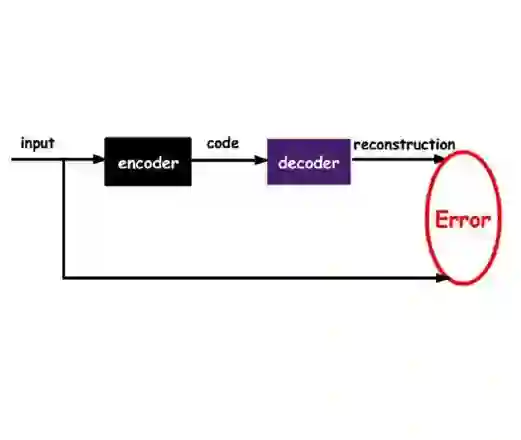
自动编码器是一种人工神经网络,用于以无监督的方式学习有效的数据编码。自动编码器的目的是通过训练网络忽略信号“噪声”来学习一组数据的表示(编码),通常用于降维。与简化方面一起,学习了重构方面,在此,自动编码器尝试从简化编码中生成尽可能接近其原始输入的表示形式,从而得到其名称。基本模型存在几种变体,其目的是迫使学习的输入表示形式具有有用的属性。自动编码器可有效地解决许多应用问题,从面部识别到获取单词的语义。
FlowQA: Grasping Flow in History for Conversational Machine Comprehension
专知会员服务
34+阅读 · 2019年10月18日
Stabilizing Transformers for Reinforcement Learning
专知会员服务
60+阅读 · 2019年10月17日
《DeepGCNs: Making GCNs Go as Deep as CNNs》
专知会员服务
32+阅读 · 2019年10月17日
Keras François Chollet 《Deep Learning with Python 》, 386页pdf
专知会员服务
164+阅读 · 2019年10月12日
Transferring Knowledge across Learning Processes
CreateAMind
29+阅读 · 2019年5月18日
Unsupervised Learning via Meta-Learning
CreateAMind
44+阅读 · 2019年1月3日
meta learning 17年:MAML SNAIL
CreateAMind
11+阅读 · 2019年1月2日
A Technical Overview of AI & ML in 2018 & Trends for 2019
待字闺中
18+阅读 · 2018年12月24日
disentangled-representation-papers
CreateAMind
26+阅读 · 2018年9月12日
Single-Shot Object Detection with Enriched Semantics
统计学习与视觉计算组
14+阅读 · 2018年8月29日
STRCF for Visual Object Tracking
统计学习与视觉计算组
15+阅读 · 2018年5月29日
Hierarchical Imitation - Reinforcement Learning
CreateAMind
19+阅读 · 2018年5月25日
Focal Loss for Dense Object Detection
统计学习与视觉计算组
12+阅读 · 2018年3月15日
IJCAI | Cascade Dynamics Modeling with Attention-based RNN
KingsGarden
13+阅读 · 2017年7月16日
国家自然科学基金
13+阅读 · 2017年12月31日
国家自然科学基金
2+阅读 · 2015年12月31日
国家自然科学基金
0+阅读 · 2015年12月31日
国家自然科学基金
0+阅读 · 2015年12月31日
国家自然科学基金
2+阅读 · 2015年12月31日
国家自然科学基金
0+阅读 · 2015年12月31日
国家自然科学基金
3+阅读 · 2015年12月31日
国家自然科学基金
0+阅读 · 2014年12月31日
国家自然科学基金
0+阅读 · 2014年12月31日
Arxiv
0+阅读 · 2024年6月25日
VIP会员
最新内容
综述 | 3D场景图:开放挑战与未来方向
专知会员服务
4+阅读 · 6月22日
21世纪的无人机战争
专知会员服务
4+阅读 · 6月22日
《量子技术的军事任务技术适配与利用》
专知会员服务
5+阅读 · 6月22日
美国从乌克兰无人机战争中学习经验
专知会员服务
7+阅读 · 6月21日
ICML 2026 | 面向视觉语言模型的语义鲁棒性认证
专知会员服务
5+阅读 · 6月21日
相关VIP内容
FlowQA: Grasping Flow in History for Conversational Machine Comprehension
专知会员服务
34+阅读 · 2019年10月18日
Stabilizing Transformers for Reinforcement Learning
专知会员服务
60+阅读 · 2019年10月17日
《DeepGCNs: Making GCNs Go as Deep as CNNs》
专知会员服务
32+阅读 · 2019年10月17日
Keras François Chollet 《Deep Learning with Python 》, 386页pdf
专知会员服务
164+阅读 · 2019年10月12日
相关资讯
Transferring Knowledge across Learning Processes
CreateAMind
29+阅读 · 2019年5月18日
Unsupervised Learning via Meta-Learning
CreateAMind
44+阅读 · 2019年1月3日
meta learning 17年:MAML SNAIL
CreateAMind
11+阅读 · 2019年1月2日
A Technical Overview of AI & ML in 2018 & Trends for 2019
待字闺中
18+阅读 · 2018年12月24日
disentangled-representation-papers
CreateAMind
26+阅读 · 2018年9月12日
Single-Shot Object Detection with Enriched Semantics
统计学习与视觉计算组
14+阅读 · 2018年8月29日
STRCF for Visual Object Tracking
统计学习与视觉计算组
15+阅读 · 2018年5月29日
Hierarchical Imitation - Reinforcement Learning
CreateAMind
19+阅读 · 2018年5月25日
Focal Loss for Dense Object Detection
统计学习与视觉计算组
12+阅读 · 2018年3月15日
IJCAI | Cascade Dynamics Modeling with Attention-based RNN
KingsGarden
13+阅读 · 2017年7月16日
相关基金
国家自然科学基金
13+阅读 · 2017年12月31日
国家自然科学基金
2+阅读 · 2015年12月31日
国家自然科学基金
0+阅读 · 2015年12月31日
国家自然科学基金
0+阅读 · 2015年12月31日
国家自然科学基金
2+阅读 · 2015年12月31日
国家自然科学基金
0+阅读 · 2015年12月31日
国家自然科学基金
3+阅读 · 2015年12月31日
国家自然科学基金
0+阅读 · 2014年12月31日
国家自然科学基金
0+阅读 · 2014年12月31日
Top
微信扫码咨询专知VIP会员