

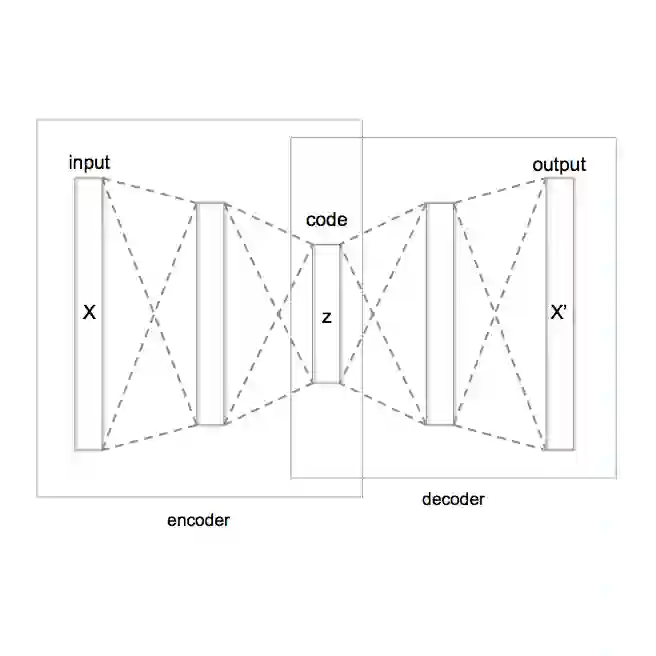
Oscillatory combustion in aero engines and modern gas turbines often has significant adverse effects on their operation, and accurately recognizing various oscillation modes is the prerequisite for understanding and controlling combustion instability. However, the high-dimensional spatial-temporal data of a complex combustion system typically poses considerable challenges to the dynamical mode recognition. Based on a two-layer bidirectional long short-term memory variational autoencoder (Bi-LSTM-VAE) dimensionality reduction model and a two-dimensional Wasserstein distance-based classifier (WDC), this study proposes a promising method (Bi-LSTM-VAE-WDC) for recognizing dynamical modes in oscillatory combustion systems. Specifically, the Bi-LSTM-VAE dimension reduction model was introduced to reduce the high-dimensional spatial-temporal data of the combustion system to a low-dimensional phase space; Gaussian kernel density estimates (GKDE) were computed based on the distribution of phase points in a grid; two-dimensional WD values were calculated from the GKDE maps to recognize the oscillation modes. The time-series data used in this study were obtained from numerical simulations of circular arrays of laminar flame oscillators. The results show that the novel Bi-LSTM-VAE method can produce a non-overlapping distribution of phase points, indicating an effective unsupervised mode recognition and classification. Furthermore, the present method exhibits a more prominent performance than VAE and PCA (principal component analysis) for distinguishing dynamical modes in complex flame systems, implying its potential in studying turbulent combustion.
翻译:航空发动机与现代燃气轮机中的振荡燃烧常对其运行产生显著不利影响,而准确识别各类振荡模态是理解和控制燃烧不稳定性的前提。然而,复杂燃烧系统的高维时空数据对动力学模态识别构成了巨大挑战。本研究基于双层双向长短期记忆变分自编码器(Bi-LSTM-VAE)降维模型和二维Wasserstein距离分类器(WDC),提出了一种用于识别振荡燃烧系统动力学模态的有效方法(Bi-LSTM-VAE-WDC)。具体而言,引入Bi-LSTM-VAE降维模型将燃烧系统的高维时空数据降至低维相空间;基于网格中相点分布计算高斯核密度估计(GKDE)值;进而从GKDE图中计算二维WD值以识别振荡模态。本研究所用时间序列数据取自层流火焰振荡器环形阵列的数值模拟。结果表明,新型Bi-LSTM-VAE方法能够生成无重叠的相点分布,实现了有效的无监督模态识别与分类。此外,相较于VAE和主成分分析(PCA),该方法在区分复杂火焰系统动力学模态方面表现更为优异,展现出其在湍流燃烧研究中的应用潜力。




相关内容




 微信扫码咨询专知VIP会员