

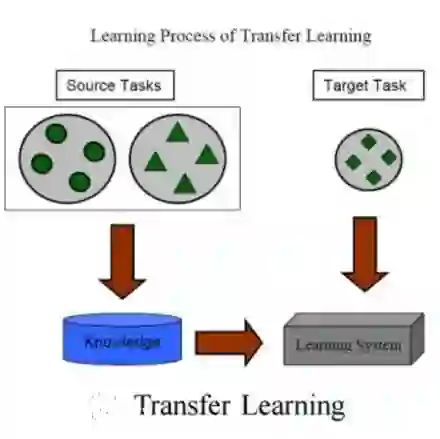
Traffic prediction represents one of the crucial tasks for smartly optimizing the mobile network. The research in this topic concentrated in making predictions in a centralized fashion, i.e., by collecting data from the different network elements. This translates to a considerable amount of energy for data transmission and processing. In this work, we propose a novel prediction framework based on edge computing which uses datasets obtained on the edge through a large measurement campaign. Two main Deep Learning architectures are designed, based on Convolutional Neural Networks (CNNs) and Recurrent Neural Networks (RNNs), and tested under different training conditions. In addition, Knowledge Transfer Learning (KTL) techniques are employed to improve the performance of the models while reducing the required computational resources. Simulation results show that the CNN architectures outperform the RNNs. An estimation for the needed training energy is provided, highlighting KTL ability to reduce the energy footprint of the models of 60% and 90% for CNNs and RNNs, respectively. Finally, two cutting-edge explainable Artificial Intelligence techniques are employed to interpret the derived learning models.
翻译:流量预测是智能优化移动网络的关键任务之一。该领域的研究主要集中在集中式预测方法上,即通过收集来自不同网络元素的数据进行预测,这会导致数据传输和处理消耗大量能源。本文提出了一种基于边缘计算的新型预测框架,通过大规模测量活动获取边缘数据集。我们设计了基于卷积神经网络(CNN)和循环神经网络(RNN)的两种主流深度学习架构,并在不同训练条件下进行了测试。同时,采用知识迁移学习(KTL)技术提升模型性能并降低计算资源需求。仿真结果表明,CNN架构的性能优于RNN。我们估算所需的训练能耗,并突显KTL技术能将CNN和RNN模型的能耗分别降低60%和90%。最后,采用两种前沿的可解释人工智能技术对所得学习模型进行解释。




相关内容




 微信扫码咨询专知VIP会员