

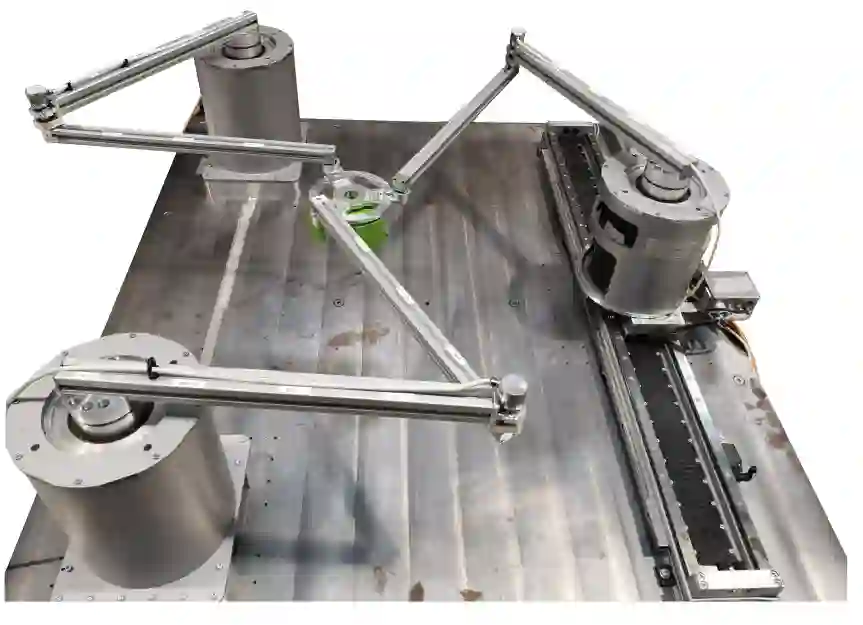
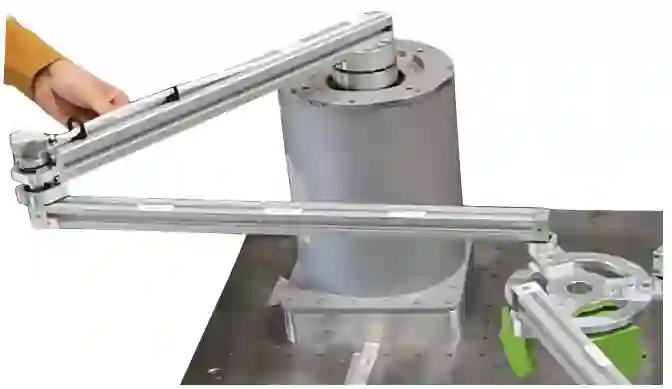
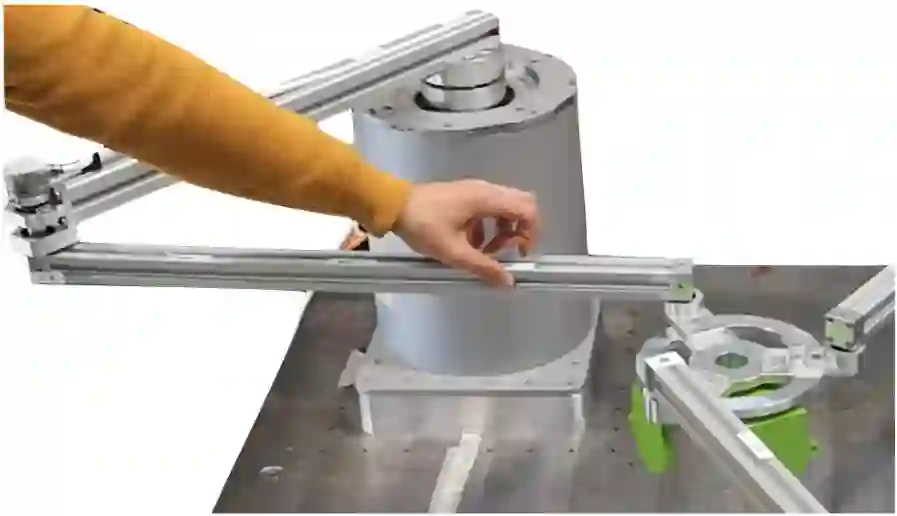
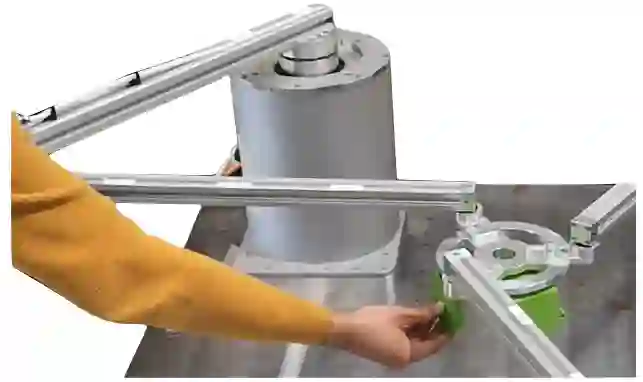
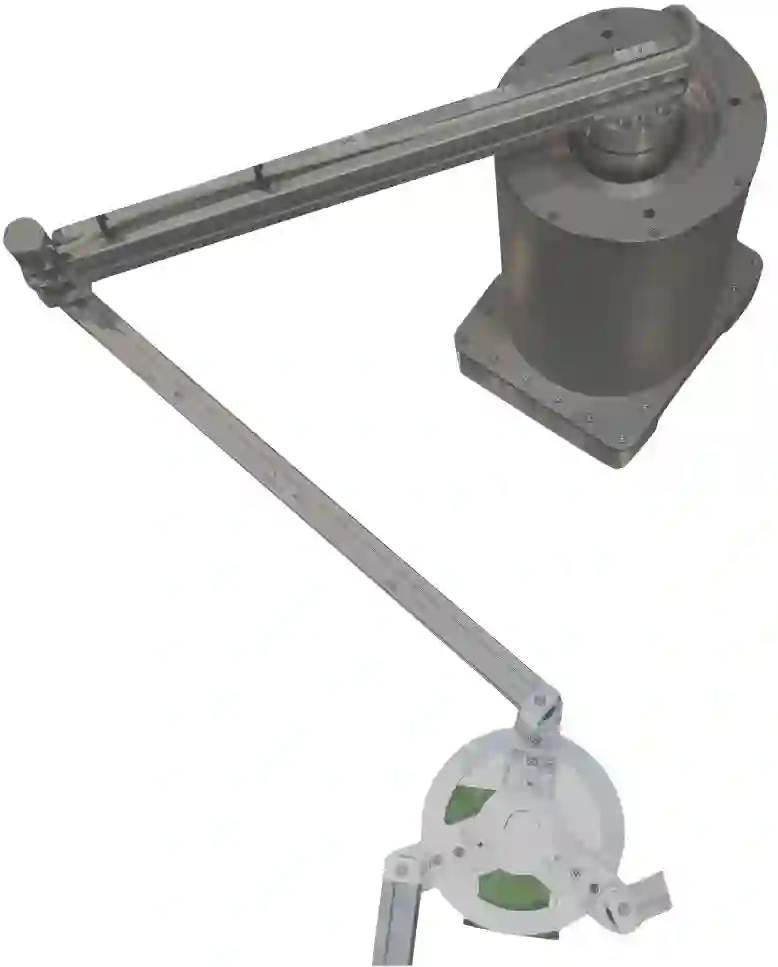
Parallel robots (PRs) allow for higher speeds in human-robot collaboration due to their lower moving masses but are more prone to unintended contact. For a safe reaction, knowledge of the location and force of a collision is useful. A novel algorithm for collision isolation and identification with proprioceptive information for a real PR is the scope of this work. To classify the collided body, the effects of contact forces at the links and platform of the PR are analyzed using a kinetostatic projection. This insight enables the derivation of features from the line of action of the estimated external force. The significance of these features is confirmed in experiments for various load cases. A feedforward neural network (FNN) classifies the collided body based on these physically modeled features. Generalization with the FNN to 300k load cases on the whole robot structure in other joint angle configurations is successfully performed with a collision-body classification accuracy of 84% in the experiments. Platform collisions are isolated and identified with an explicit solution, while a particle filter estimates the location and force of a contact on a kinematic chain. Updating the particle filter with estimated external joint torques leads to an isolation error of less than 3cm and an identification error of 4N in a real-world experiment.
翻译:并联机器人因其较低的运动质量而能够实现更高速度的人机协作,但更容易发生意外接触。为安全应对碰撞,获取碰撞位置与作用力信息至关重要。本文提出一种基于本体感知信息的真实并联机器人碰撞隔离与识别新算法。为分类被碰撞部件,采用动静态投影分析接触力对并联机器人连杆与平台的影响。该方法能够从估计外力的作用线中提取特征,并通过不同载荷工况实验验证了这些特征的显著性。基于物理建模特征,采用前馈神经网络对被碰撞部件进行分类。实验表明,该神经网络在关节角度配置不同的整体机器人结构300k载荷工况下成功实现泛化,碰撞部件分类准确率达84%。通过显式解对平台碰撞进行隔离与识别,同时采用粒子滤波器估计运动链上接触点的位置与作用力。在真实实验中,利用估计的外部关节力矩更新粒子滤波器,可实现隔离误差小于3厘米、识别误差小于4牛顿的精度。




相关内容




 微信扫码咨询专知VIP会员