

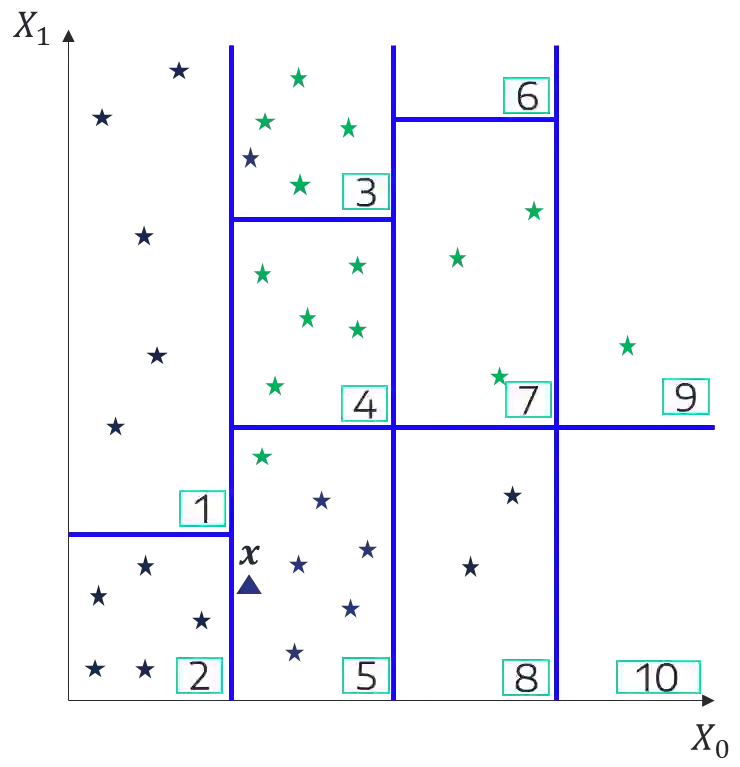
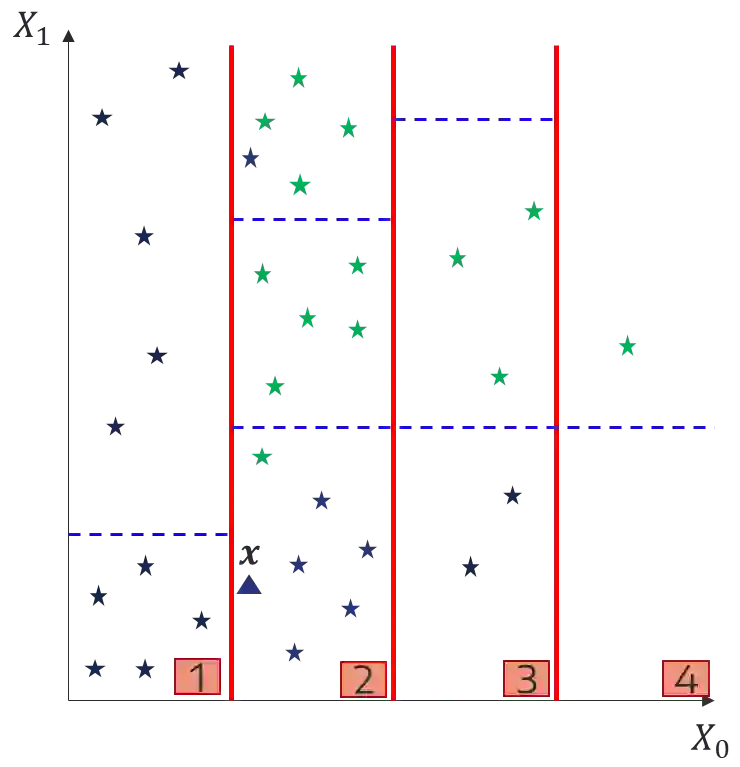
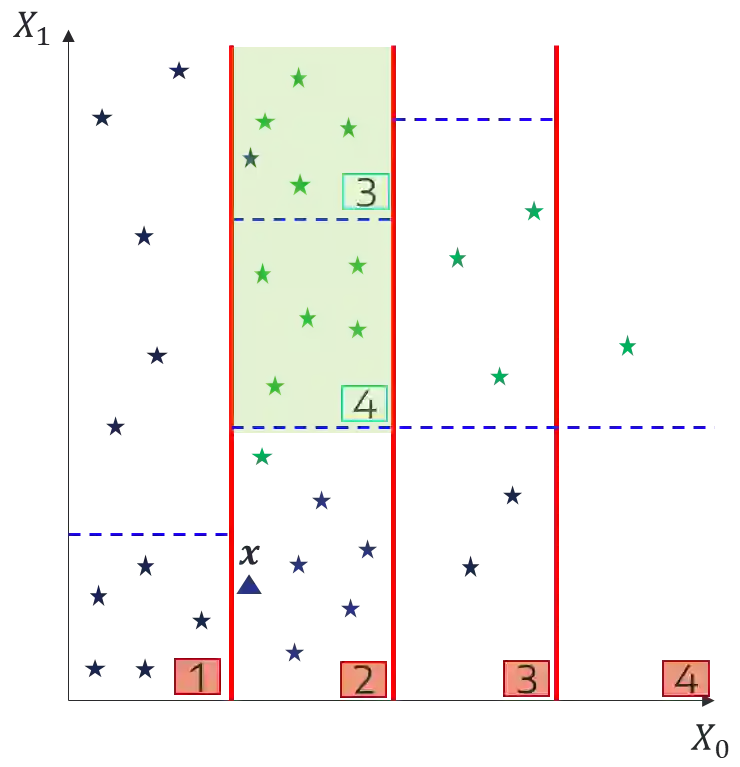
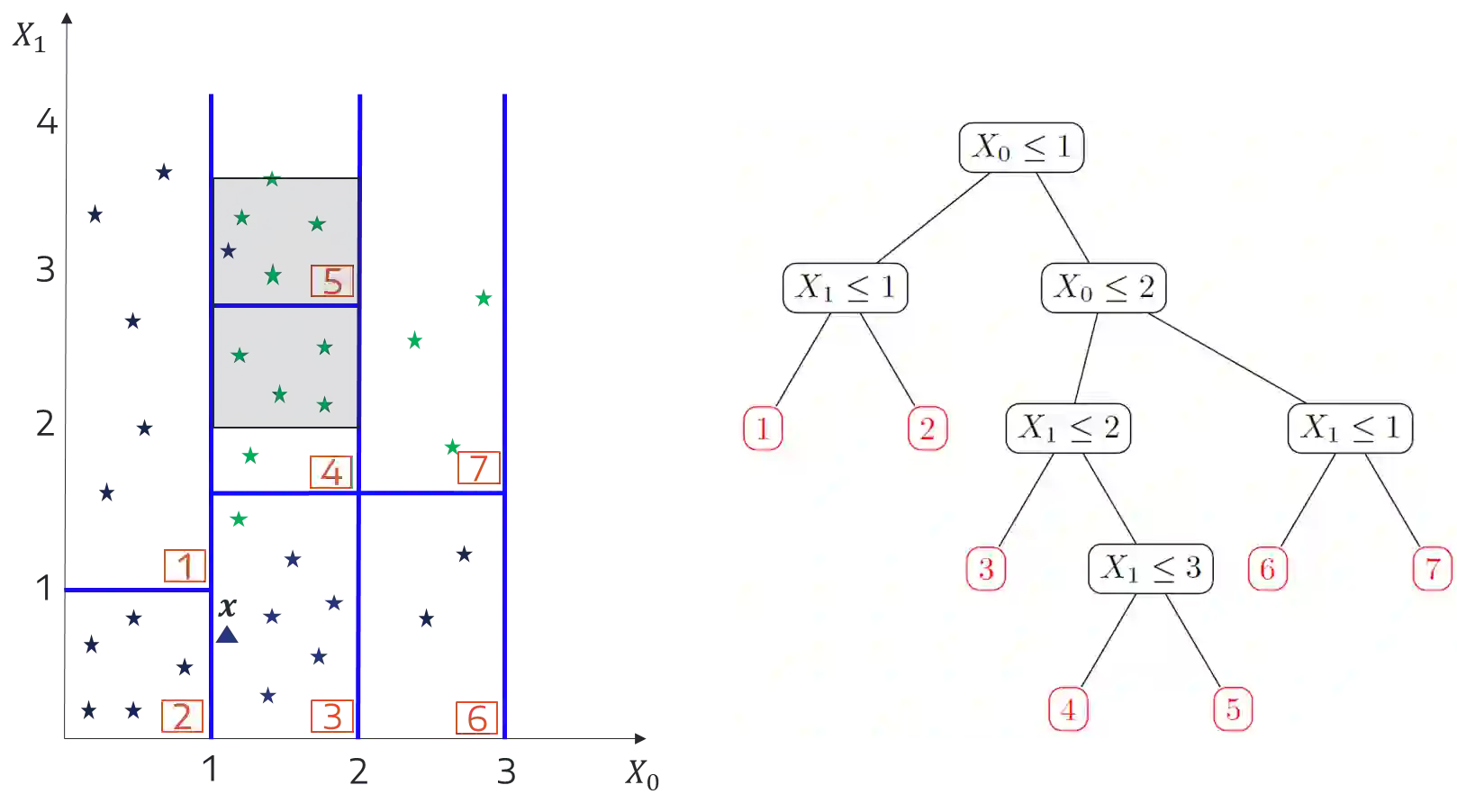
Counterfactual Explanations (CE) face several unresolved challenges, such as ensuring stability, synthesizing multiple CEs, and providing plausibility and sparsity guarantees. From a more practical point of view, recent studies [Pawelczyk et al., 2022] show that the prescribed counterfactual recourses are often not implemented exactly by individuals and demonstrate that most state-of-the-art CE algorithms are very likely to fail in this noisy environment. To address these issues, we propose a probabilistic framework that gives a sparse local counterfactual rule for each observation, providing rules that give a range of values capable of changing decisions with high probability. These rules serve as a summary of diverse counterfactual explanations and yield robust recourses. We further aggregate these local rules into a regional counterfactual rule, identifying shared recourses for subgroups of the data. Our local and regional rules are derived from the Random Forest algorithm, which offers statistical guarantees and fidelity to data distribution by selecting recourses in high-density regions. Moreover, our rules are sparse as we first select the smallest set of variables having a high probability of changing the decision. We have conducted experiments to validate the effectiveness of our counterfactual rules in comparison to standard CE and recent similar attempts. Our methods are available as a Python package.
翻译:反事实解释(CE)面临若干未解决的挑战,例如确保稳定性、综合多个CE以及提供合理性与稀疏性保证。从更实际的角度看,近期研究[Pawelczyk等人,2022]表明,个体往往无法精确实施所推荐的反事实纠偏措施,并证明大多数最先进的CE算法在这种噪声环境中极有可能失效。为解决这些问题,我们提出一个概率框架,为每个观测值提供稀疏的局部反事实规则,这些规则能给出高概率改变决策的值域范围。这些规则作为多样化反事实解释的总结,并产生稳健的纠偏方案。我们进一步将这些局部规则聚合为区域反事实规则,识别数据子组的共享纠偏策略。我们的局部与区域规则源自随机森林算法,通过在密度高的区域选择纠偏路径,提供统计保证并忠实于数据分布。此外,通过优先选取高概率改变决策的最小变量集,我们的规则具有稀疏性。我们开展了实验,将反事实规则的有效性与标准CE及近期类似方法进行对比。我们的方法已作为Python包发布。




相关内容



 微信扫码咨询专知VIP会员