

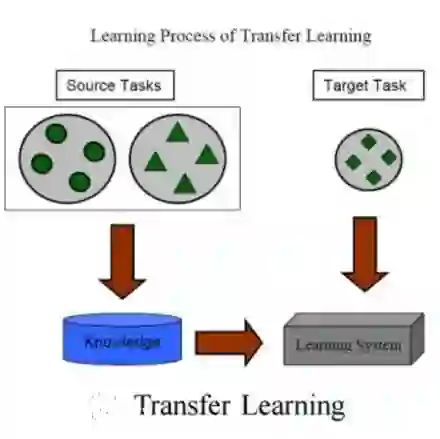
Transfer learning has been widely utilized to mitigate the data scarcity problem in the field of Alzheimer's disease (AD). Conventional transfer learning relies on re-using models trained on AD-irrelevant tasks such as natural image classification. However, it often leads to negative transfer due to the discrepancy between the non-medical source and target medical domains. To address this, we present evidence-empowered transfer learning for AD diagnosis. Unlike conventional approaches, we leverage an AD-relevant auxiliary task, namely morphological change prediction, without requiring additional MRI data. In this auxiliary task, the diagnosis model learns the evidential and transferable knowledge from morphological features in MRI scans. Experimental results demonstrate that our framework is not only effective in improving detection performance regardless of model capacity, but also more data-efficient and faithful.
翻译:迁移学习已被广泛应用于缓解阿尔茨海默病领域的数据稀缺问题。传统迁移学习依赖于复用通过自然图像分类等与阿尔茨海默病无关任务训练的模型,但由于非医学源域与目标医学域之间的差异,往往导致负迁移。为解决这一问题,我们提出了一种证据增强的迁移学习方法用于阿尔茨海默病诊断。不同于传统方法,我们利用了一个与阿尔茨海默病相关的辅助任务——形态变化预测——且无需额外MRI数据。在该辅助任务中,诊断模型从MRI扫描的形态特征中学习证据性且可迁移的知识。实验结果表明,我们的框架不仅能有效提升不同模型容量下的检测性能,而且具有更高的数据效率和可靠性。




相关内容



 微信扫码咨询专知VIP会员