

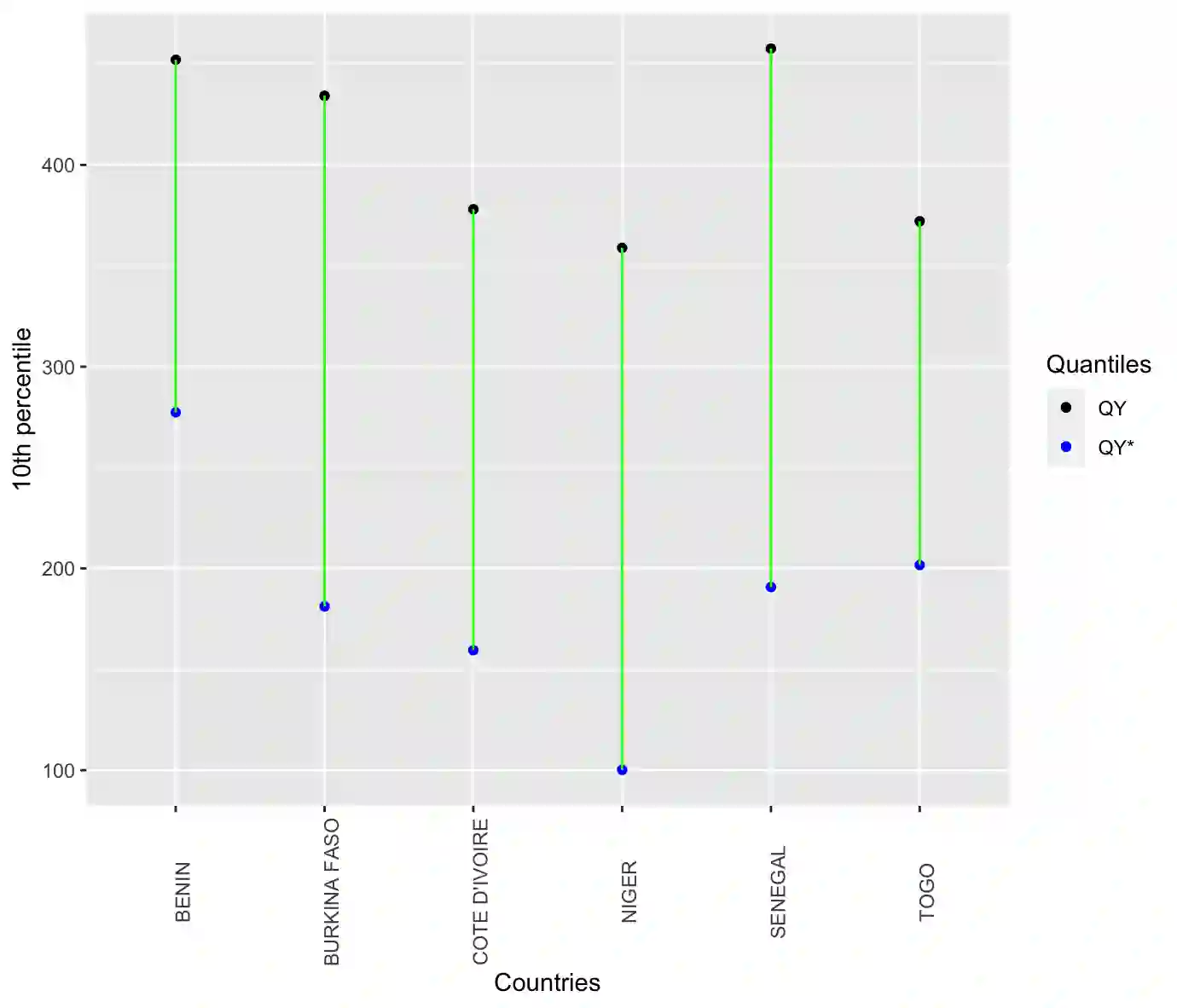
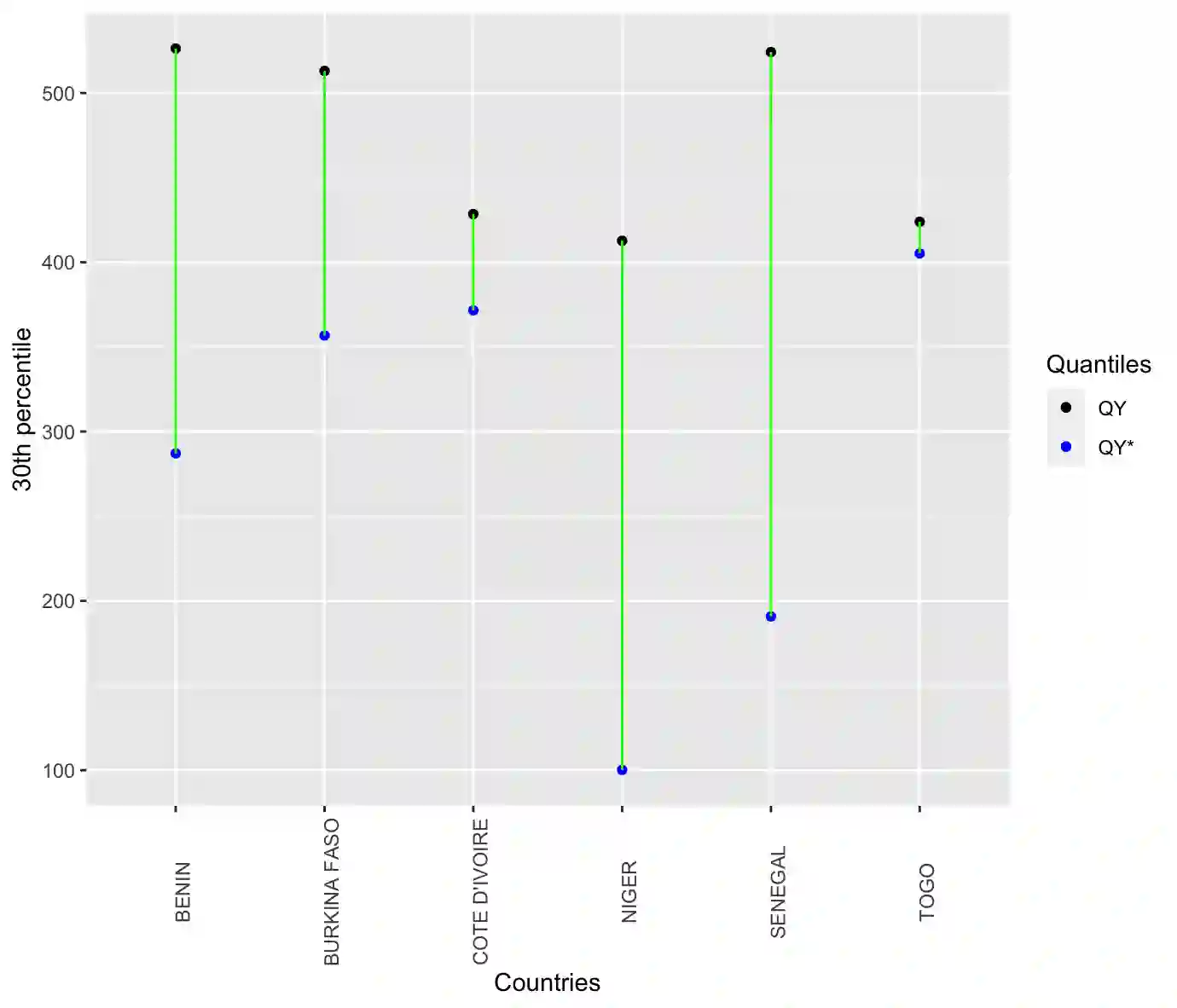
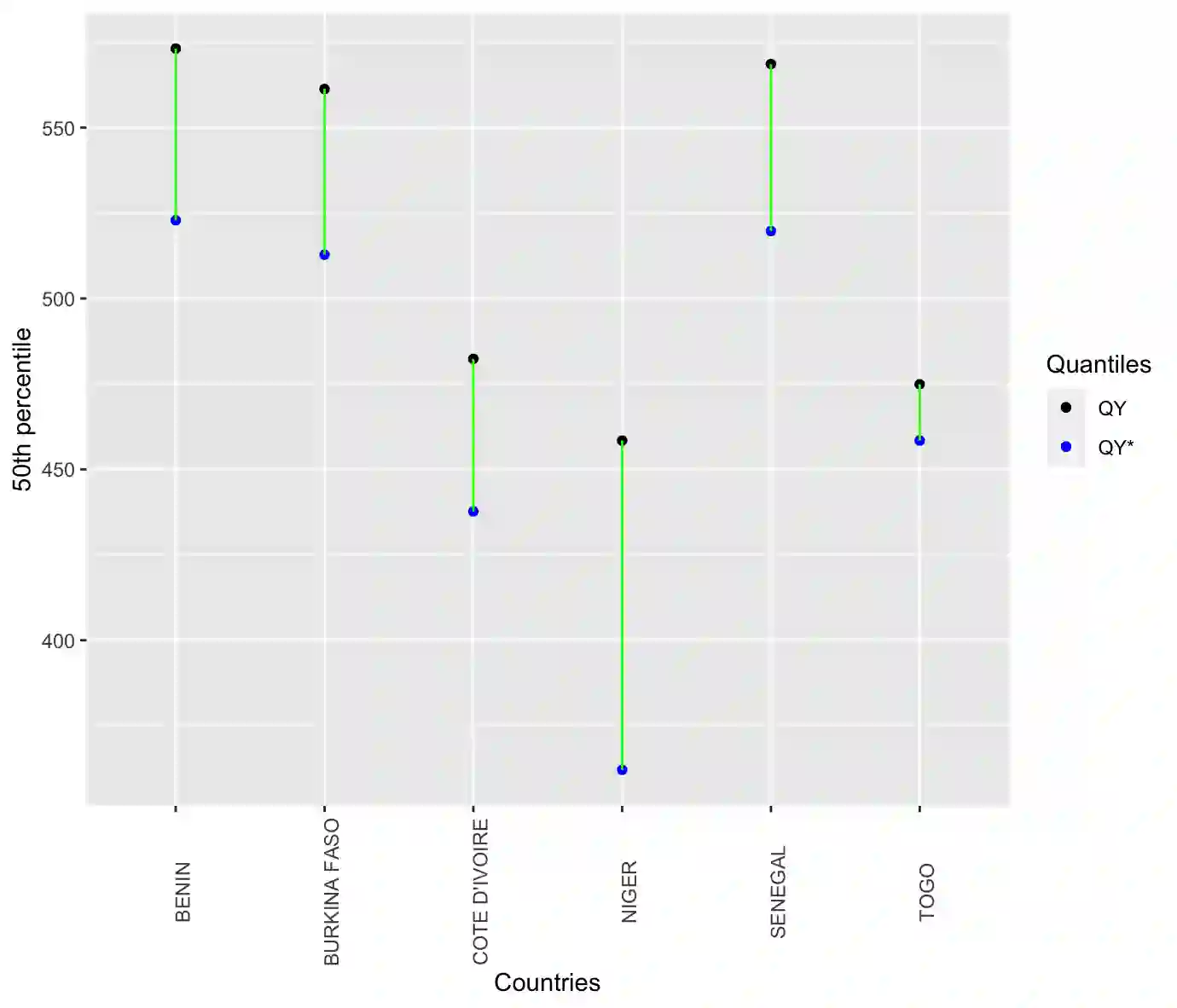
Country comparisons using standardized test scores may in some cases be misleading unless we make sure that the potential sample selection bias created by drop-outs and non-enrollment patterns does not alter the analysis. In this paper, I propose an answer to this issue which consists in comparing the counterfactual distribution of achievement (I mean the distribution of achievement if there was hypothetically no selection) and the observed distribution of achievements. If the difference is statistically significant, international comparison measures like means, quantiles, and inequality measures have to be computed using that counterfactual distribution. I identify the quantiles of that latent distribution by readjusting the percentile levels of the observed quantile function of achievement. Because the data on test scores is by nature truncated, I have to rely on auxiliary data to borrow identification power. I finally applied my method to 6 sub-Saharan countries using 6th-grade test scores.
翻译:基于标准化测试分数的国家间比较在某些情况下可能产生误导,除非我们确保由辍学和未入学模式造成的潜在样本选择偏差不会改变分析结果。针对这一问题,本文提出通过比较成就的反事实分布(即假设不存在选择时的成就分布)与观测到的成就分布来加以解决。若两者差异具有统计显著性,则须采用该反事实分布计算均值、分位数及不平等测度等国际比较指标。通过重新调整观测到的成就分位数函数的百分位水平,本文识别了该潜在分布的分位数。由于测试分数数据本质上是截断的,必须借助辅助数据获取识别效力。最终,本文利用六年级测试分数对6个撒哈拉以南非洲国家进行了实证应用。






相关内容



 微信扫码咨询专知VIP会员