

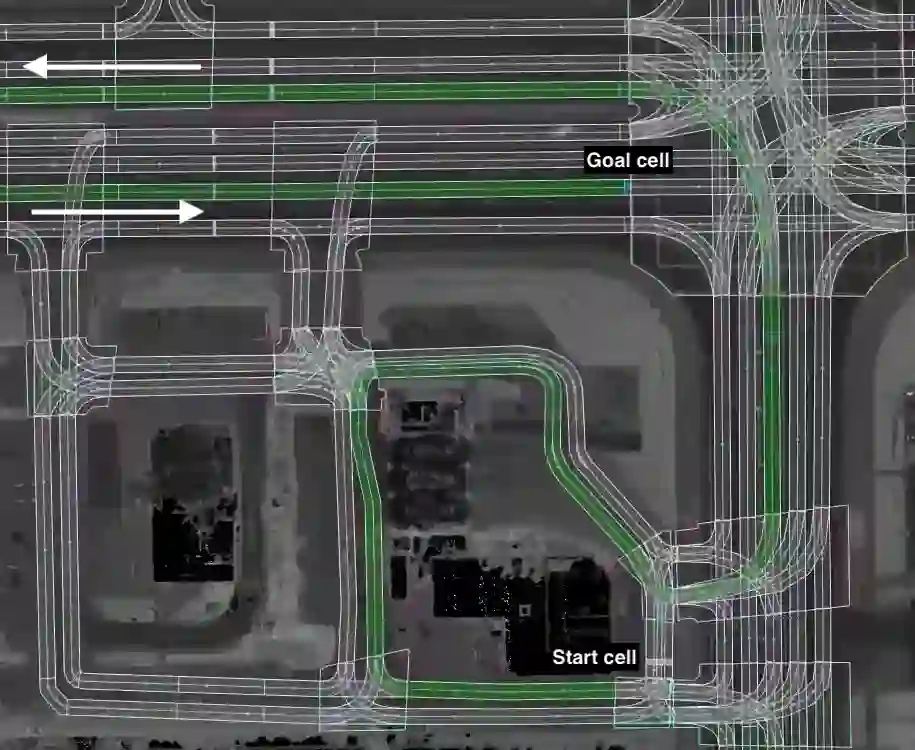
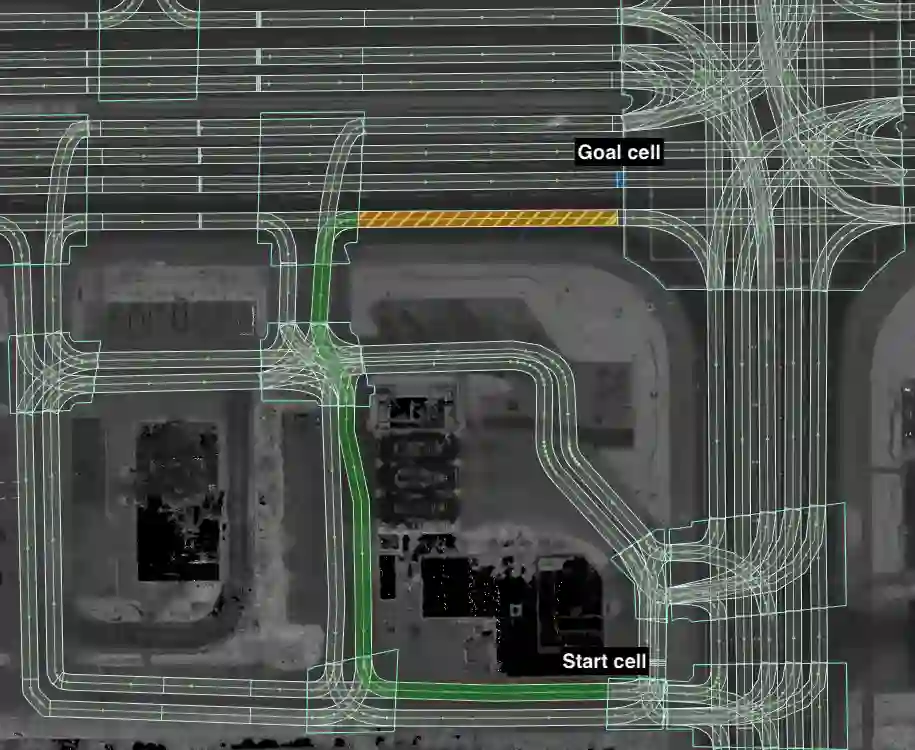
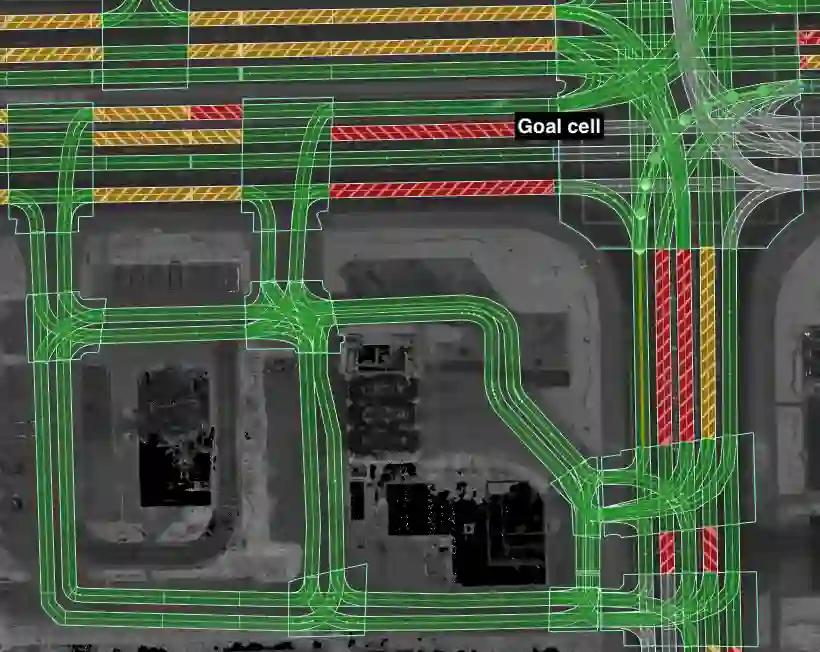
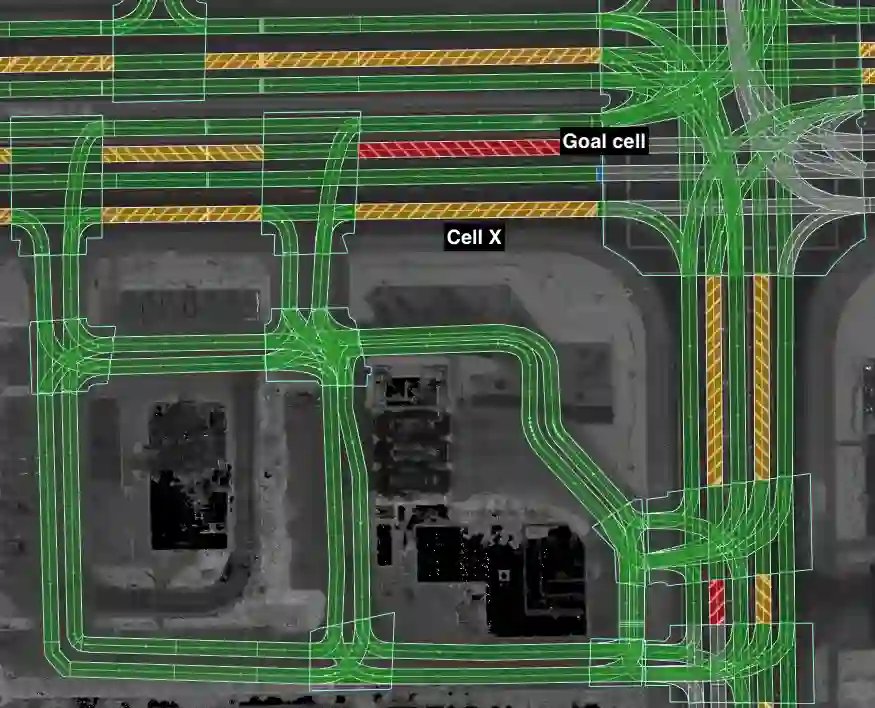
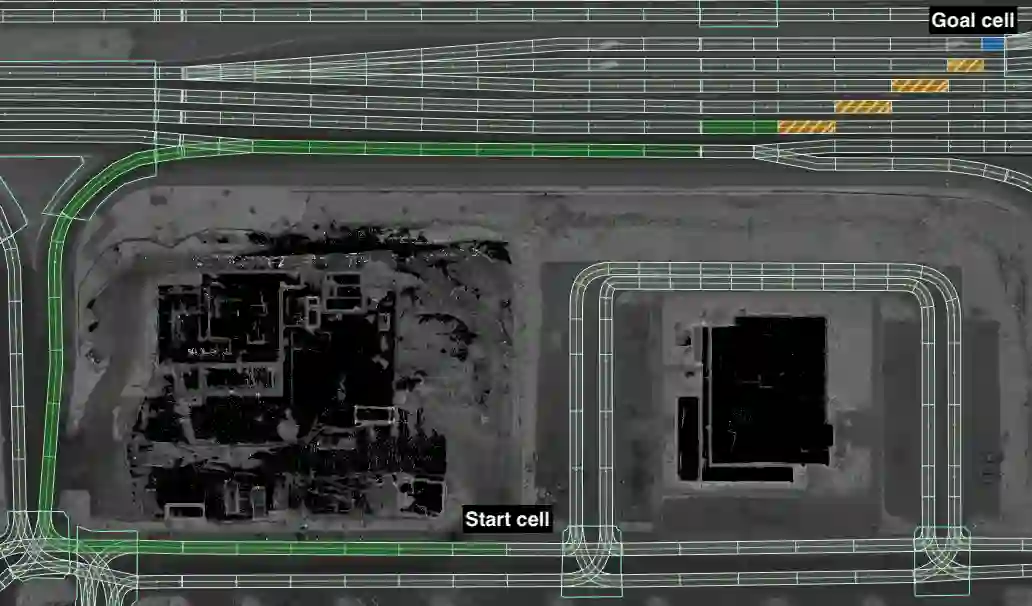
We present an algorithm that, given a representation of a road network in lane-level detail, computes a route that minimizes the expected cost to reach a given destination. In doing so, our algorithm allows us to solve for the complex trade-offs encountered when trying to decide not just which roads to follow, but also when to change between the lanes making up these roads, in order to -- for example -- reduce the likelihood of missing a left exit while not unnecessarily driving in the leftmost lane. This routing problem can naturally be formulated as a Markov Decision Process (MDP), in which lane change actions have stochastic outcomes. However, MDPs are known to be time-consuming to solve in general. In this paper, we show that -- under reasonable assumptions -- we can use a Dijkstra-like approach to solve this stochastic problem, and benefit from its efficient $O(n \log n)$ running time. This enables an autonomous vehicle to exhibit lane-selection behavior as it efficiently plans an optimal route to its destination.
翻译:本文提出一种算法,该算法基于车道级细节的道路网络表示,计算出通往给定目的地的最小期望代价路径。该算法能够解决何时变更车道(例如,在降低错过左侧出口概率的同时避免不必要地行驶在最左侧车道)这一复杂权衡问题,而不仅仅是选择行驶路段。该路径规划问题可自然建模为马尔可夫决策过程(MDP),其中车道变更行为具有随机性结果。然而,MDP通常求解耗时。本文证明,在合理假设下,可采用类Dijkstra方法求解该随机性问题,并实现$O(n \log n)$的高效时间复杂度。这使自动驾驶车辆能够通过高效规划最优路径,展现车道选择行为。




相关内容




 微信扫码咨询专知VIP会员