

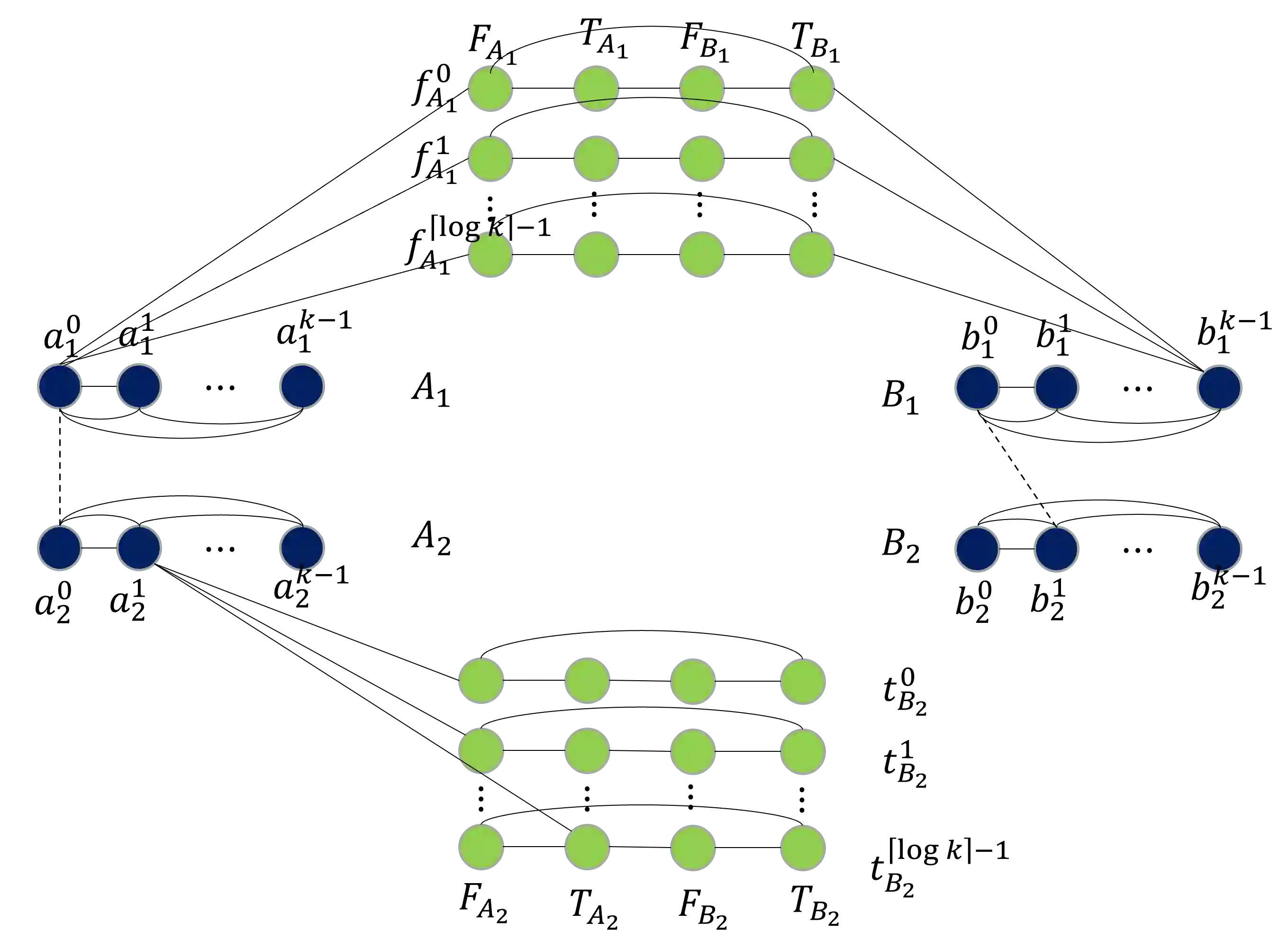
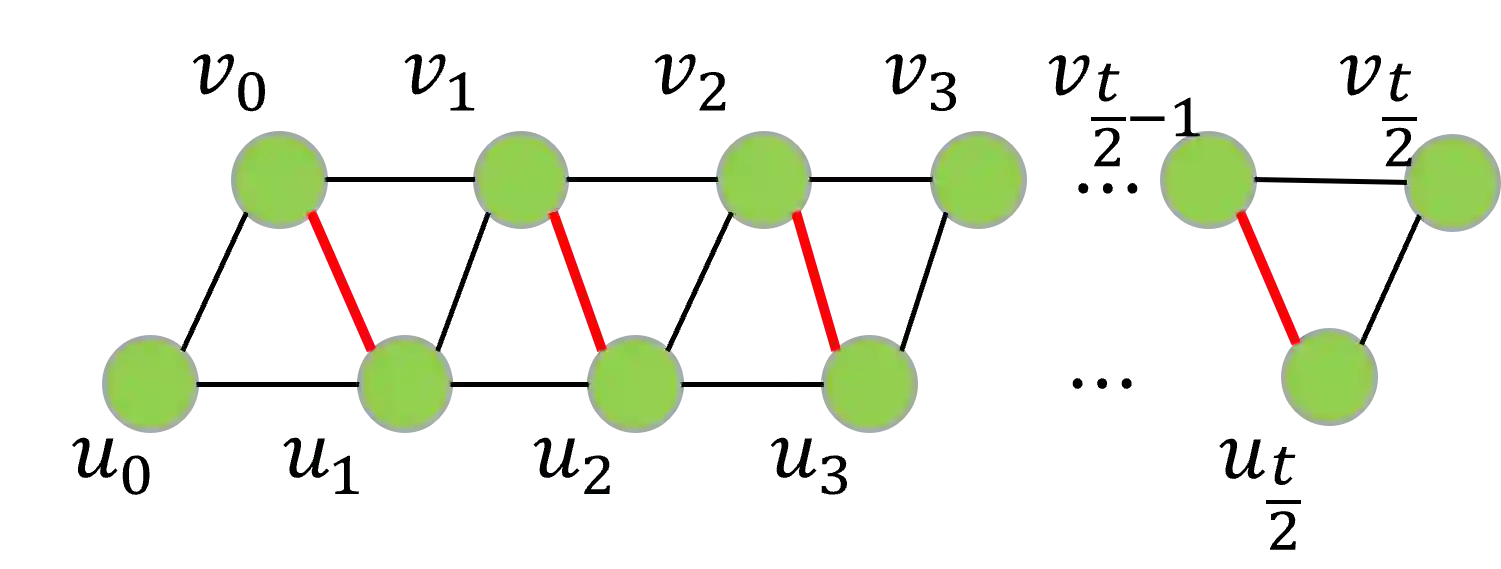
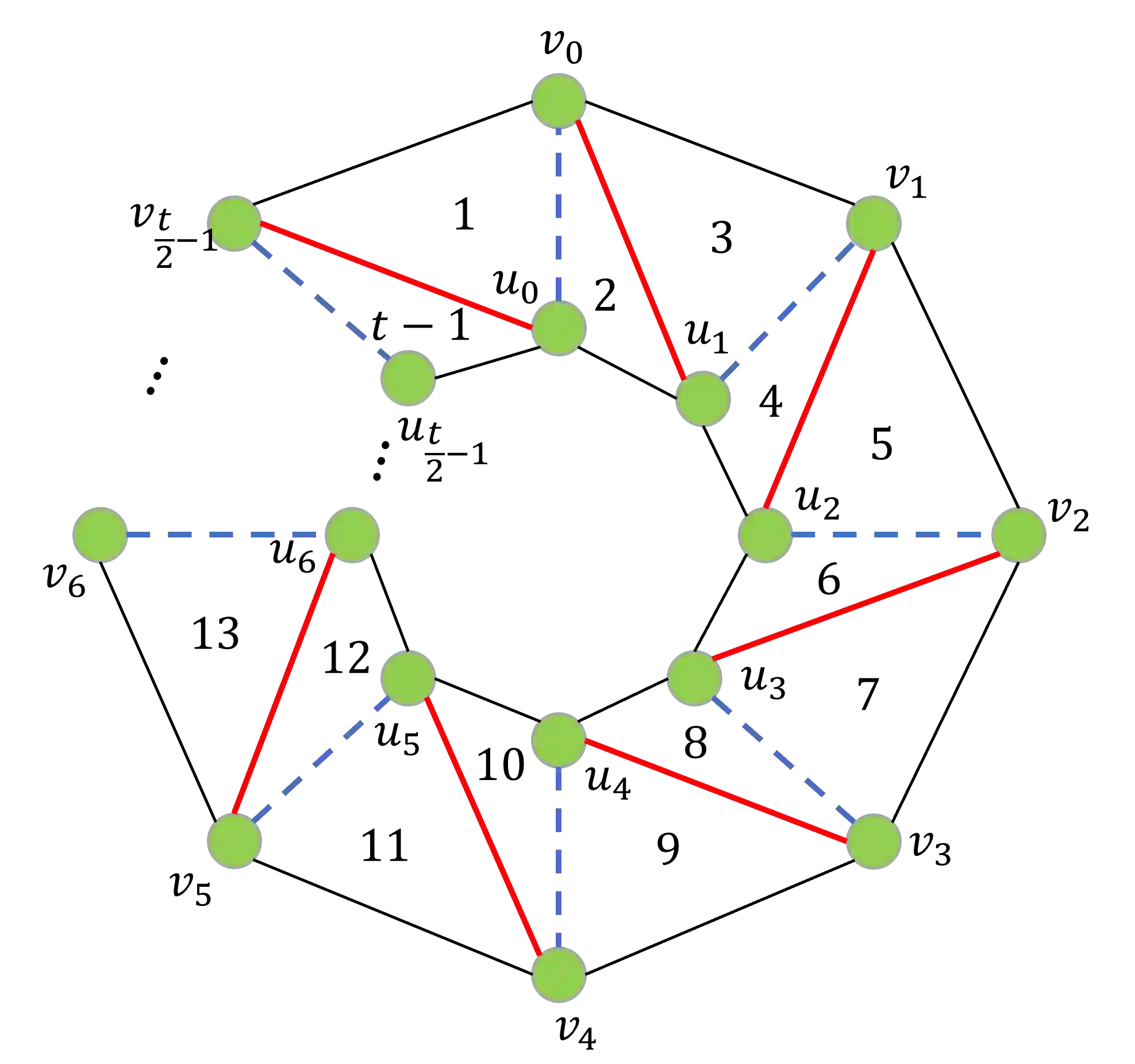
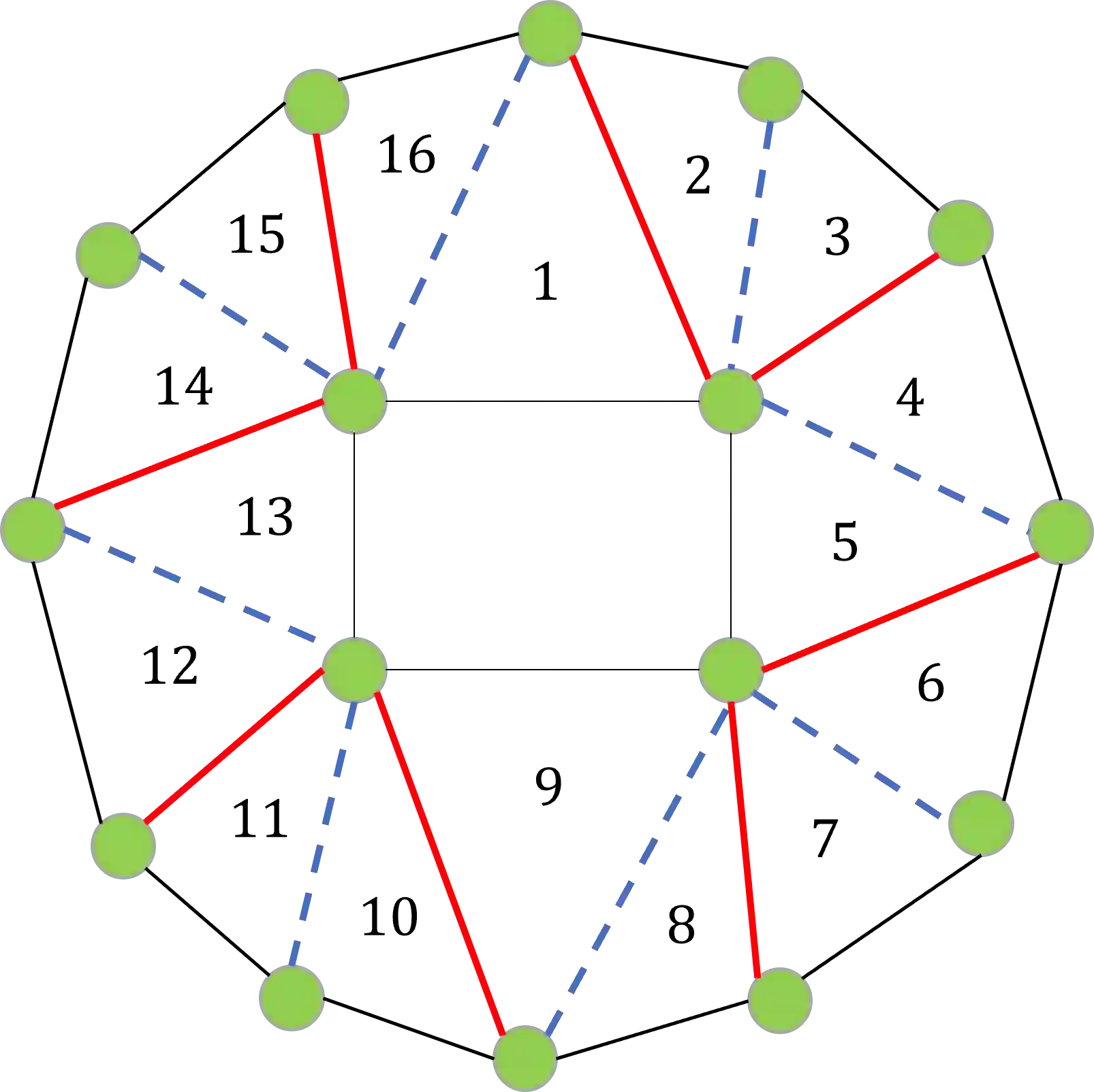
The distance of a graph from being triangle-free is a fundamental graph parameter, counting the number of edges that need to be removed from a graph in order for it to become triangle-free. Its corresponding computational problem is the classic minimum triangle edge transversal problem, and its normalized value is the baseline for triangle-freeness testing algorithms. While triangle-freeness testing has been successfully studied in the distributed setting, computing the distance itself in a distributed setting is unknown, to the best of our knowledge, despite being well-studied in the centralized setting. This work addresses the computation of the minimum triangle edge transversal in distributed networks. We show with a simple warm-up construction that this is a global task, requiring $\Omega(D)$ rounds even in the $\mathsf{LOCAL}$ model with unbounded messages, where $D$ is the diameter of the network. However, we show that approximating this value can be done much faster. A $(1+\epsilon)$-approximation can be obtained in $\text{poly}\log{n}$ rounds, where $n$ is the size of the network graph. Moreover, faster approximations can be obtained, at the cost of increasing the approximation factor to roughly 3, by a reduction to the minimum hypergraph vertex cover problem. With a time overhead of the maximum degree $\Delta$, this can also be applied to the $\mathsf{CONGEST}$ model, in which messages are bounded. Our key technical contribution is proving that computing an exact solution is ``as hard as it gets'' in $\mathsf{CONGEST}$, requiring a near-quadratic number of rounds. Because this problem is an edge selection problem, as opposed to previous lower bounds that were for node selection problems, major challenges arise in constructing the lower bound, requiring us to develop novel ingredients.
翻译:图与无三角形之间的距离是一个基本的图参数,它衡量为了使得图变为无三角形而需要移除的边的数量。其对应的计算问题是经典的最小三角形边横贯问题,其归一化值是无三角形性测试算法的基准。尽管无三角形性测试在分布式环境中已得到成功研究,但据我们所知,在分布式环境中计算该距离本身尚属未知,尽管它在集中式环境中已得到深入研究。本文研究了分布式网络中的最小三角形边横贯计算问题。我们通过一个简单的热身构造表明,这是一个全局性任务,即使在具有无界消息的$\mathsf{LOCAL}$模型中也需要$\Omega(D)$轮,其中$D$是网络的直径。然而,我们表明该值的近似可以更快地完成。$(1+\epsilon)$-近似可以在$\text{poly}\log{n}$轮内获得,其中$n$是网络图的大小。此外,通过归约到最小超图顶点覆盖问题,以将近似因子增加至约3为代价,可以获得更快的近似。在最大度$\Delta$的时间开销下,这也可以应用于消息有界的$\mathsf{CONGEST}$模型。我们的关键技术贡献是证明在$\mathsf{CONGEST}$中求解精确解“与最困难问题一样难”,需要接近二次方的轮数。由于该问题是一个边选择问题,与之前针对节点选择问题的下界不同,构造下界时面临重大挑战,需要我们开发新颖的要素。




相关内容


 微信扫码咨询专知VIP会员