

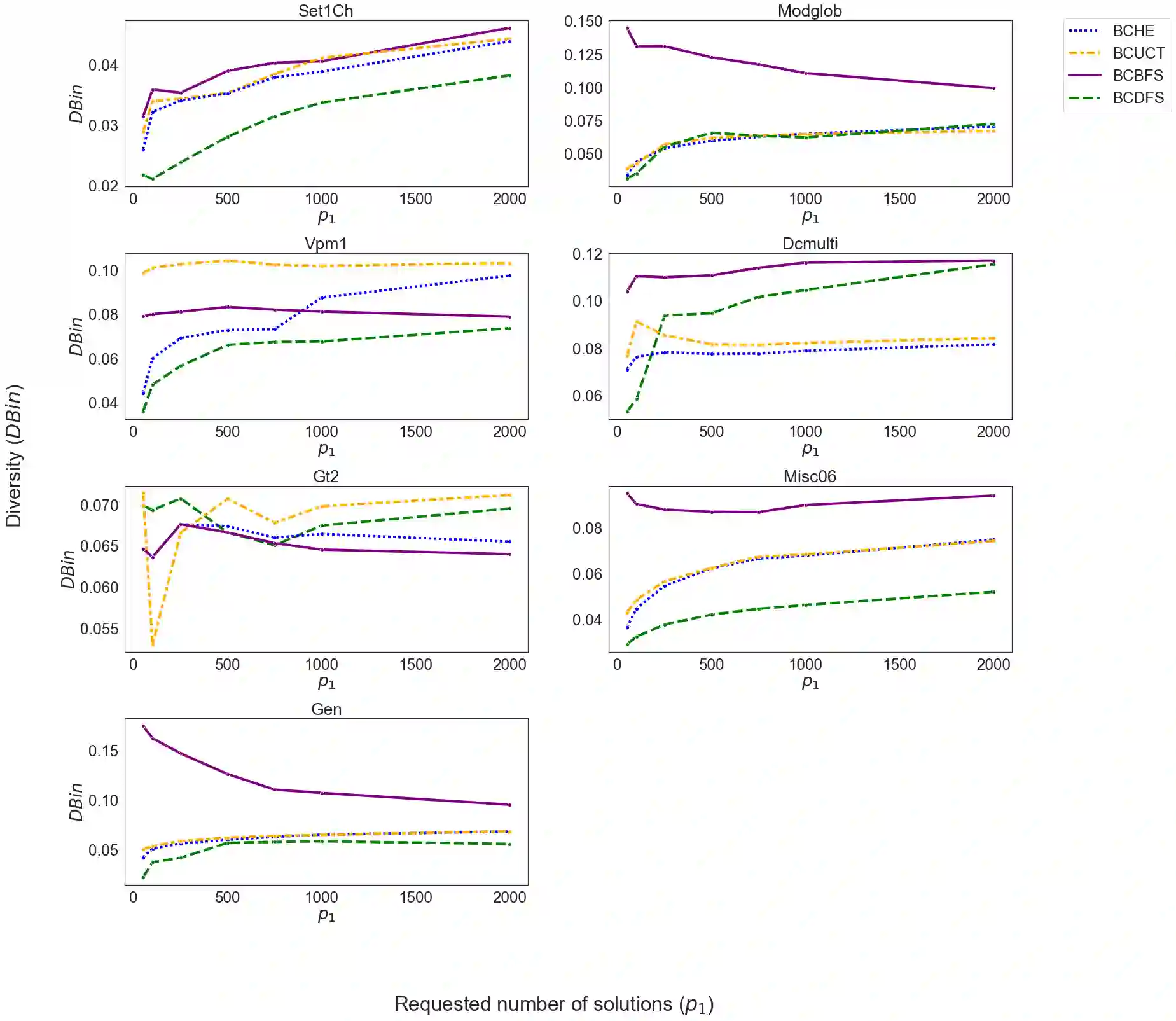
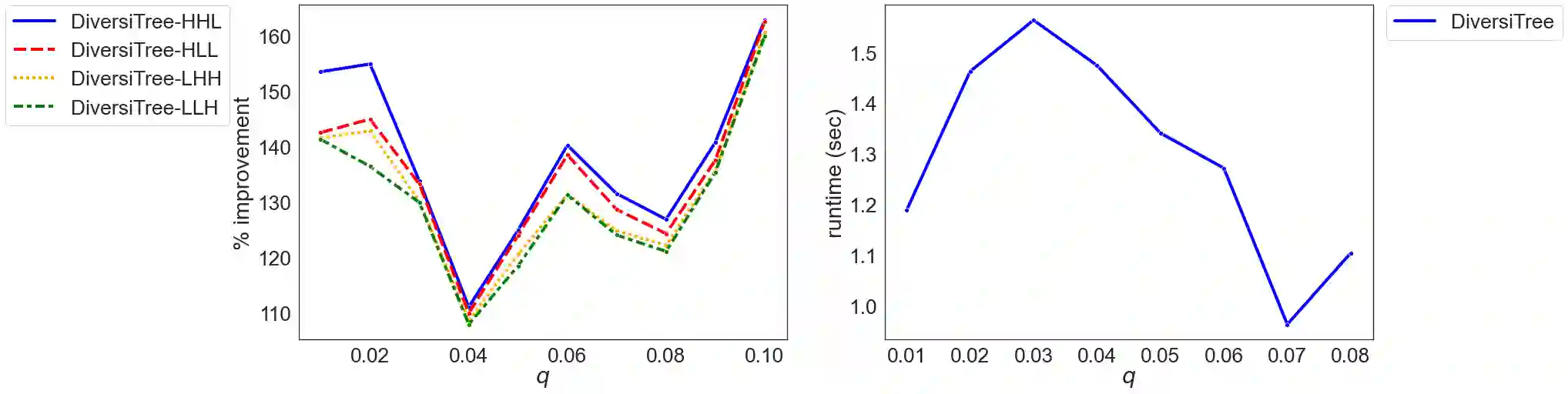
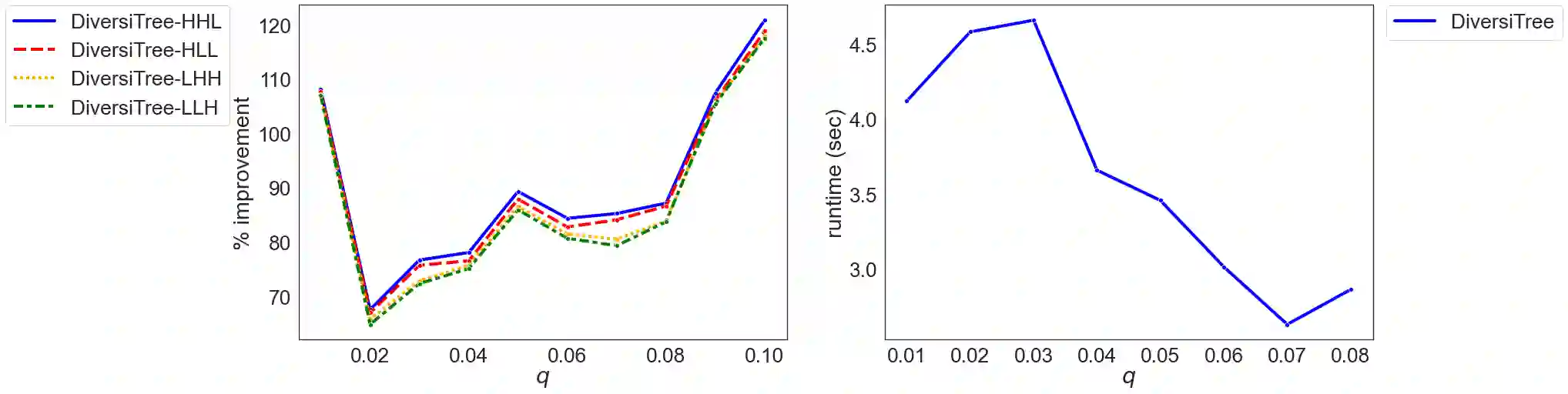
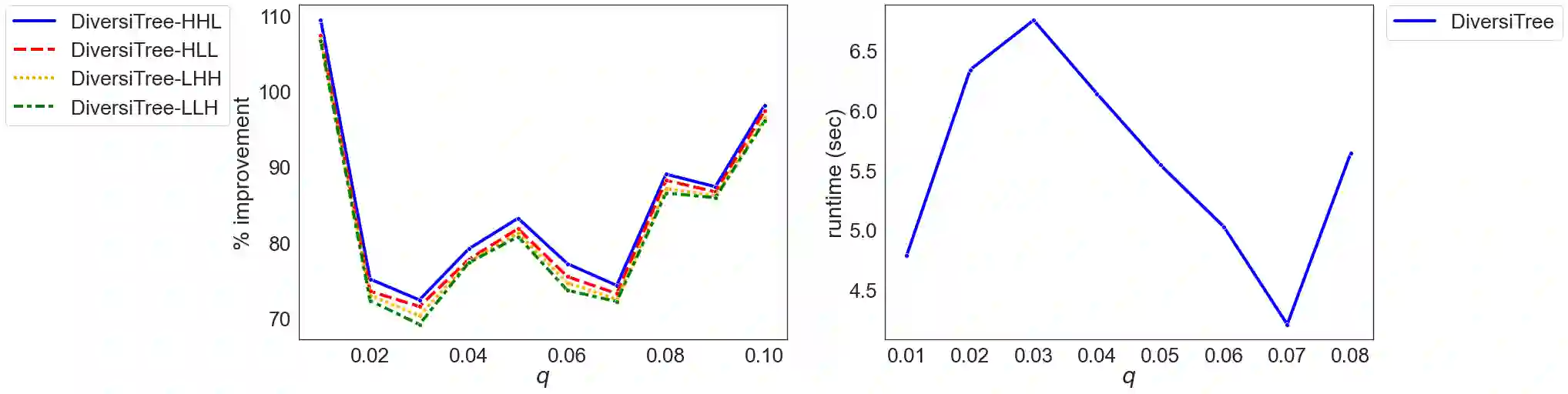
While most methods for solving mixed-integer optimization problems compute a single optimal solution, a diverse set of near-optimal solutions can often lead to improved outcomes. We present a new method for finding a set of diverse solutions by emphasizing diversity within the search for near-optimal solutions. Specifically, within a branch-and-bound framework, we investigated parameterized node selection rules that explicitly consider diversity. Our results indicate that our approach significantly increases the diversity of the final solution set. When compared with two existing methods, our method runs with similar runtime as regular node selection methods and gives a diversity improvement between 12% and 190%. In contrast, popular node selection rules, such as best-first search, in some instances performed worse than state-of-the-art methods by more than 35% and gave an improvement of no more than 130%. Further, we find that our method is most effective when diversity in node selection is continuously emphasized after reaching a minimal depth in the tree and when the solution set has grown sufficiently large. Our method can be easily incorporated into integer programming solvers and has the potential to significantly increase the diversity of solution sets.
翻译:大多数求解混合整数优化问题的方法只计算单一最优解,而一组多样化的近似最优解往往能带来更好的结果。我们提出了一种新方法,通过在近似最优解的搜索过程中强调多样性来寻找多样性解集。具体而言,在分支定界框架下,我们研究了显式考虑多样性的参数化节点选择规则。结果表明,我们的方法显著提高了最终解集的多样性。与两种现有方法相比,我们的方法运行时间与常规节点选择方法相当,且多样性提升幅度在12%至190%之间。相比之下,流行节点选择规则(如最佳优先搜索)在某些情况下比最先进方法性能差35%以上,且提升幅度不超过130%。此外,我们发现该方法在以下条件下效果最佳:当达到树的最小深度后持续强调节点选择中的多样性,且当解集已充分扩展时。我们的方法可轻松集成至整数规划求解器中,并具有显著提升解集多样性的潜力。





相关内容



 微信扫码咨询专知VIP会员