

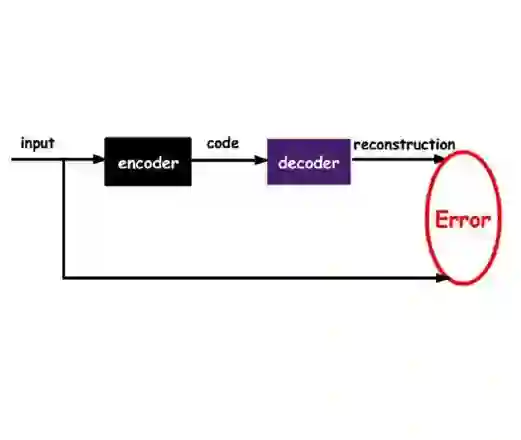
Detecting anomalies in high-dimensional, time-dependent simulation data is challenging due to complex spatial and temporal dynamics. We study reconstruction-based anomaly detection for ensemble data from parameterized Kármán vortex street simulations using convolutional autoencoders. We compare a 2D autoencoder operating on individual frames with a 3D autoencoder that processes short temporal stacks. The 2D model identifies localized spatial irregularities in single time steps, while the 3D model exploits spatio-temporal context to detect anomalous motion patterns and reduces redundant detections across time. We further evaluate volumetric time-dependent data and find that reconstruction errors are strongly influenced by the spatial distribution of mass, with highly concentrated regions yielding larger errors than dispersed configurations. Our results highlight the importance of temporal context for robust anomaly detection in dynamic simulations.
翻译:在高维时间相关模拟数据中检测异常具有挑战性,这源于复杂的空间与时间动力学。我们利用卷积自编码器,研究了基于重构的异常检测方法,并将其应用于参数化卡门涡街模拟产生的集成数据。我们比较了在单帧图像上运行的2D自编码器与处理短时态堆栈的3D自编码器。2D模型能识别单个时间步中的局部空间不规则性,而3D模型则利用时空上下文来检测异常运动模式,并减少了跨时间的冗余检测。我们进一步评估了体积时间相关数据,发现重构误差受质量空间分布的强烈影响,高度集中的区域比分散配置产生更大的误差。我们的结果突显了时间上下文对于动态模拟中稳健异常检测的重要性。




相关内容



 微信扫码咨询专知VIP会员