

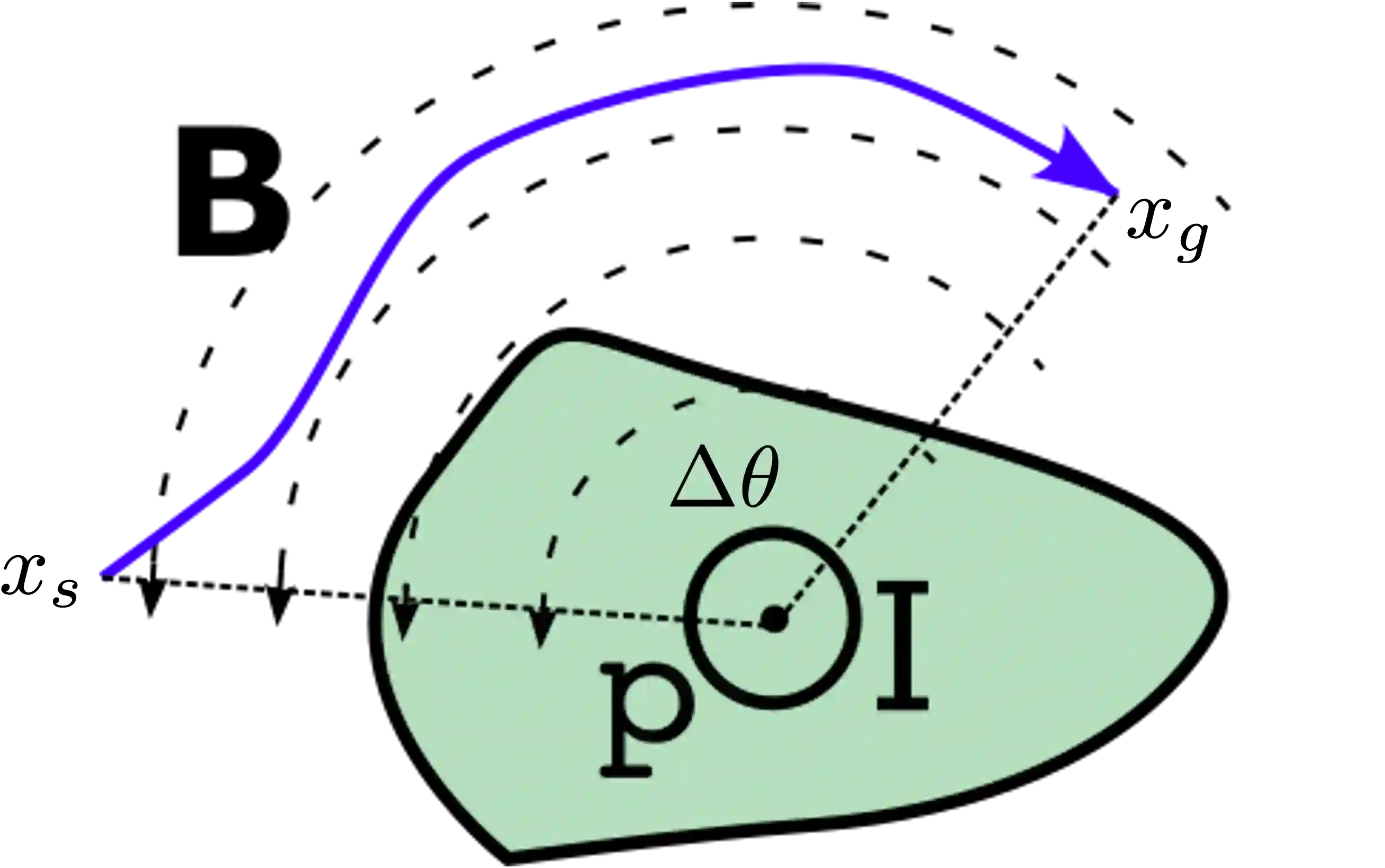
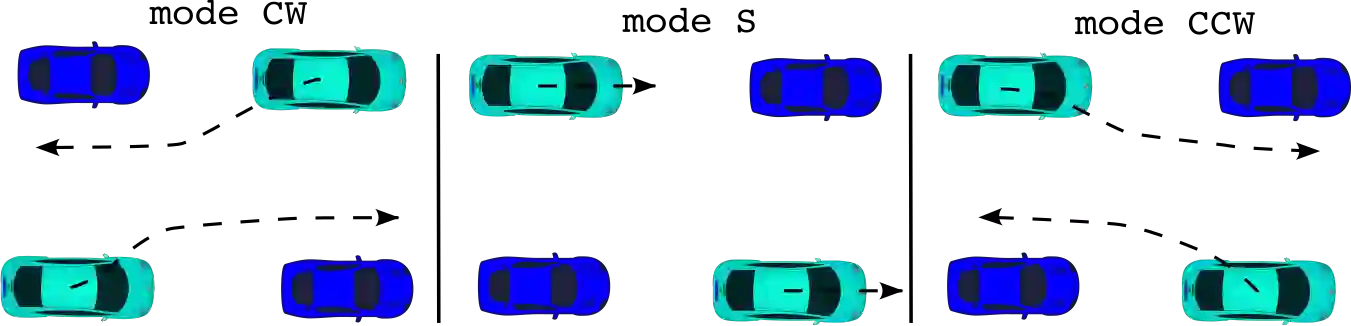
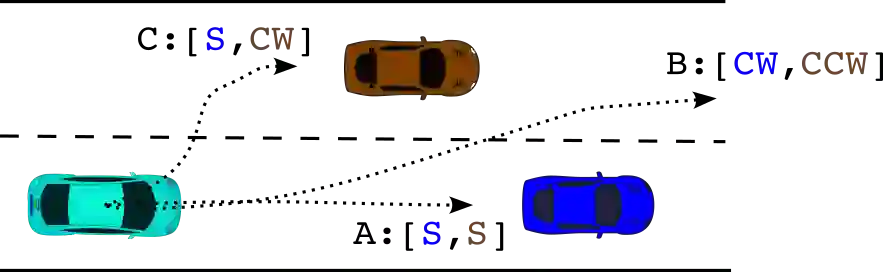
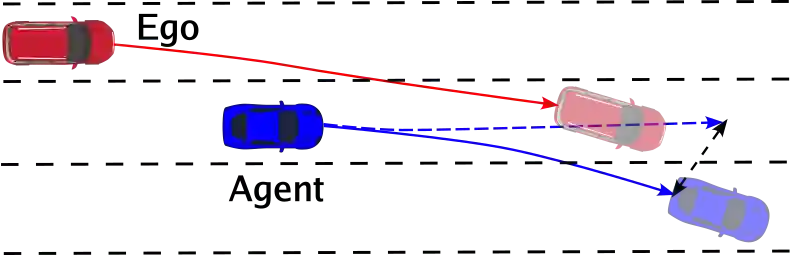
In highly interactive driving scenarios, the actions of one agent greatly influences those of its neighbors. Planning safe motions for autonomous vehicles in such interactive environments, therefore, requires reasoning about the impact of the ego's intended motion plan on nearby agents' behavior. Deep-learning-based models have recently achieved great success in trajectory prediction and many models in the literature allow for ego-conditioned prediction. However, leveraging ego-conditioned prediction remains challenging in downstream planning due to the complex nature of neural networks, limiting the planner structure to simple ones, e.g., sampling-based planner. Despite their ability to generate fine-grained high-quality motion plans, it is difficult for gradient-based planning algorithms, such as model predictive control (MPC), to leverage ego-conditioned prediction due to their iterative nature and need for gradient. We present Interactive Joint Planning (IJP) that bridges MPC with learned prediction models in a computationally scalable manner to provide us the best of both the worlds. In particular, IJP jointly optimizes over the behavior of the ego and the surrounding agents and leverages deep-learned prediction models as prediction priors that the join trajectory optimization tries to stay close to. Furthermore, by leveraging homotopy classes, our joint optimizer searches over diverse motion plans to avoid getting stuck at local minima. Closed-loop simulation result shows that IJP significantly outperforms the baselines that are either without joint optimization or running sampling-based planning.
翻译:在高度交互的驾驶场景中,一个智能体的行为会显著影响其周围智能体的行动。因此,在这种交互环境中规划自动驾驶车辆的安全运动,需要推理自车预期运动规划对附近智能体行为的影响。基于深度学习的模型近年来在轨迹预测方面取得了巨大成功,文献中的许多模型支持自车条件预测。然而,由于神经网络的复杂性质,在后续规划中利用自车条件预测仍然具有挑战性,这限制了规划器结构只能采用简单形式(例如基于采样的规划器)。尽管基于梯度的规划算法(如模型预测控制)能够生成精细的高质量运动规划,但由于其迭代性质和梯度需求,难以利用自车条件预测。我们提出交互式联合规划(IJP),以计算可扩展的方式将模型预测控制与学习型预测模型相结合,从而兼得两者优势。具体而言,IJP联合优化自车与周围智能体的行为,并利用深度学习的预测模型作为先验知识,使联合轨迹优化尽可能接近这些先验。此外,通过利用同伦类,我们的联合优化器搜索多样化的运动规划,以避免陷入局部最小值。闭环仿真结果表明,IJP显著优于未采用联合优化或仅采用基于采样规划的基线方法。




相关内容




 微信扫码咨询专知VIP会员