

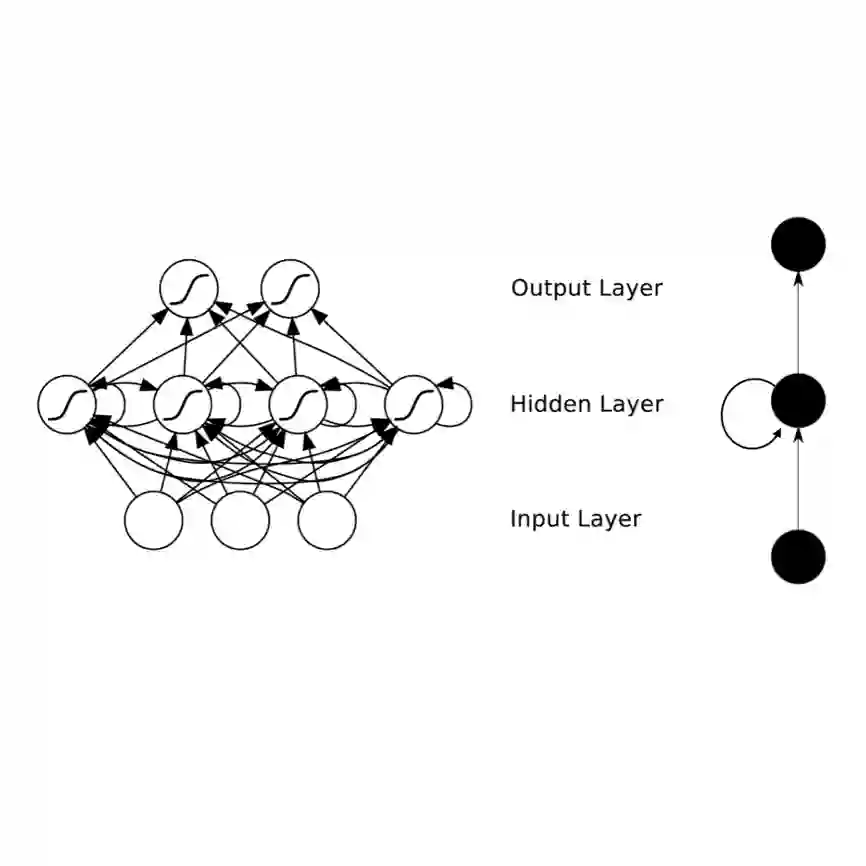
Brain-Computer Interfaces (BCIs) based on P300 event-related potentials offer promising applications in health, education, and assistive technologies. However, challenges related to inter- and intra-subject variability and the explainability of Deep Learning (DL) models limit their practical deployment. In this work, we present the Post-Recurrent Module (PRM), an additional layer designed to improve both performance and transparency, incorporated into a Recurrent Neural Network (RNN) architecture for classifying P300 signals from EEG data. Our approach enables a dual analysis of spatio-temporal signals through both global and local explainability techniques, allowing us not only to identify the most relevant brain regions and critical time intervals involved in classification, but also to interpret model decisions in terms of spatio-temporal EEG patterns consistent with well-stablished neurophysiological descriptions of the P300. Experimental results show a 9\% improvement in performance over state of the art, while also revealing the importance of inter- and intra-subject variability, in alignment with established neuroscience literature. By making model decisions transparent and efficient, we present a framework for explainable EEG-based models. This framework is not limited to more efficient P300 detection, but can be generalized to a wide range of EEG-based tasks. Its ability to identify key spatial and temporal features makes it suitable for applications such as motor imagery, steady-state visual evoked potentials, and even cognitive workload assessment.
翻译:基于P300事件相关电位的脑-机接口在健康、教育和辅助技术领域展现出广阔的应用前景。然而,受试者间/受试者内变异以及深度学习模型可解释性不足等问题制约了其实际部署。本文提出了一种后递归模块,该附加层旨在提升分类性能与模型透明度,并集成于递归神经网络架构中,用于对脑电图数据中的P300信号进行分类。我们的方法通过全局与局部可解释性技术实现了对时空信号的双重分析,不仅能够识别分类中涉及的关键脑区与关键时间区间,还能依据与P300神经生理学经典描述相符的时空脑电图模式解释模型决策。实验结果表明,该方法在性能上较当前最优方法提升9%,同时揭示了与现有神经科学文献一致的受试者间/受试者内变异的重要性。通过使模型决策透明且高效,我们提出了一种可解释的脑电图模型框架。该框架不仅局限于更高效的P300检测,还可推广至广泛基于脑电图的任务中。其识别关键时空特征的能力使其适用于运动想象、稳态视觉诱发电位乃至认知负荷评估等应用场景。




相关内容




 微信扫码咨询专知VIP会员