

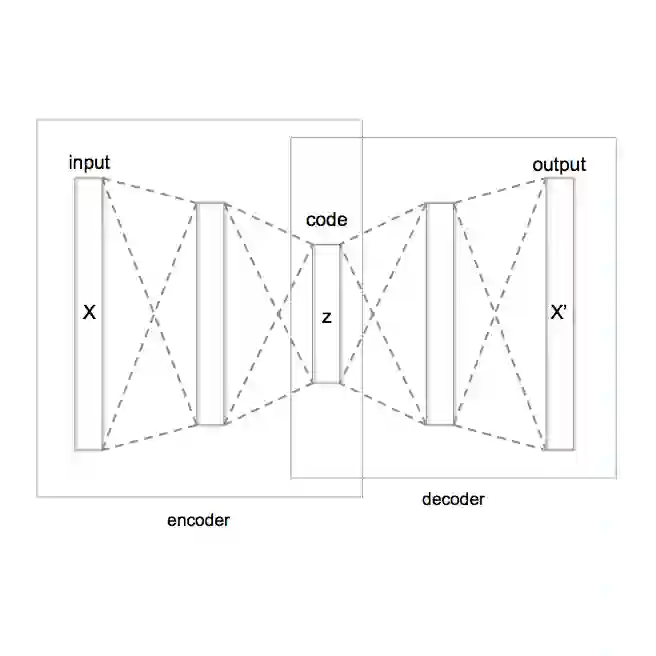
Adjoint-based shape optimization of ship hulls is a powerful tool for addressing high-dimensional design problems in naval architecture, particularly in minimizing the ship resistance. However, its application to vessels that employ complex propulsion systems introduces significant challenges. They arise from the need for transient simulations extending over long periods of time with small time steps and from the reverse temporal propagation of the primal and adjoint solutions. These challenges place considerable demands on the required storage and computing power, which significantly hamper the use of adjoint methods in the industry. To address this issue, we propose a machine learning-assisted optimization framework that employs a Conditional Variational Autoencoder-based surrogate model of the propulsion system. The surrogate model replicates the time-averaged flow field induced by a Voith Schneider Propeller and replaces the geometrically and time-resolved propeller with a data-driven approximation. Primal flow verification examples demonstrate that the surrogate model achieves significant computational savings while maintaining the necessary accuracy of the resolved propeller. Optimization studies show that ignoring the propulsion system can yield designs that perform worse than the initial shape. In contrast, the proposed method produces shapes that achieve more than an 8\% reduction in resistance.
翻译:基于伴随的船体形状优化是解决船舶工程中高维设计问题(尤其是最小化船舶阻力)的有力工具。然而,将其应用于采用复杂推进系统的船舶时,会引入重大挑战。这些挑战源于需要以较小时间步长进行长时间瞬态模拟,以及原始解与伴随解的反向时间传播。这些挑战对所需的存储和计算能力提出了相当高的要求,严重阻碍了伴随方法在工业中的应用。为解决这一问题,我们提出了一种机器学习辅助的优化框架,该框架采用基于条件变分自编码器的推进系统代理模型。该代理模型复现了福伊特施耐德推进器诱导的时间平均流场,并以数据驱动的近似模型取代了几何与时间解析的推进器。原始流体验证算例表明,该代理模型在保持解析推进器所需精度的同时,实现了显著的计算节省。优化研究表明,忽略推进系统可能导致设计性能劣于初始形状。相比之下,所提方法生成的船体形状实现了超过8%的阻力降低。




相关内容

 微信扫码咨询专知VIP会员