

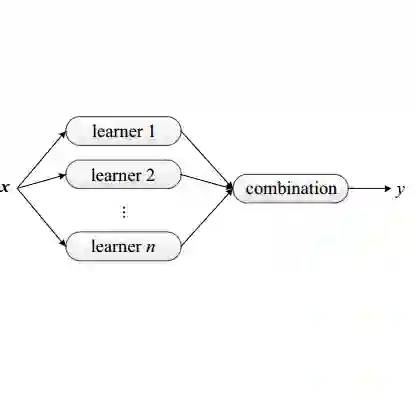
Type 1 diabetes is a serious disease in which individuals are unable to regulate their blood glucose levels, leading to various medical complications. Artificial pancreas (AP) systems have been developed as a solution for type 1 diabetic patients to mimic the behavior of the pancreas and regulate blood glucose levels. However, current AP systems lack detection capabilities for exercise-induced glucose intake, which can last up to 4 to 8 hours. This incapability can lead to hypoglycemia, which if left untreated, could have serious consequences, including death. Existing exercise detection methods are either limited to single sensor data or use inaccurate models for exercise detection, making them less effective in practice. In this work, we propose an ensemble learning framework that combines a data-driven physiological model and a Siamese network to leverage multiple physiological signal streams for exercise detection with high accuracy. To evaluate the effectiveness of our proposed approach, we utilized a public dataset with 12 diabetic patients collected from an 8-week clinical trial. Our approach achieves a true positive rate for exercise detection of 86.4% and a true negative rate of 99.1%, outperforming state-of-the-art solutions.
翻译:1型糖尿病是一种严重的疾病,患者无法自主调节血糖水平,从而引发多种医学并发症。人工胰腺(AP)系统作为针对1型糖尿病患者的解决方案被开发出来,模拟胰腺行为并调节血糖水平。然而,当前AP系统缺乏对运动诱发的葡萄糖摄入的检测能力,这种影响可持续4至8小时。这一缺陷可能导致低血糖症,若未及时处理,可能引发严重后果甚至死亡。现有运动检测方法要么局限于单一传感器数据,要么采用不精确的模型,实际应用中效果欠佳。本文提出了一种集成学习框架,结合数据驱动的生理模型和孪生网络(Siamese network),利用多路生理信号流实现高精度运动检测。为评估所提方法的有效性,我们采用了包含12名糖尿病患者数据的公开数据集,该数据来自一项为期8周的临床试验。我们的方法在运动检测中实现了86.4%的真阳性率和99.1%的真阴性率,性能优于现有最优解决方案。




相关内容



 微信扫码咨询专知VIP会员