

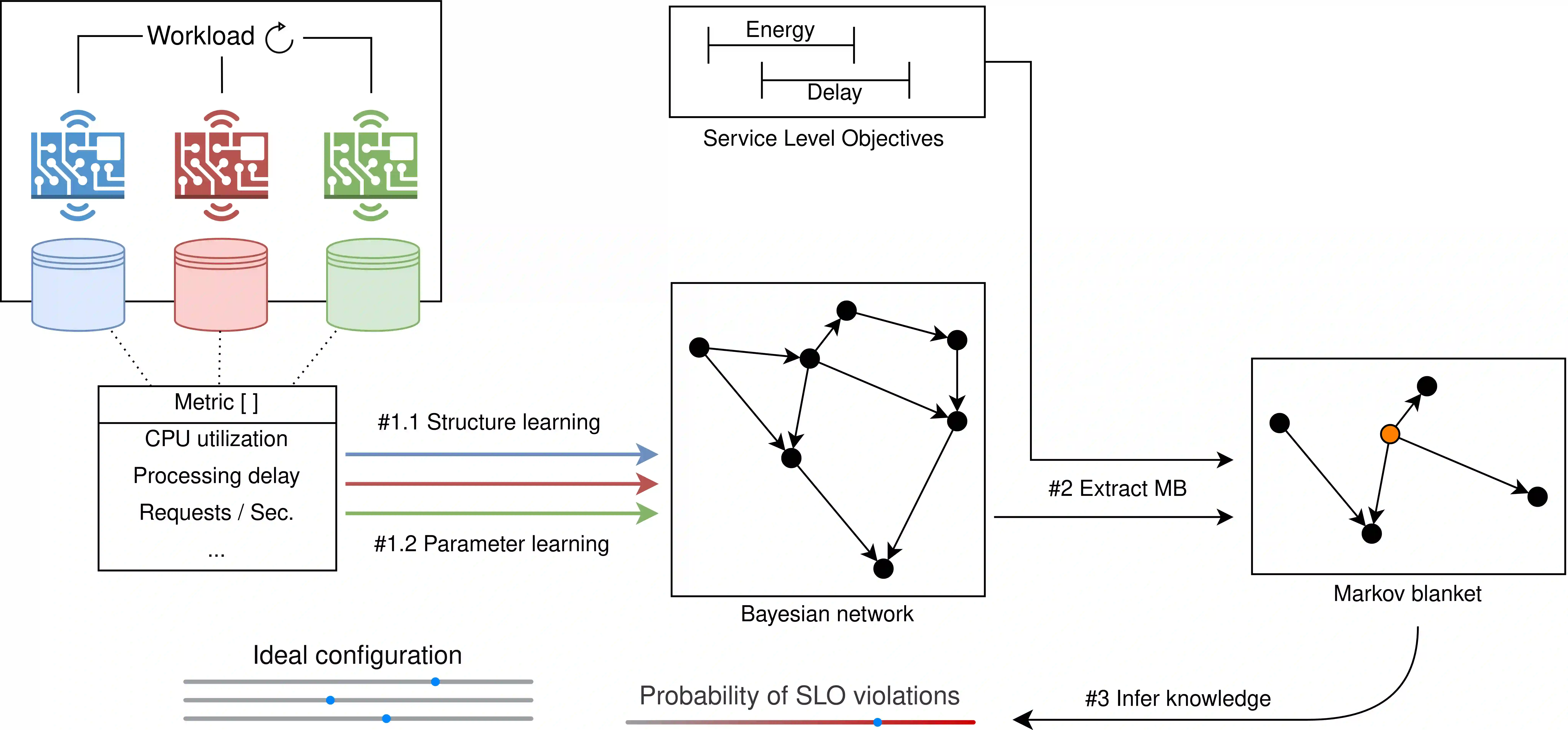
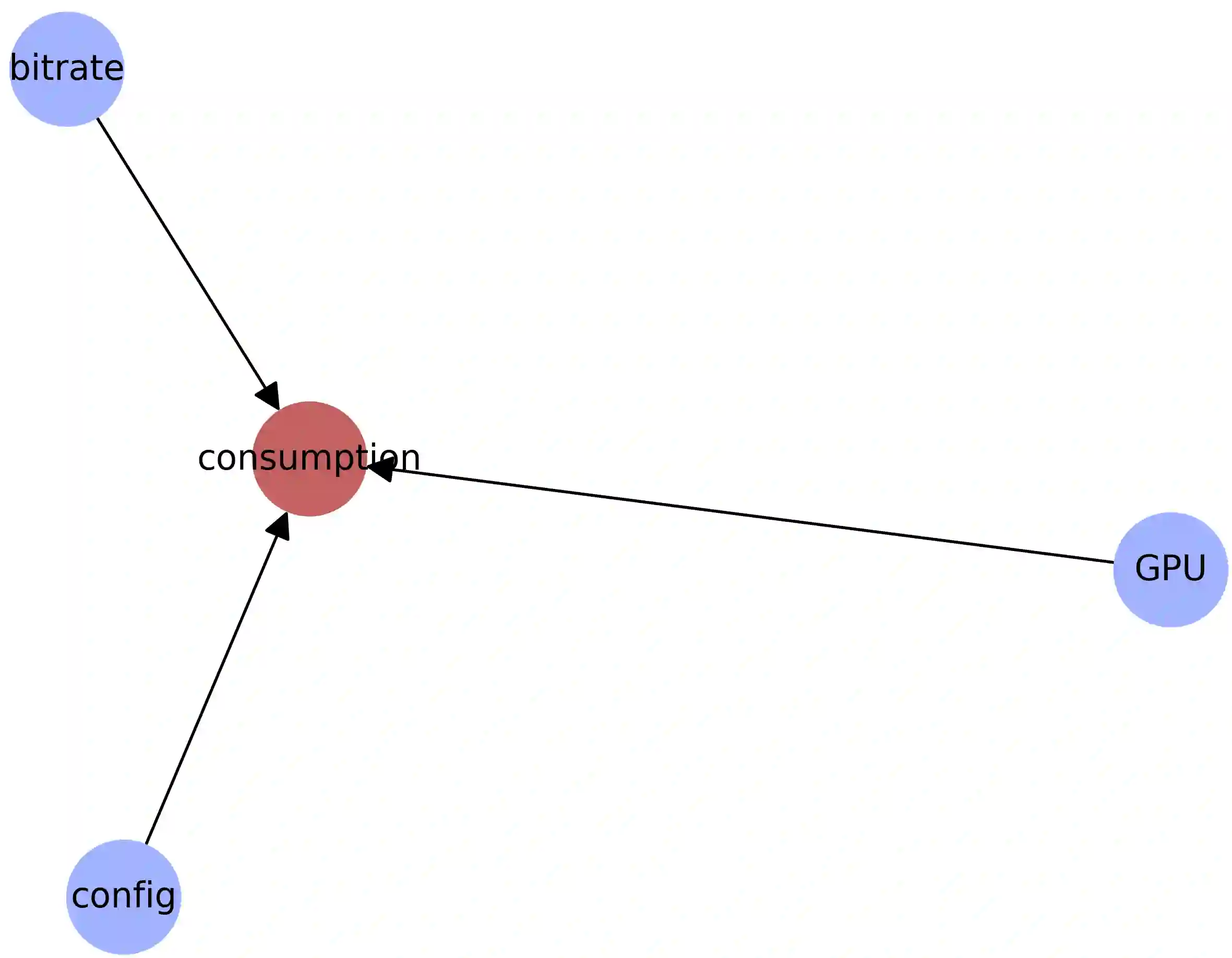
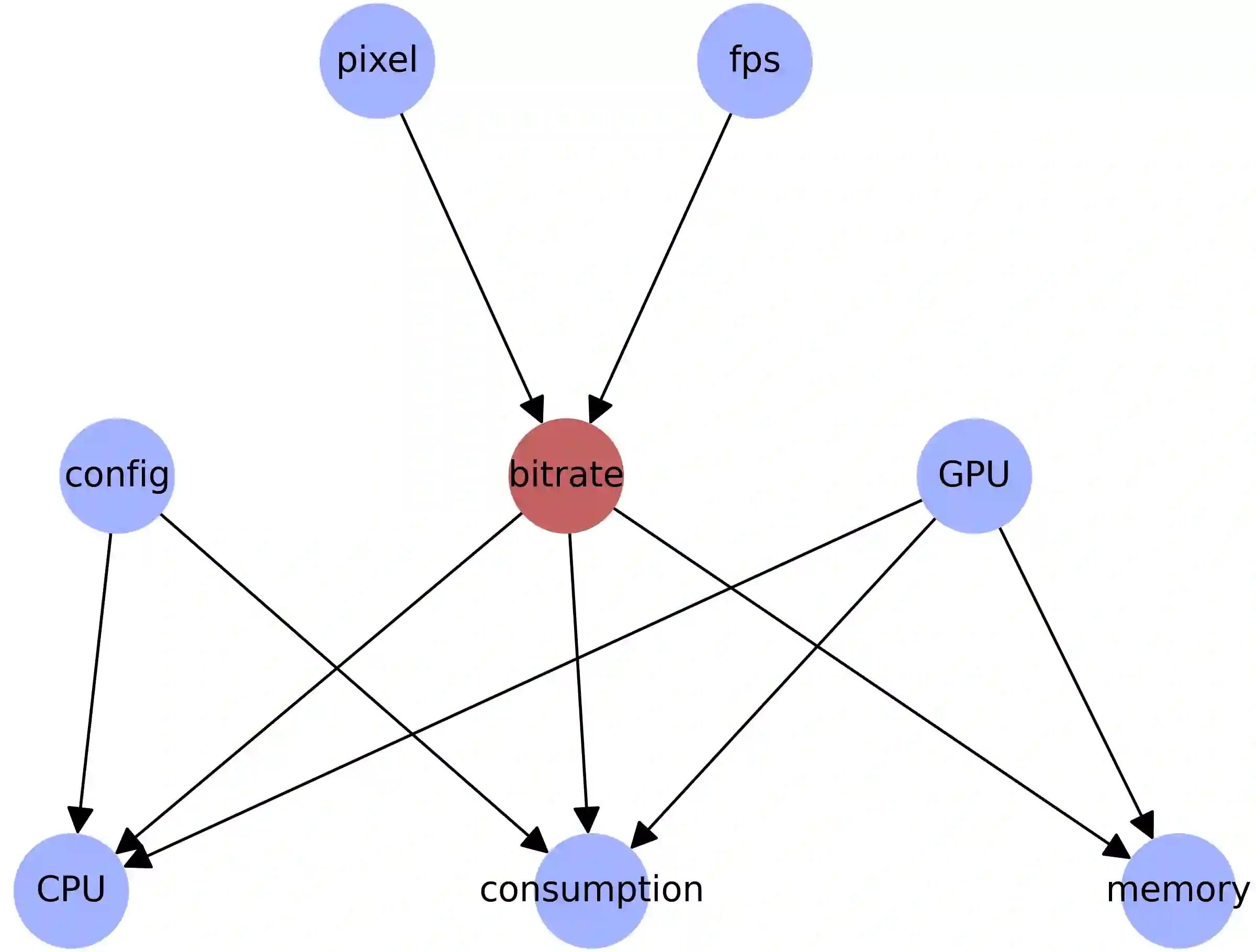
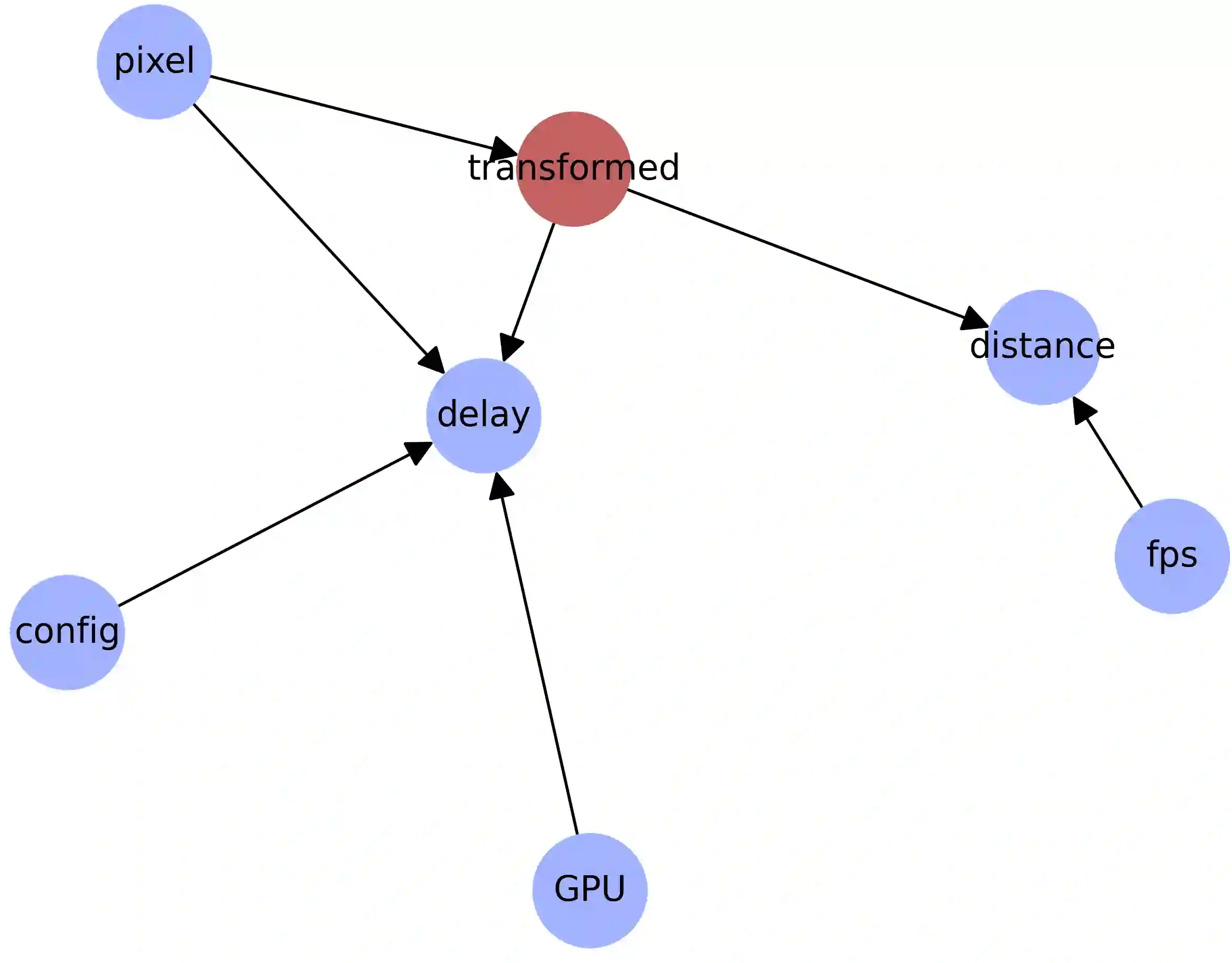
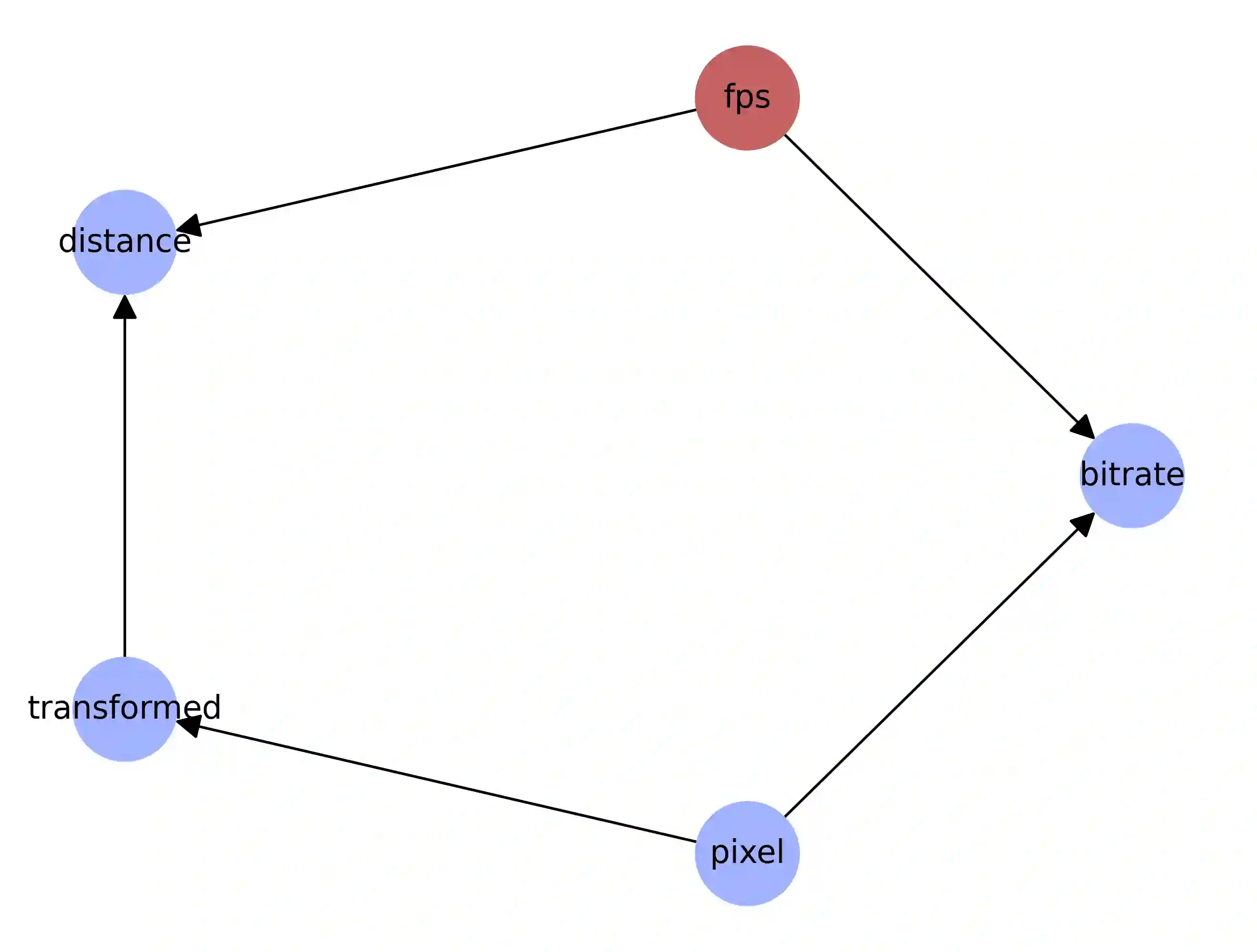
Compute Continuum (CC) systems comprise a vast number of devices distributed over computational tiers. Evaluating business requirements, i.e., Service Level Objectives (SLOs), requires collecting data from all those devices; if SLOs are violated, devices must be reconfigured to ensure correct operation. If done centrally, this dramatically increases the number of devices and variables that must be considered, while creating an enormous communication overhead. To address this, we (1) introduce a causality filter based on Markov blankets (MB) that limits the number of variables that each device must track, (2) evaluate SLOs decentralized on a device basis, and (3) infer optimal device configuration for fulfilling SLOs. We evaluated our methodology by analyzing video stream transformations and providing device configurations that ensure the Quality of Service (QoS). The devices thus perceived their environment and acted accordingly -- a form of decentralized intelligence.
翻译:计算连续体(CC)系统包含分布在计算层级上的大量设备。评估业务需求(即服务等级目标SLO)需要从所有设备收集数据;若SLO违反,则必须重新配置设备以确保正常运行。若采用集中式处理,这会急剧增加需考虑的设备和变量数量,同时产生巨大的通信开销。为解决此问题,我们(1)引入基于马尔可夫毯(MB)的因果滤波器,限制每台设备需追踪的变量数量;(2)以设备为单位分散化评估SLO;(3)推断满足SLO的最优设备配置。通过分析视频流变换并提供保障服务质量(QoS)的设备配置,我们评估了该方法。由此,设备感知环境并作出相应调整——一种分散化智能形式。




相关内容



 微信扫码咨询专知VIP会员