

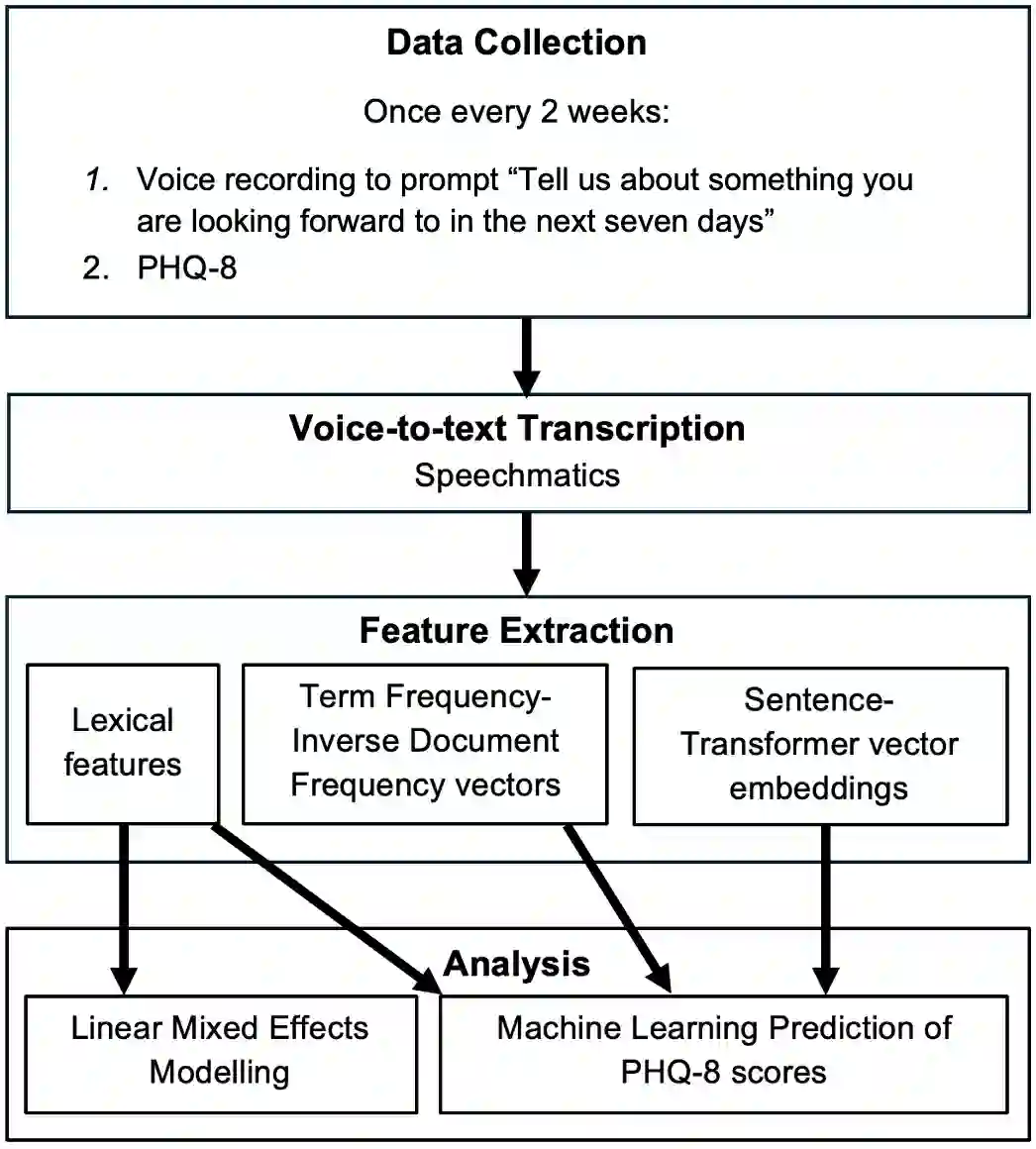
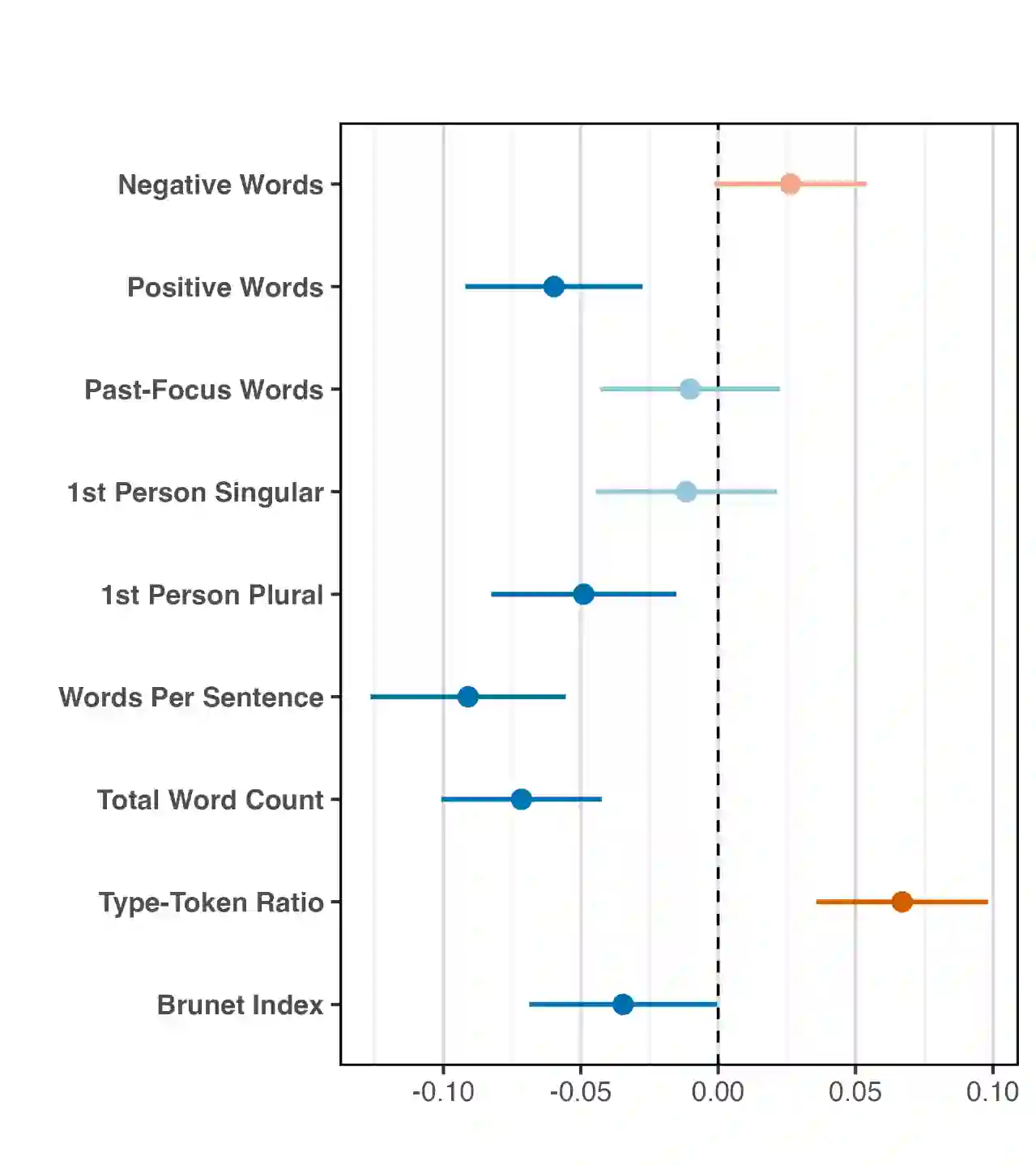
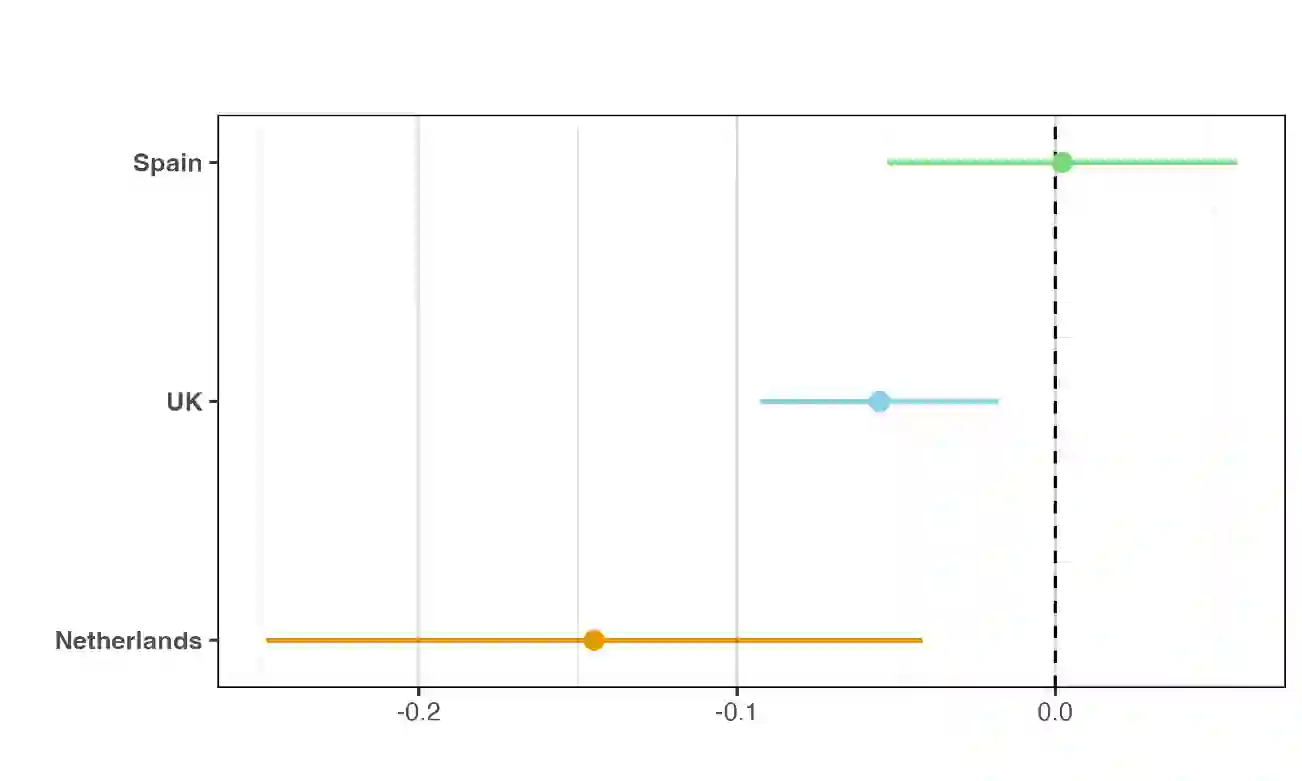
Background: Remotely captured spoken language could provide objective, regular indicators of depression symptom severity. However, research to date has largely used non-clinical, cross-sectional written language and complex machine learning (ML) approaches with limited interpretability. Methods: We used linear mixed-effect models to identify interpretable lexical features associated with symptom severity in data from the RADAR-MDD study that comprised 5,846 smartphone recordings and Patient Health Questionnaire (PHQ-8) scores from 467 participants in the UK, Netherlands and Spain. We then developed ML models and systematically assessed via nested cross-validation whether interpretable lexical features or high-dimensional vector embeddings improved the accuracy of PHQ-8 prediction over sociodemographic and confounding features. Results: Depression symptom severity was associated with five lexical features, including reductions in word count measures, use of first-person plural pronouns and positive word frequency. Associations were stable across countries, except for positive word frequency. Lexical features and vector embeddings did improve prediction accuracy beyond baseline models. Limitations: Our cohort was skewed in age (median = 53, IQR 35 to 62) and majority female (n=357), potentially affecting the generalizability of our results. A lack of natural language processing tools for non-English languages restricted our feature choices. Conclusion: Further research is required to realise the value of spoken lexical markers in clinical research and practice including larger and more diverse samples, elicitation protocol development and analytical methods that account for within- and between-individual variations.
翻译:暂无翻译


相关内容




 微信扫码咨询专知VIP会员