

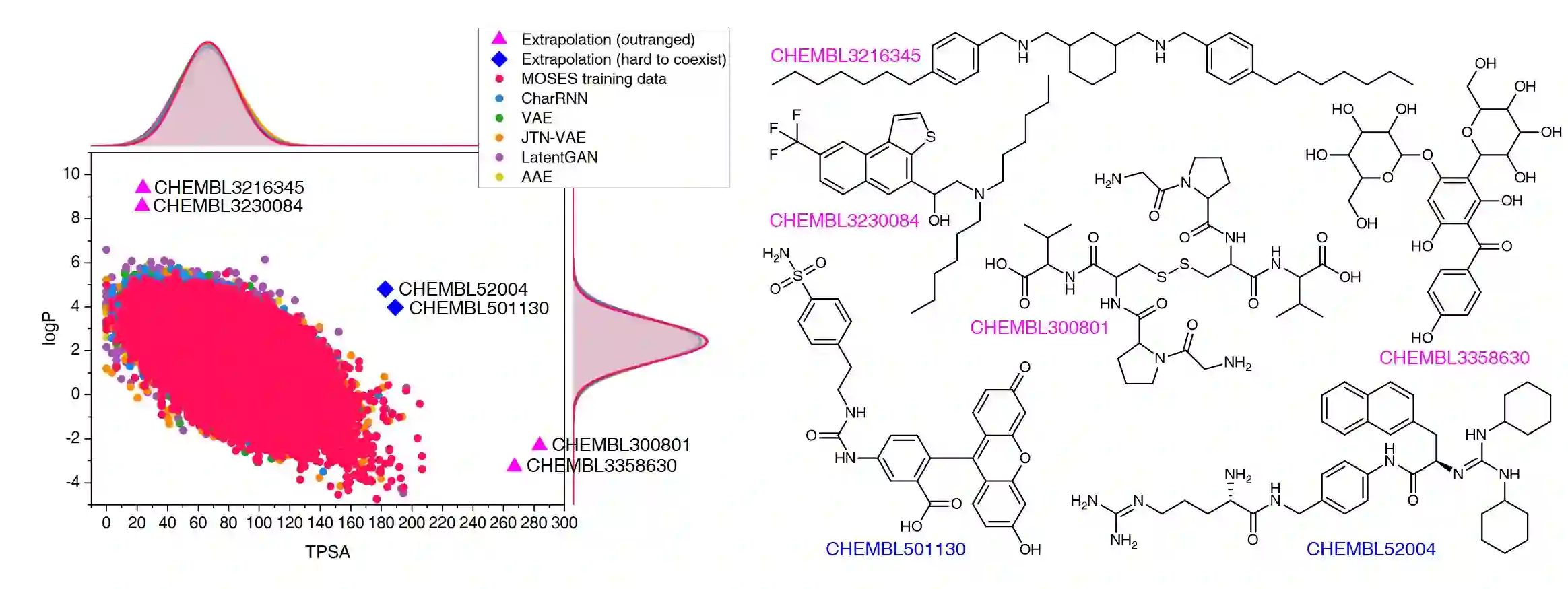
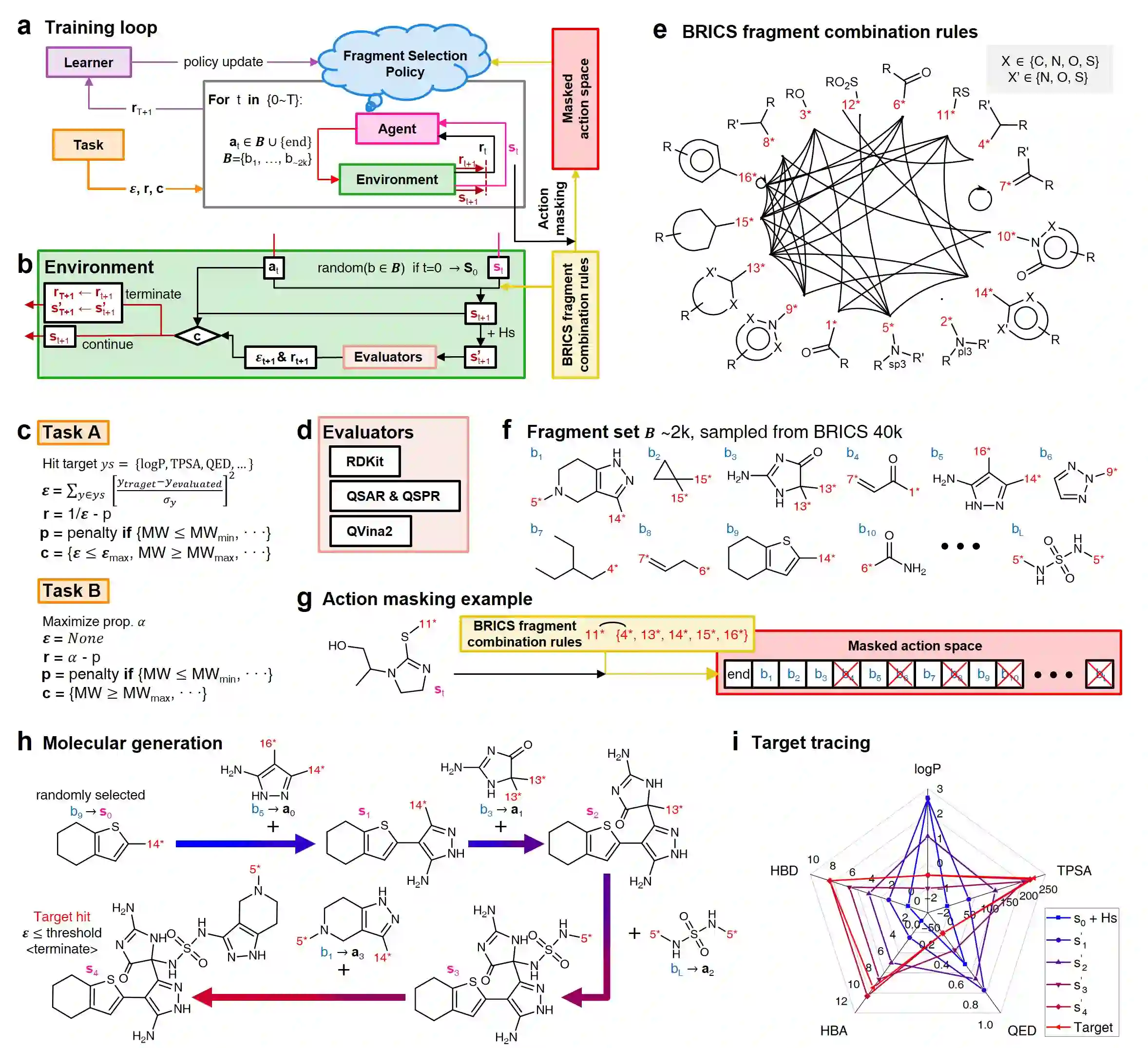
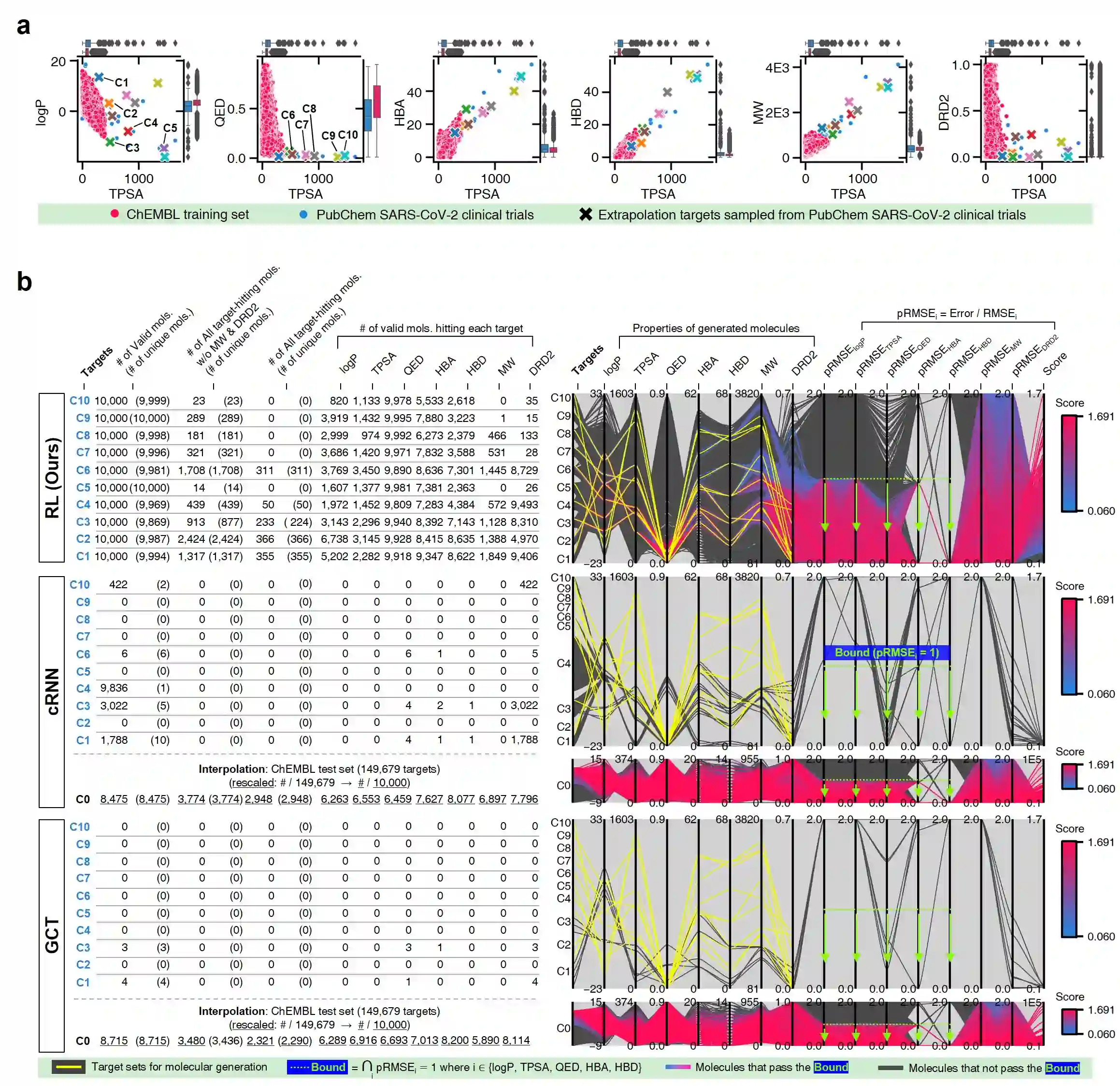
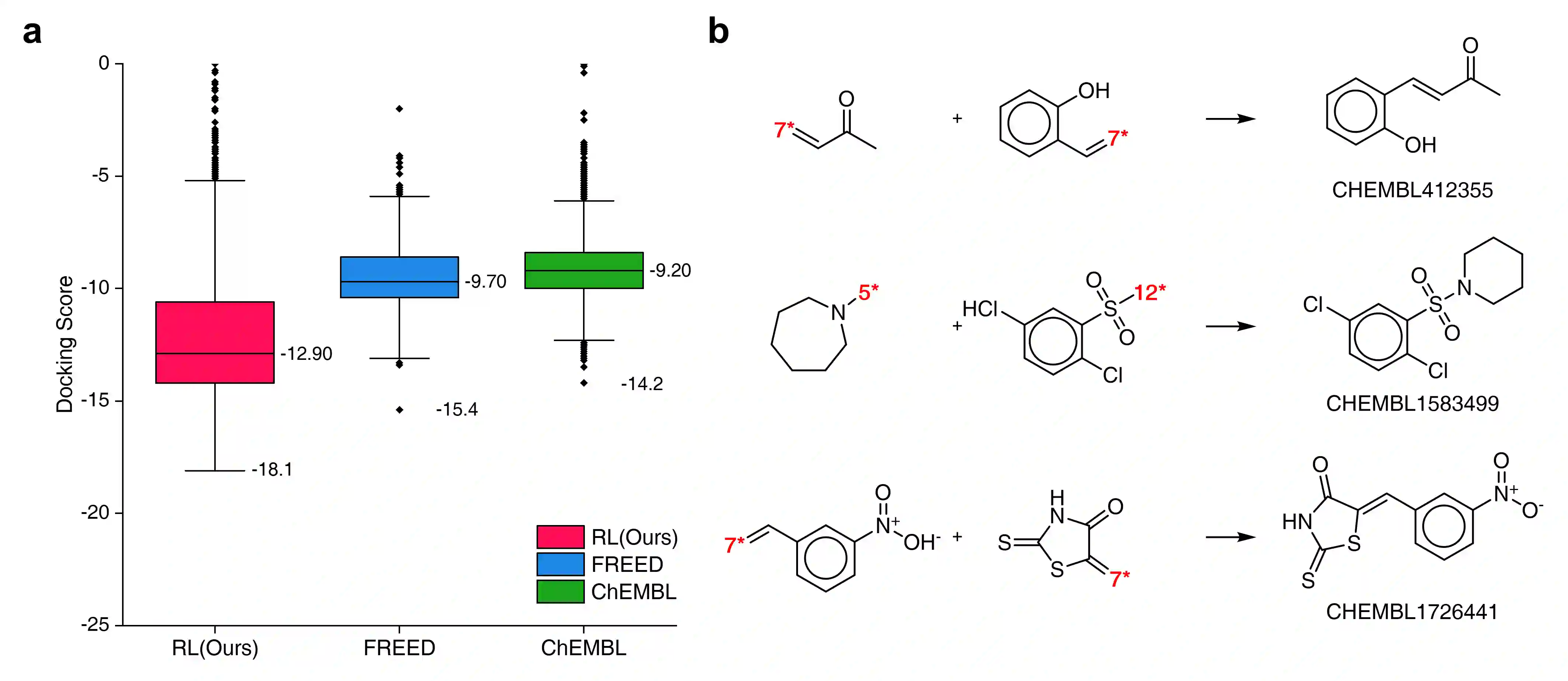
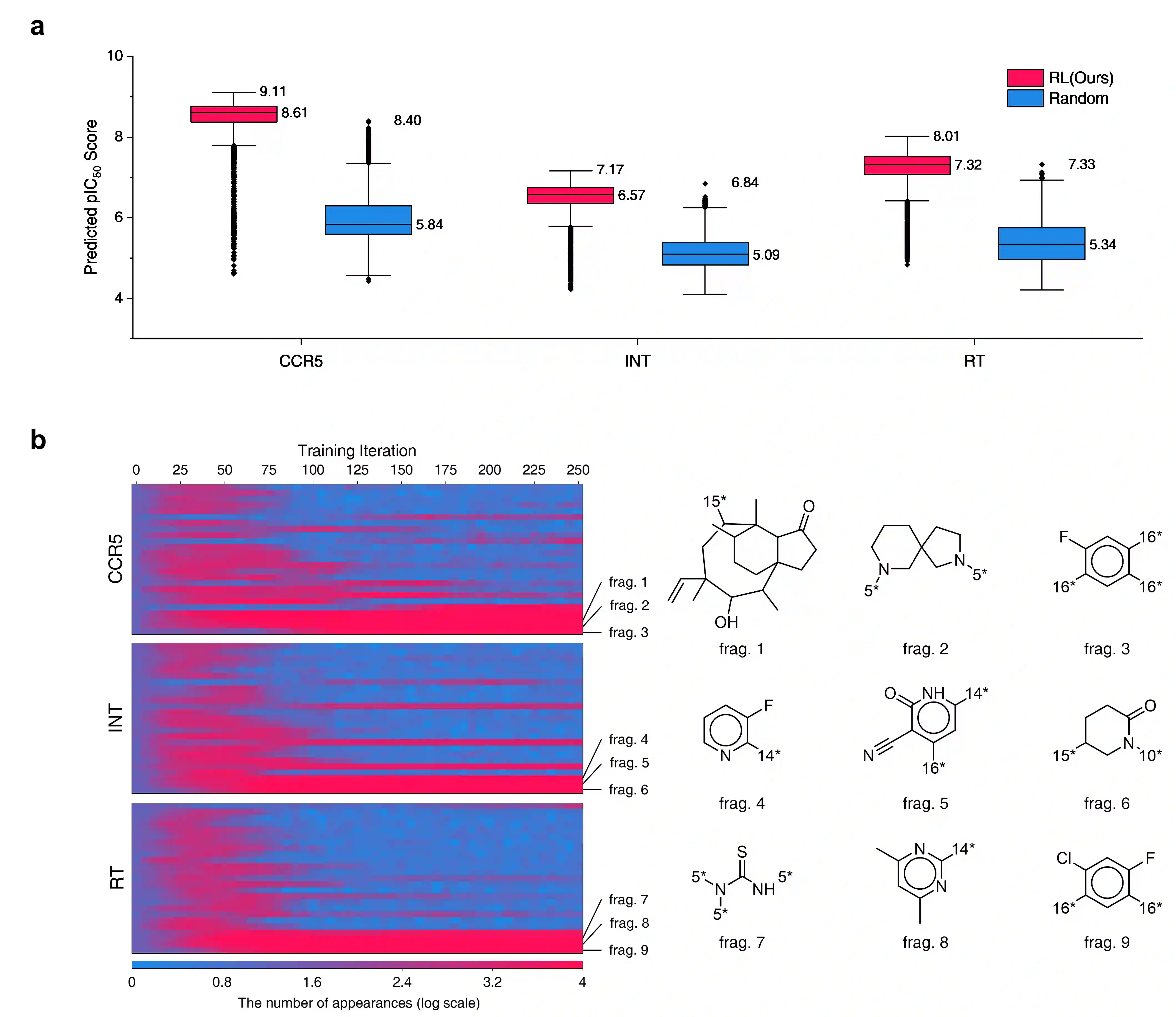
The goal of most materials discovery is to discover materials that are superior to those currently known. Fundamentally, this is close to extrapolation, which is a weak point for most machine learning models that learn the probability distribution of data. Herein, we develop AI-driven combinatorial chemistry, which is a rule-based inverse molecular designer that does not rely on data. Since our model has the potential to generate all possible molecular structures that can be obtained from combinations of molecular fragments, unknown materials with superior properties can be discovered. We theoretically and empirically demonstrate that our model is more suitable for discovering better materials than probability distribution-learning models. In an experiment aimed at discovering molecules that hit seven target properties, our model discovered 1,315 of all target-hitting molecules and 7,629 of five target-hitting molecules out of 100,000 trials, whereas the probability distribution-learning models failed. To illustrate the performance in actual problems, we also demonstrate that our models work well on two practical applications: discovering protein docking materials and HIV inhibitors.
翻译:大多数材料发现的目标是找到优于现有已知材料的材料。从根本上讲,这接近于外推法,而大多数学习数据概率分布的机器学习模型在这方面存在弱点。为此,我们开发了AI驱动组合化学——一种不依赖数据的基于规则的逆向分子设计方法。由于我们的模型能够生成通过分子片段组合可获得的所有可能分子结构,因此可以发现具有优异性能的未知材料。我们从理论和实验上证明,与概率分布学习模型相比,该模型更适用于发现性能更优的材料。在旨在发现满足七种目标特性的分子的实验中,我们的模型在10万次试验中发现了1315种满足全部目标特性的分子和7629种满足五种目标特性的分子,而概率分布学习模型均未能成功。为展示其在实际问题中的表现,我们还验证了模型在两个实际应用中的良好性能:发现蛋白质对接材料和HIV抑制剂。




相关内容



 微信扫码咨询专知VIP会员