

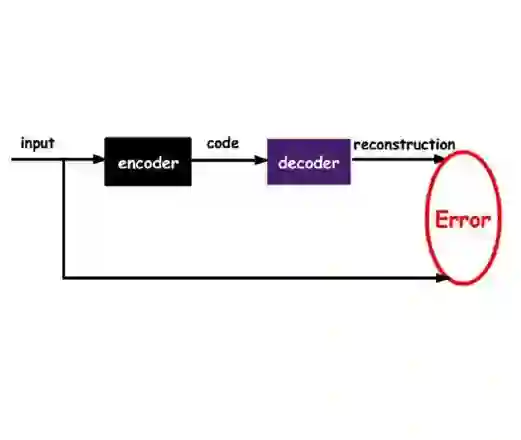
Continual learning protocols are attracting increasing attention from the medical imaging community. In continual environments, datasets acquired under different conditions arrive sequentially; and each is only available for a limited period of time. Given the inherent privacy risks associated with medical data, this setup reflects the reality of deployment for deep learning diagnostic radiology systems. Many techniques exist to learn continuously for image classification, and several have been adapted to semantic segmentation. Yet most struggle to accumulate knowledge in a meaningful manner. Instead, they focus on preventing the problem of catastrophic forgetting, even when this reduces model plasticity and thereon burdens the training process. This puts into question whether the additional overhead of knowledge preservation is worth it - particularly for medical image segmentation, where computation requirements are already high - or if maintaining separate models would be a better solution. We propose UNEG, a simple and widely applicable multi-model benchmark that maintains separate segmentation and autoencoder networks for each training stage. The autoencoder is built from the same architecture as the segmentation network, which in our case is a full-resolution nnU-Net, to bypass any additional design decisions. During inference, the reconstruction error is used to select the most appropriate segmenter for each test image. Open this concept, we develop a fair evaluation scheme for different continual learning settings that moves beyond the prevention of catastrophic forgetting. Our results across three regions of interest (prostate, hippocampus, and right ventricle) show that UNEG outperforms several continual learning methods, reinforcing the need for strong baselines in continual learning research.
翻译:连续学习协议正日益受到医学影像领域的关注。在连续学习环境中,在不同条件下采集的数据集按顺序到达,且每个数据集仅在一段有限的时间内可用。鉴于医学数据固有的隐私风险,这种设置反映了深度学习诊断放射学系统在部署中的现实情况。目前存在许多用于图像分类的连续学习技术,其中一些已被调整应用于语义分割。然而,大多数技术难以以一种有意义的方式积累知识。相反,它们专注于防止灾难性遗忘的问题,即使这降低了模型的可塑性并因此增加了训练过程的负担。这引出了一个问题:保持知识的额外开销是否值得——尤其是在医学图像分割中,计算需求已经很高——或者维护独立的模型是否是一种更好的解决方案。我们提出了UNEG,一种简单且广泛适用的多模型基准,它为每个训练阶段维护独立的分割网络和自编码器网络。自编码器采用与分割网络相同的架构构建,在我们的案例中,分割网络为全分辨率nnU-Net,以避免任何额外的设计决策。在推理过程中,利用重构误差为每个测试图像选择最合适的分割器。基于这一概念,我们开发了一种公平的评估方案,适用于不同的连续学习设置,超越了防止灾难性遗忘的范畴。我们在三个感兴趣区域(前列腺、海马体和右心室)上的结果表明,UNEG优于几种连续学习方法,这强调了在连续学习研究中建立强基线的重要性。




相关内容

Source: Apple - iOS 8


 微信扫码咨询专知VIP会员