

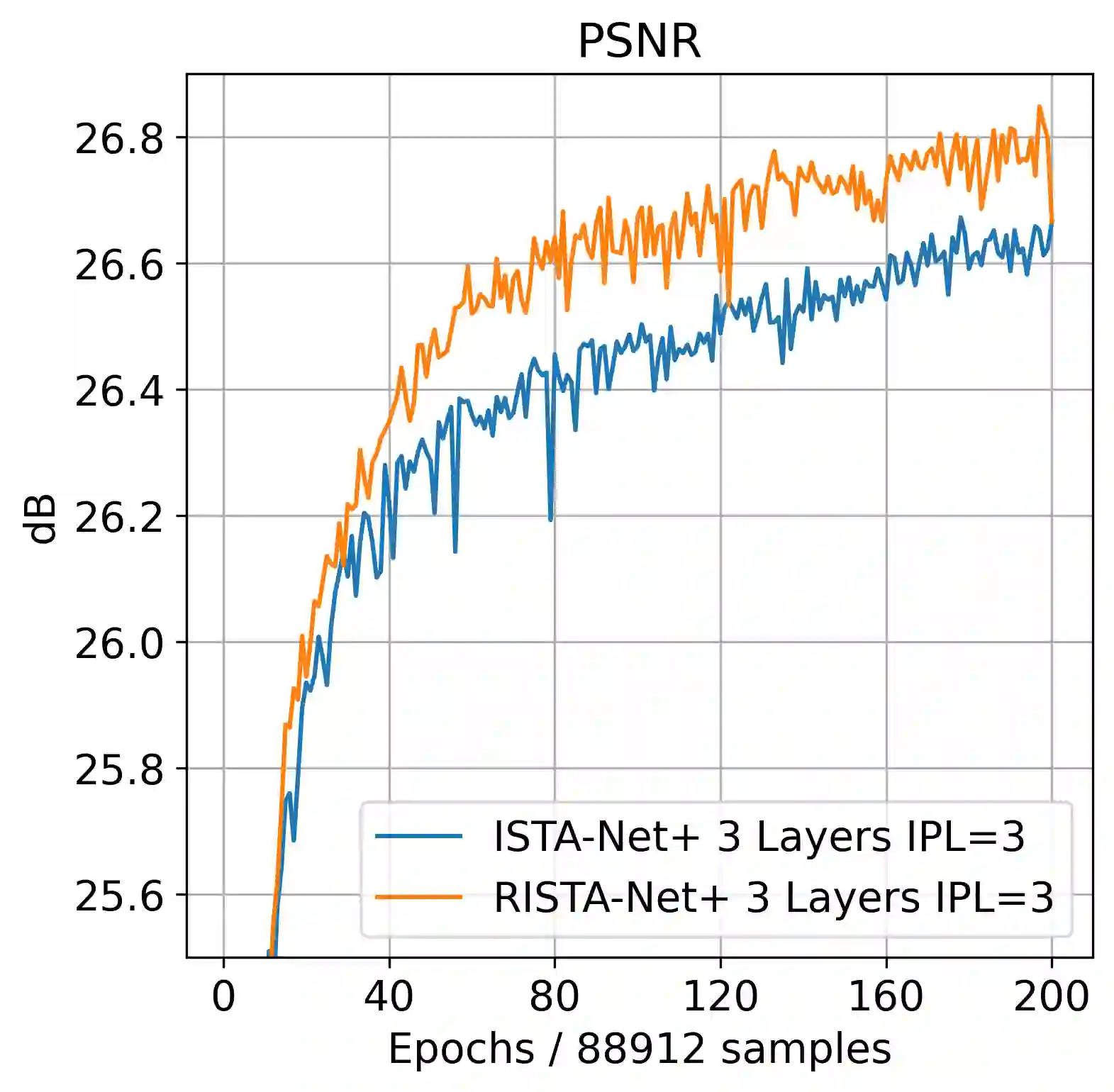
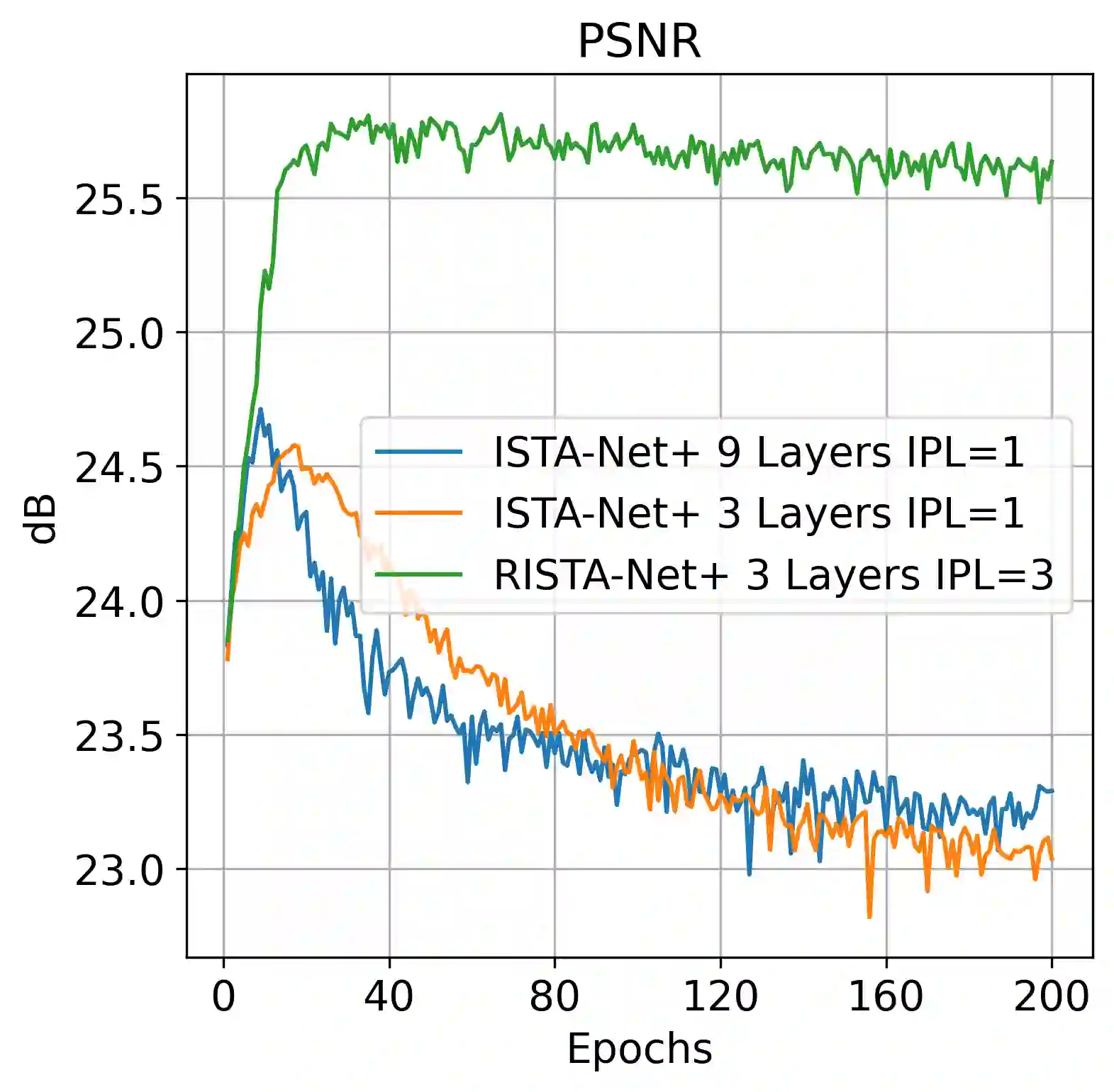
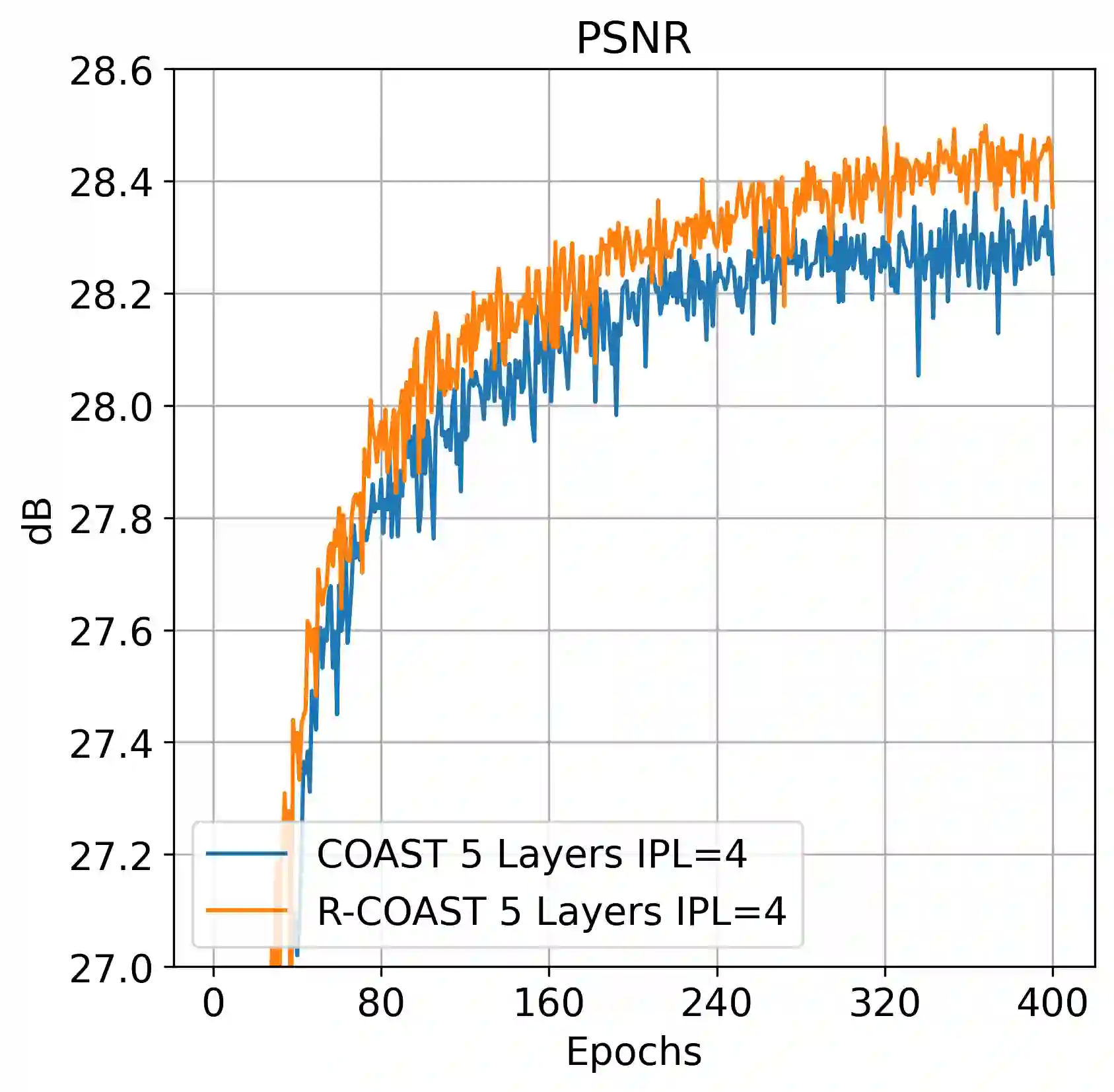
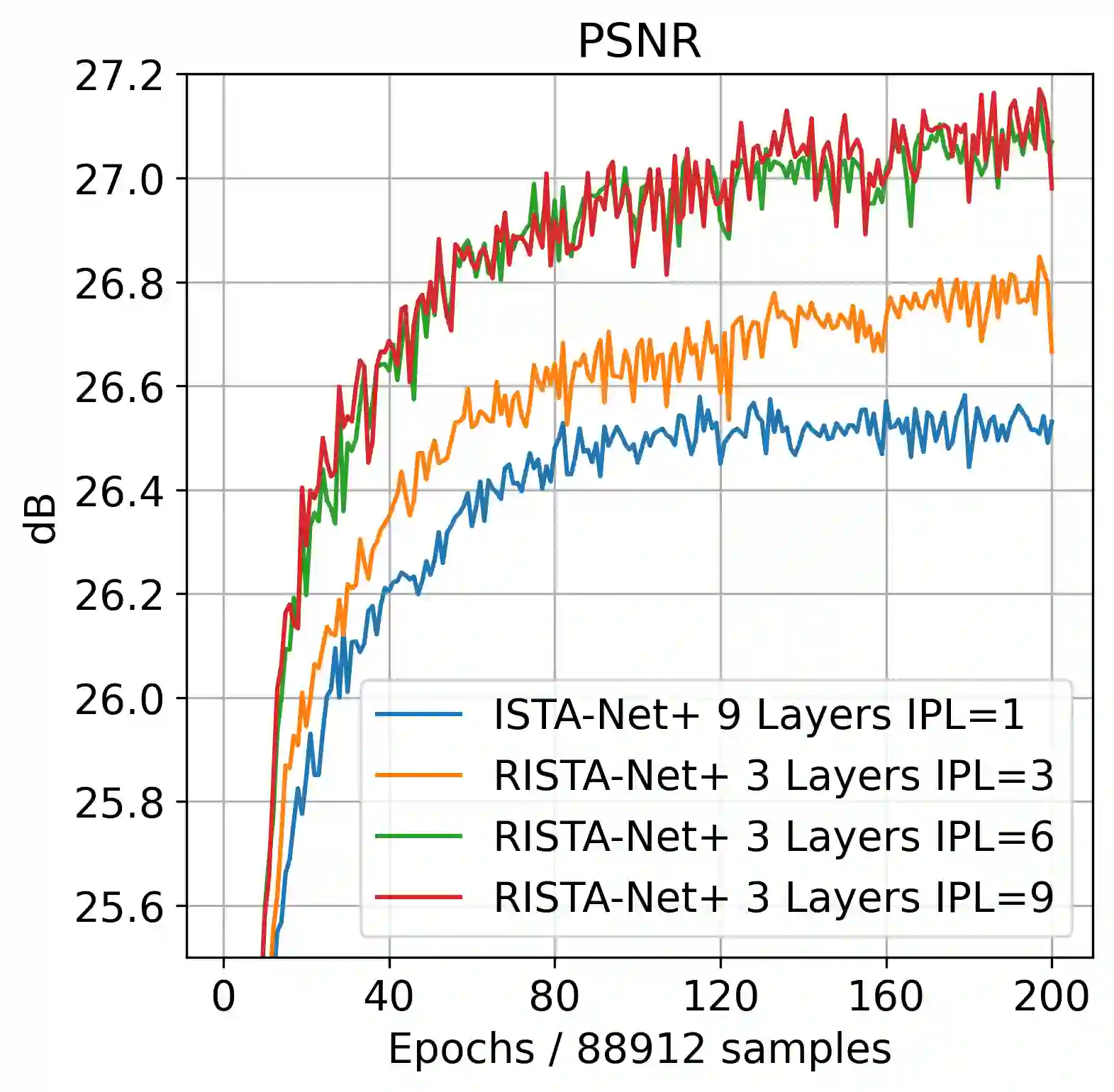
The use of deep unfolding networks in compressive sensing (CS) has seen wide success as they provide both simplicity and interpretability. However, since most deep unfolding networks are iterative, this incurs significant redundancies in the network. In this work, we propose a novel recursion-based framework to enhance the efficiency of deep unfolding models. First, recursions are used to effectively eliminate the redundancies in deep unfolding networks. Secondly, we randomize the number of recursions during training to decrease the overall training time. Finally, to effectively utilize the power of recursions, we introduce a learnable unit to modulate the features of the model based on both the total number of iterations and the current iteration index. To evaluate the proposed framework, we apply it to both ISTA-Net+ and COAST. Extensive testing shows that our proposed framework allows the network to cut down as much as 75% of its learnable parameters while mostly maintaining its performance, and at the same time, it cuts around 21% and 42% from the training time for ISTA-Net+ and COAST respectively. Moreover, when presented with a limited training dataset, the recursive models match or even outperform their respective non-recursive baseline. Codes and pretrained models are available at https://github.com/Rawwad-Alhejaili/Recursions-Are-All-You-Need .
翻译:深度展开网络在压缩感知(CS)中的应用取得了广泛成功,因其兼具简洁性与可解释性。然而,由于大多数深度展开网络采用迭代结构,这导致网络中引入了显著的冗余。在本工作中,我们提出了一种新颖的基于递归的框架,以提升深度展开模型的效率。首先,利用递归有效消除深度展开网络中的冗余。其次,我们在训练过程中随机化递归次数,以缩短整体训练时间。最后,为充分利用递归的能力,我们引入了一个可学习单元,该单元基于总迭代次数和当前迭代索引对模型特征进行调制。为评估所提框架,我们将其应用于ISTA-Net+和COAST两种模型。大量实验表明,采用该框架的网络可削减高达75%的可学习参数,同时基本保持原有性能;此外,ISTA-Net+和COAST的训练时间分别缩短约21%和42%。当训练数据集有限时,递归模型的表现可与非递归基线模型持平甚至更优。代码与预训练模型已发布于https://github.com/Rawwad-Alhejaili/Recursions-Are-All-You-Need。





相关内容




 微信扫码咨询专知VIP会员