

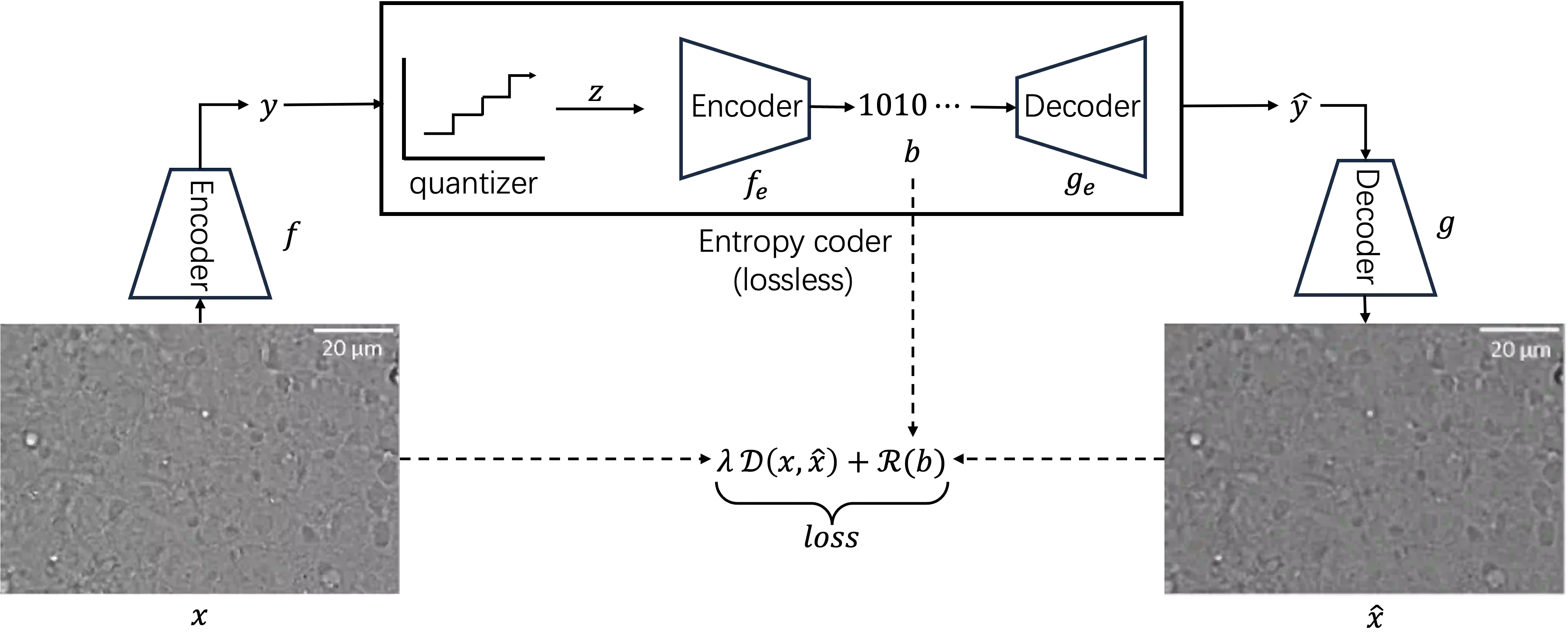
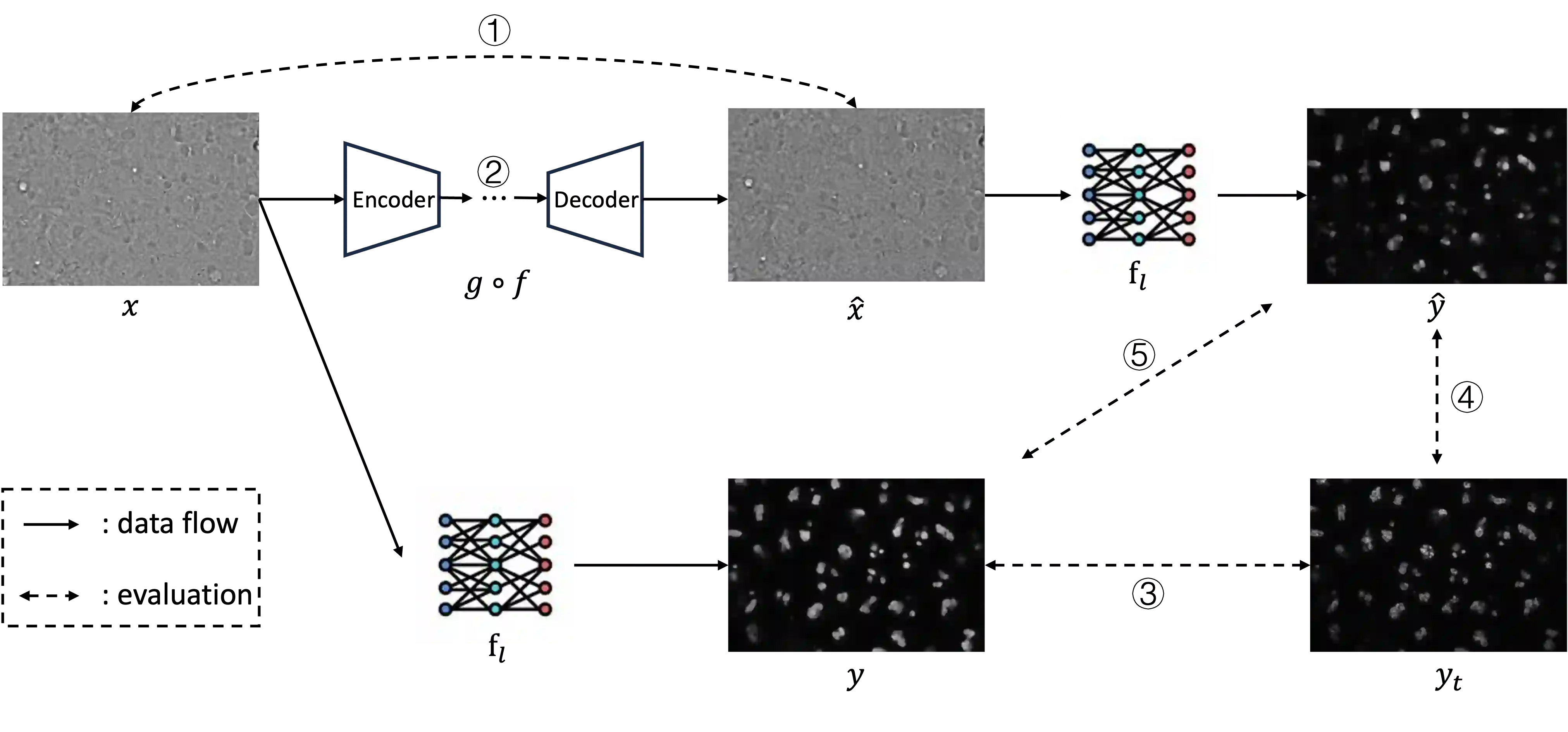
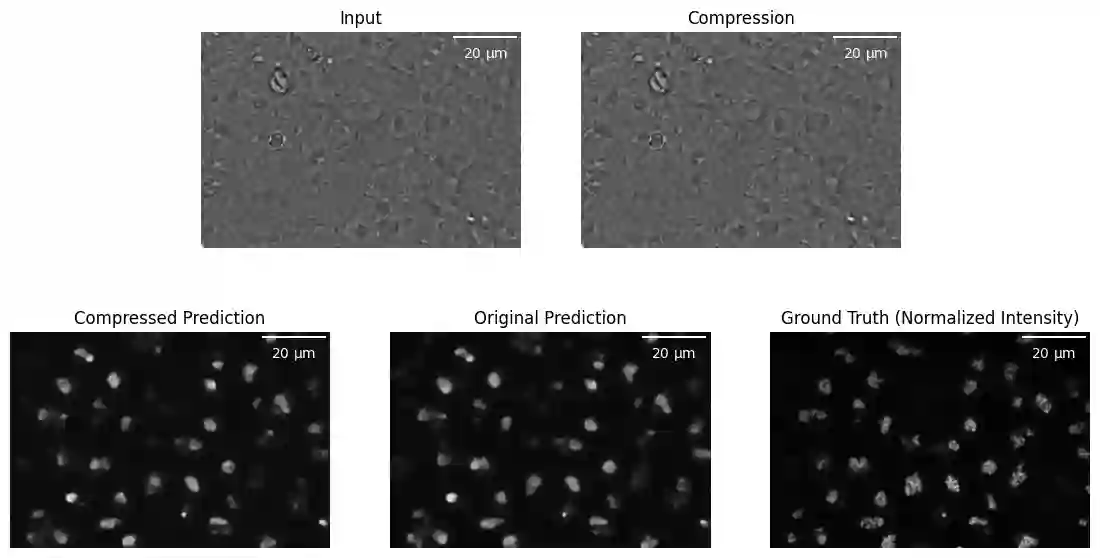
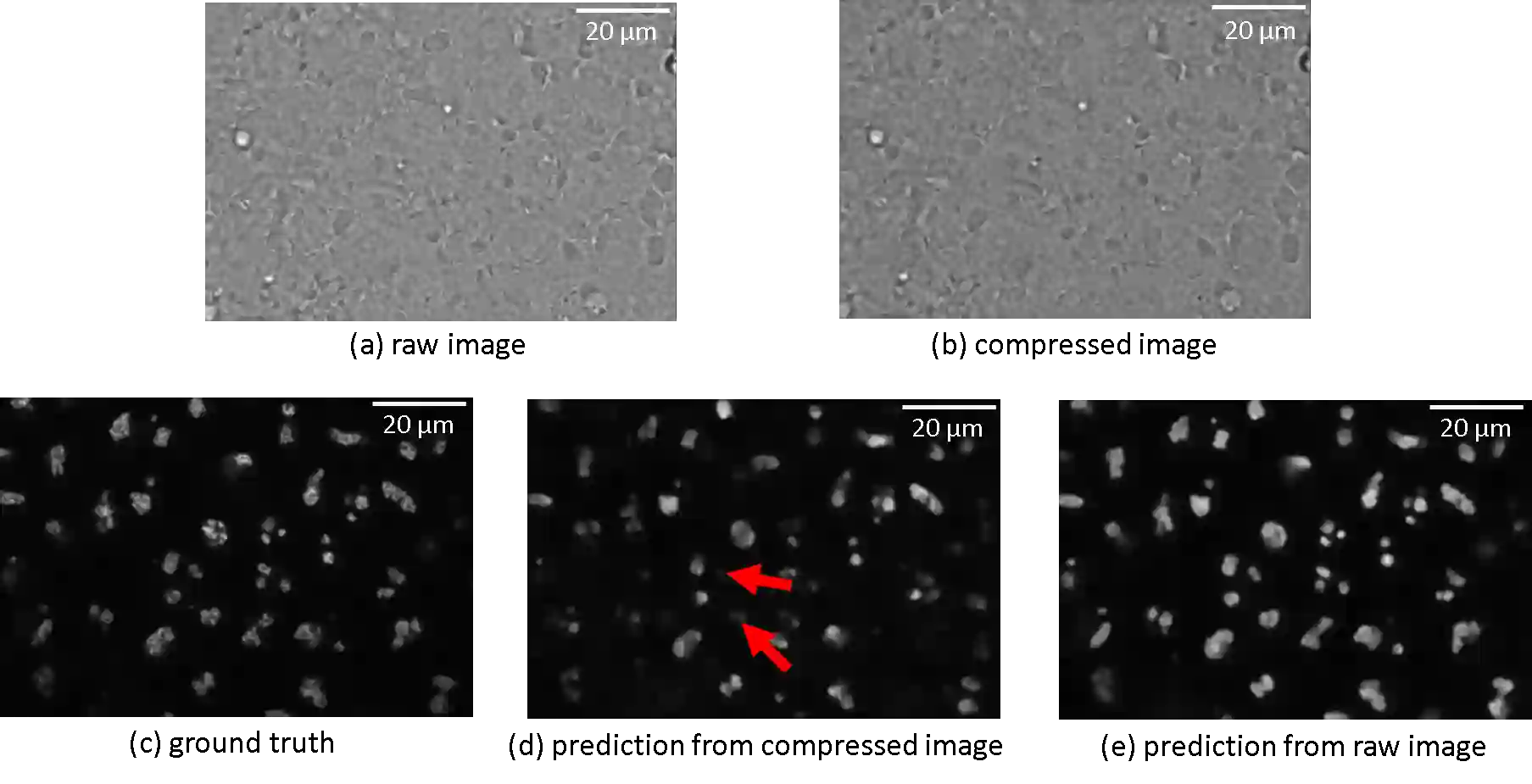
With the fast development of modern microscopes and bioimaging techniques, an unprecedentedly large amount of imaging data are being generated, stored, analyzed, and even shared through networks. The size of the data poses great challenges for current data infrastructure. One common way to reduce the data size is by image compression. This present study analyzes classic and deep learning based image compression methods, and their impact on deep learning based image processing models. Deep learning based label-free prediction models (i.e., predicting fluorescent images from bright field images) are used as an example application for comparison and analysis. Effective image compression methods could help reduce the data size significantly without losing necessary information, and therefore reduce the burden on data management infrastructure and permit fast transmission through the network for data sharing or cloud computing. To compress images in such a wanted way, multiple classical lossy image compression techniques are compared to several AI-based compression models provided by and trained with the CompressAI toolbox using python. These different compression techniques are compared in compression ratio, multiple image similarity measures and, most importantly, the prediction accuracy from label-free models on compressed images. We found that AI-based compression techniques largely outperform the classic ones and will minimally affect the downstream label-free task in 2D cases. In the end, we hope the present study could shed light on the potential of deep learning based image compression and the impact of image compression on downstream deep learning based image analysis models.
翻译:随着现代显微镜和生物成像技术的快速发展,前所未有的海量成像数据被生成、存储、分析,甚至通过网络共享。这些数据的规模对当前数据基础设施构成了巨大挑战。减小数据规模的常用方法之一是图像压缩。本研究分析了经典和基于深度学习的图像压缩方法及其对基于深度学习的图像处理模型的影响。以基于深度学习的无标记预测模型(即从明场图像预测荧光图像)作为示例应用进行比较分析。有效的图像压缩方法能显著减小数据规模而不丢失必要信息,从而减轻数据管理基础设施的负担,并支持通过网络快速传输以实现数据共享或云计算。为达到理想的压缩效果,我们将多种经典有损图像压缩技术与基于压缩AI工具箱(CompressAI)使用Python提供并训练的若干人工智能压缩模型进行了比较。这些压缩技术在压缩比、多种图像相似性度量以及更重要的是,无标记模型对压缩图像的预测准确性等方面进行了对比。我们发现,基于人工智能的压缩技术显著优于经典技术,且在二维情况下对下游无标记任务的影响极小。最后,我们希望本研究能揭示基于深度学习的图像压缩潜力及其对下游基于深度学习的图像分析模型的影响。




相关内容




 微信扫码咨询专知VIP会员