

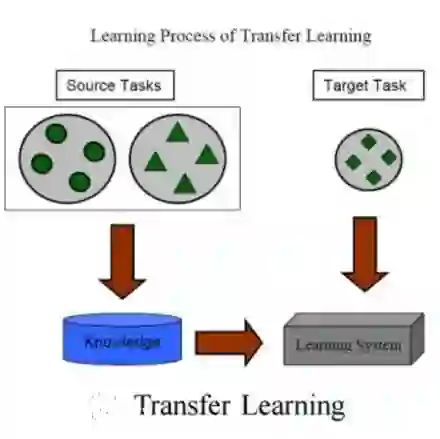
Diabetic retinopathy (DR) is one of the major blindness-causing diseases currently known. Automatic grading of DR using deep learning methods not only speeds up the diagnosis of the disease but also reduces the rate of misdiagnosis. However,problems such as insufficient samples and imbalanced class distribution in small DR datasets have constrained the improvement of grading performance. In this paper, we apply the idea of multi-stage transfer learning into the grading task of DR. The new transfer learning technique utilizes multiple datasets with different scales to enable the model to learn more feature representation information. Meanwhile, to cope with the imbalanced problem of small DR datasets, we present a class-balanced loss function in our work and adopt a simple and easy-to-implement training method for it. The experimental results on IDRiD dataset show that our method can effectively improve the grading performance on small data, obtaining scores of 0.7961 and 0.8763 in terms of accuracy and quadratic weighted kappa, respectively. Our method also outperforms several state-of-the-art methods.
翻译:糖尿病视网膜病变(DR)是当前已知的主要致盲性疾病之一。利用深度学习方法对DR进行自动分级,不仅可加速疾病诊断,还能降低误诊率。然而,小规模DR数据集中存在的样本不足与类别分布不平衡等问题,限制了分级性能的提升。本文首次将渐进式迁移学习思想引入DR分级任务。这种新型迁移学习技术通过利用多个不同规模的数据集,使模型能够学习更丰富的特征表示信息。同时,为应对小规模DR数据集的不平衡问题,我们提出了一种类别平衡损失函数,并采用简单易实现的训练方法对其加以应用。在IDRiD数据集上的实验结果表明,该方法能有效提升小数据场景下的分级性能,在准确率和二次加权kappa系数上分别取得了0.7961和0.8763的评分。此外,我们的方法还优于多种现有先进方法。




相关内容




 微信扫码咨询专知VIP会员