

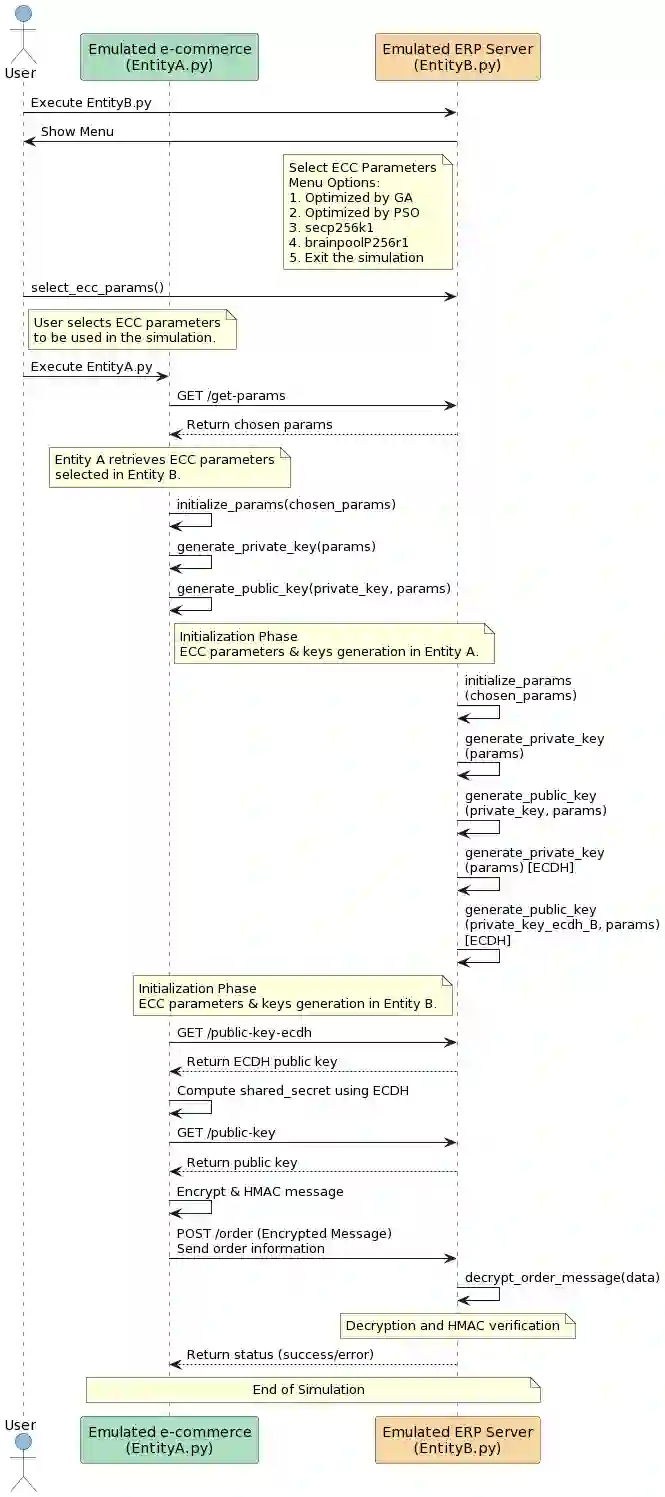
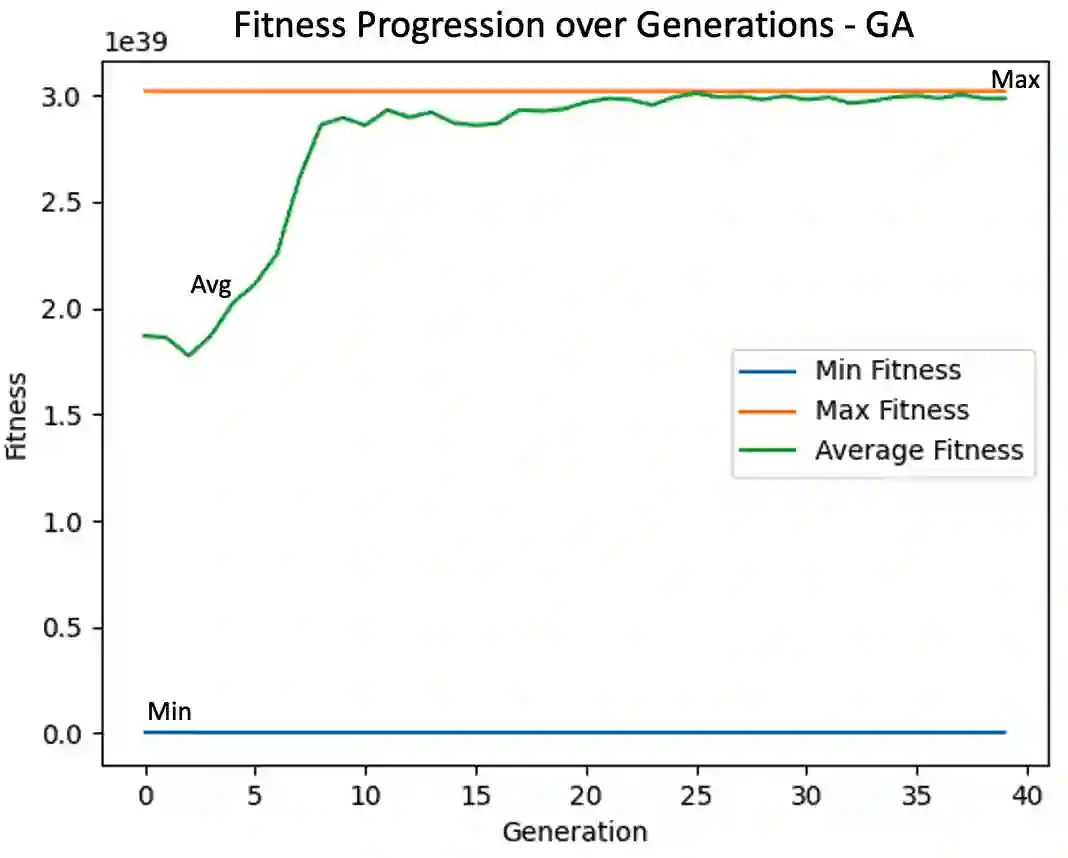
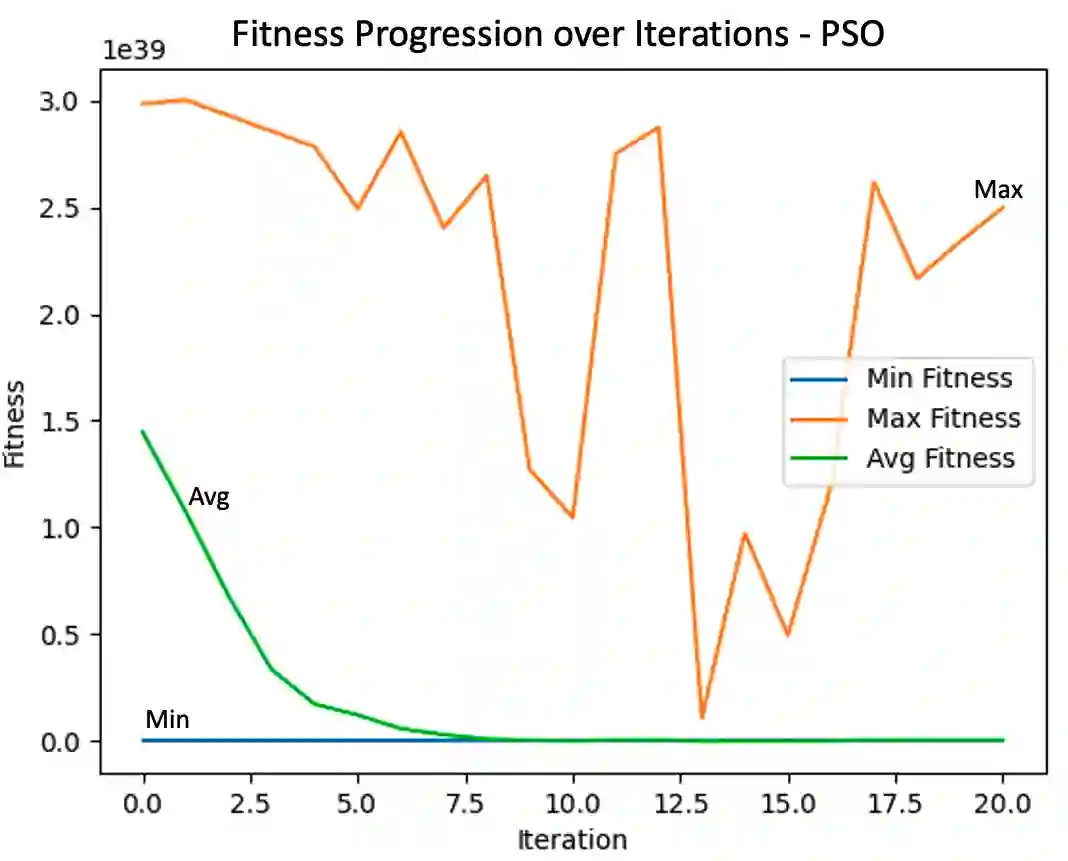
This paper presents a comparative analysis between the Genetic Algorithm (GA) and Particle Swarm Optimization (PSO), two vital artificial intelligence algorithms, focusing on optimizing Elliptic Curve Cryptography (ECC) parameters. These encompass the elliptic curve coefficients, prime number, generator point, group order, and cofactor. The study provides insights into which of the bio-inspired algorithms yields better optimization results for ECC configurations, examining performances under the same fitness function. This function incorporates methods to ensure robust ECC parameters, including assessing for singular or anomalous curves and applying Pollard's rho attack and Hasse's theorem for optimization precision. The optimized parameters generated by GA and PSO are tested in a simulated e-commerce environment, contrasting with well-known curves like secp256k1 during the transmission of order messages using Elliptic Curve-Diffie Hellman (ECDH) and Hash-based Message Authentication Code (HMAC). Focusing on traditional computing in the pre-quantum era, this research highlights the efficacy of GA and PSO in ECC optimization, with implications for enhancing cybersecurity in third-party e-commerce integrations. We recommend the immediate consideration of these findings before quantum computing's widespread adoption.
翻译:本文对两种重要的人工智能算法——遗传算法(GA)与粒子群优化算法(PSO)——进行了比较分析,重点研究它们在优化椭圆曲线密码学(ECC)参数方面的性能。这些参数包括椭圆曲线系数、素数、生成点、群阶及余因子。本研究探讨了哪种生物启发算法能为ECC配置提供更优的优化结果,并在相同适应度函数下检验其性能。该适应度函数包含确保ECC参数鲁棒性的方法,包括评估奇异或异常曲线,以及应用Pollard's rho攻击与Hasse定理以实现优化精度。GA与PSO生成的优化参数在模拟电子商务环境中进行了测试,并与secp256k1等知名曲线进行对比,用于基于椭圆曲线Diffie-Hellman(ECDH)和基于哈希的消息认证码(HMAC)的订单消息传输。本研究聚焦前量子时代的传统计算,揭示了GA与PSO在ECC优化中的有效性,对增强第三方电商集成的网络安全具有启示意义。我们建议在量子计算广泛普及之前立即考虑这些研究成果。





相关内容



 微信扫码咨询专知VIP会员